$64 Million for a Greener Mongolia: The ADB and Golomt Bank Green Finance Power Play
Key Takeaways
The Asian Development Bank and Golomt Bank have partnered on a $64 million loan to accelerate green finance for Mongolian MSMEs, specifically targeting climate mitigation and female entrepreneurship.
The infusion of $64 million into Mongolia’s financial ecosystem marks a pivotal moment in the region's transition toward a sustainable economy. By partnering with Golomt Bank, the Asian Development Bank (ADB) is not just providing capital; it is creating a scalable infrastructure for green finance that targets the most vital sector of the Mongolian economy: micro, small, and medium-sized enterprises (MSMEs). This initiative underscores a critical shift where international development funds are being deployed specifically to tackle climate change adaptation while simultaneously fostering local economic growth.
This collaboration arrives at a time when emerging markets are increasingly seeking ways to bridge the gap between high-level sustainability goals and ground-level industrial needs. For decades, MSMEs have faced significant hurdles in accessing traditional credit due to stringent requirements and a lack of specialized "green" lending products. By integrating international expertise with Golomt Bank's local market reach, this partnership seeks to dismantle those barriers, providing the necessary capital for ventures in renewable energy, sustainable agriculture, and waste management—sectors that are essential for Mongolia’s long-term resilience.
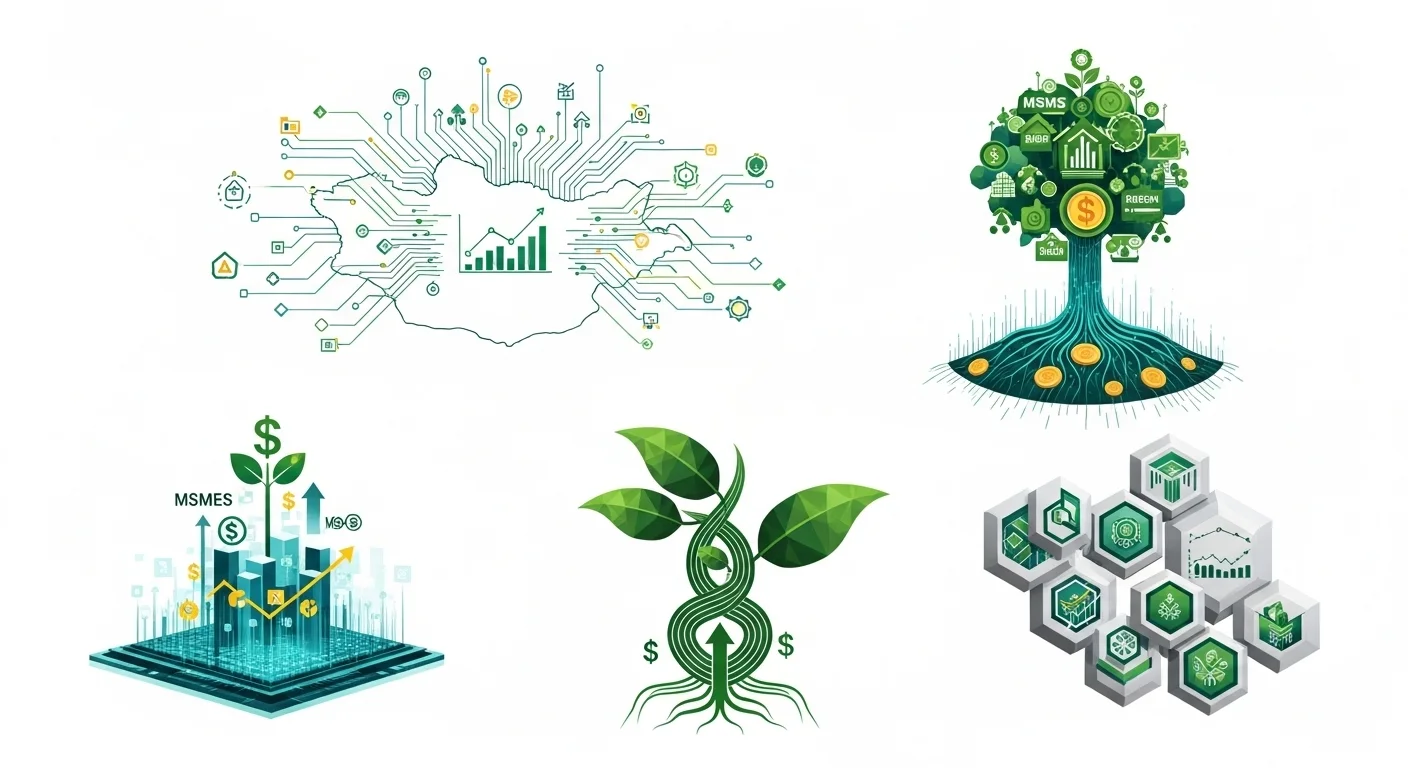
How does this $64 million investment structure actually work?
The financial architecture of this deal is a masterclass in the "pass-through" model, which is designed to maximize impact while managing risk effectively at scale. The total package is valued at $64 million, with a nuanced split: $60 million is sourced directly from ADB’s ordinary capital resources, while the remaining $4 million comes from other sources, including Golomt Bank's own internal capital.
By utilizing this model, the ADB provides the necessary liquidity and risk-mitigation framework at the macro level, but it leaves the "heavy lifting" of distribution to Golomt Bank. This is a strategic move; rather than attempting to lend directly to thousands of small businesses—a process that can be administratively overwhelming for an international organization—the ADB leverages the existing infrastructure of a major domestic institution. This ensures that the funds reach the intended recipients through established channels, ensuring both speed and localized oversight.
Why is "green finance" the primary focus for these funds?
In the contemporary fintech landscape, green finance is no longer just a buzzword; it is a specific investment mandate for capital projects that have measurable positive impacts on the environment. For Mongolia, this means prioritizing initiatives that contribute to climate change mitigation and adaptation.
A significant portion of the $64 million is specifically earmarked for these initiatives. By funneling money into green-focused ventures, the partnership aims to accelerate the national transition toward a low-carbon economy. This includes supporting local businesses that adopt cleaner technologies or move away from high-carbon processes. By providing this specific type of funding, the partnership helps domestic companies become more competitive in a global market where environmental standards are increasingly becoming a prerequisite for trade and investment.
Empowering MSMEs and promoting gender equality in Mongolia
One of the most critical components of this agreement is its focus on underserved segments of the population, specifically micro, small, and medium-sized enterprises (MSMEs) and women-owned businesses. These entities often form the backbone of local economies but are frequently excluded from mainstream banking because they may lack traditional collateral or meet high barriers to entry for standard loans.
The mandate to support women-owned businesses is a direct play toward achieving Sustainable Development Goal 5 (Gender Equality). In many emerging markets, female entrepreneurs face unique systemic hurdles; by carving out specific protections and mandates for these businesses, the ADB and Golomt Bank are attempting to create an inclusive economic ecosystem. Furthermore, the project addresses other key SDGs, including Goal 7 (Affordable and Clean Energy), Goal 8 (Decent Work and Economic Growth), and Goal 13 (Climate Action), creating a multi-layered impact that transcends simple lending.
A blueprint for Central Asian development?
The success of this partnership in Mongolia is intended to serve as a scalable model for other regions, particularly within Central Asia. As international capital seeks higher yields in "blended" products—where risk is shared between public and private entities—the demand for structured development finance will grow.
By de-risking these investments at the primary level (through ADB) and allowing commercial banks to manage the distribution, this model provides a blueprint for how multilateral development banks can achieve their sustainability goals without sacrificing the operational efficiency of local financial institutions. It proves that the path to a greener economy is best paved when international capital meets local market expertise.
Key Facts
- Total loan value: $64 million.
- ADB contribution: $60 million from ordinary capital resources.
- Partner contribution: $4 million from other sources, including Golomt Bank’s own capital.
- Primary target: Micro, small, and medium-sized enterprises (MSMEs).
- Specific focus: Green finance projects for climate mitigation and adaptation.
- Gender mandate: Specific provisions to support women-owned businesses.
- Applicable SDGs: Goals 5, 7, 8, and 13.
- Model type: Pass-through model using Golomt Bank as the operational vehicle.
Expert Commentary
From a market analysis perspective, this $64 million deal is a classic example of "de-risked capital" reaching its maximum utility. By employing the pass-through model, the ADB effectively uses Golomt Bank as a localized filter and distributor, which significantly reduces the friction of international bureaucracy for local entrepreneurs. This is a win-win for both entities: the ADB achieves its sustainability mandates at scale, while Golomt Bank reinforces its position as a primary driver of national economic growth.
For investors and analysts watching the Central Asian region, this shouldn't be viewed as a one-off loan but as a structural template. We are seeing a shift in how multilateral organizations operate; they no longer want to just provide "aid"—they want to create sustainable, scalable financial ecosystems. By tethering green finance goals directly to MSME growth and gender equality, the partnership ensures that the capital is not just being spent, but invested in something with high long-term retention value for the Mongolian economy. The focus on SDG 7 (Clean Energy) and SDG 13 (Climate Action) specifically highlights a growing trend where environmental compliance is becoming as important to the bottom line as traditional profitability.
Google Search Preference
Add Fintech Monster to your preferred sources
Never miss deep, analytical fintech insights. Prioritize our stories in your Google Search, Discover feed, and AI Overviews with one click.
About the Author
Fintech Monster
Fintech Monster is run by a solo editor with over 20 years of experience in the IT industry. A long-time tech blogger and active trader, the editor brings a combination of deep technical expertise and extended trading experience to analyze the latest fintech startups, market moves, and crypto trends.