AAA-Rated Digital Dollars: How Moody’s Validation Is Tokenizing the Future of Institutional Finance
Key Takeaways
The top-tier AAA rating assigned by Moody's to tokenized funds signals a critical institutional acceptance, establishing digital asset structures as regulated, highly liquid, and reliable vehicles for traditional capital flows.
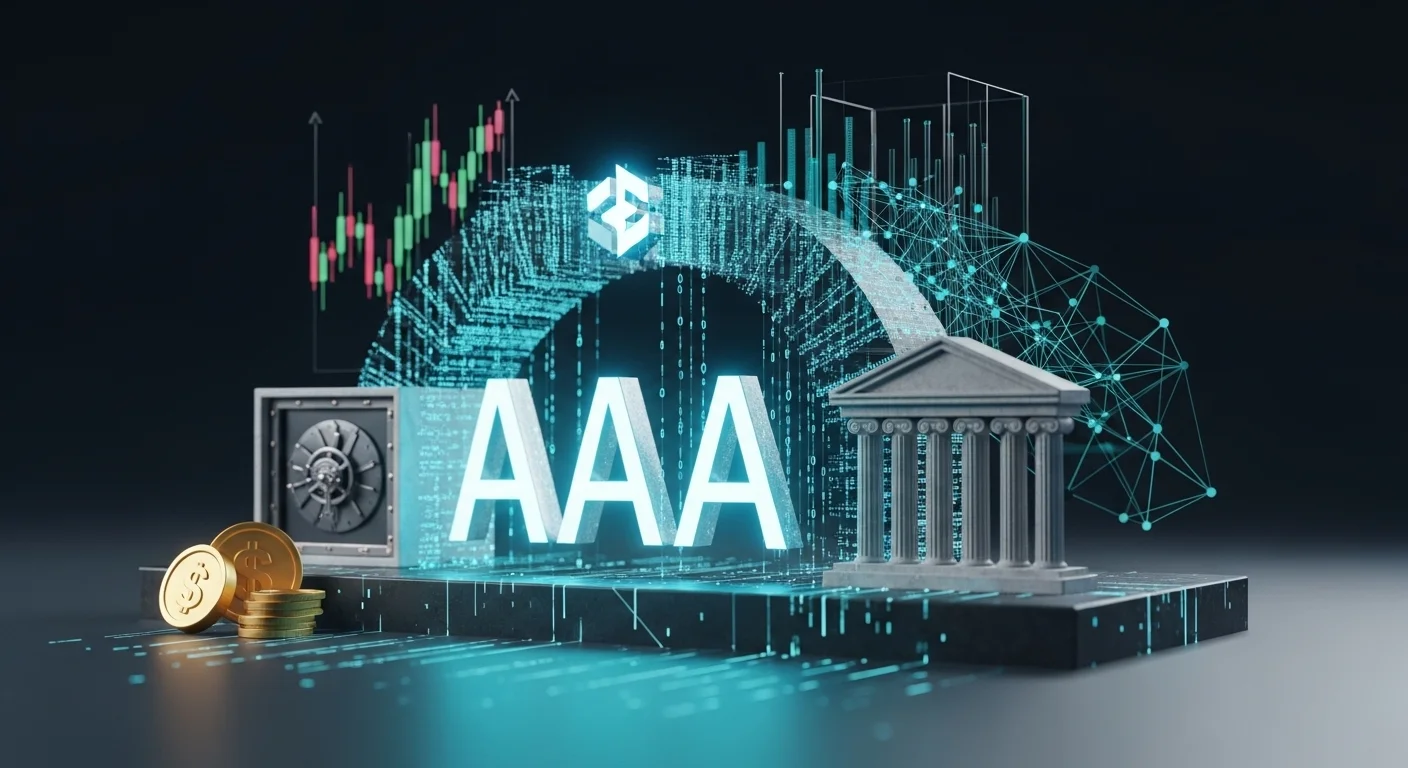
The convergence of trillions of dollars in global capital with decentralized ledger technology (DLT) has finally reached a critical tipping point, marked by the top-tier credit rating from Moody's. When Moody's awarded an AAA-mf rating (AAA for money market funds) to Fidelity's Digital Liquidity Fund (FILQ), it was not merely a financial accolade—it was a profound signal of institutional validation. This development decisively signals that the complex, multi-billion dollar market for cash equivalents and money market funds is actively and successfully being restructured through tokenization, effectively bridging the perceived risk gap between traditional finance (TradFi) giants and the decentralized digital asset world.
For decades, institutional investors—pension funds, sovereign wealth funds, and large asset managers—have required assets that are not only highly liquid but also subject to rigorous, established regulatory oversight. Tokenization offers unprecedented efficiency and settlement speed, yet historically, the structural transparency of early digital assets was insufficient for the most risk-averse capital. The Moody's rating, therefore, transcends mere finance; it is a powerful, third-party assurance mechanism that de-risks the underlying technology and the operational structure, proving that digital formats can meet the most stringent global standards for credit quality and verifiable stability.
Decoding the Institutional Validation: What Does the AAA Rating Mean?
The assignment of an AAA-mf rating to FILQ is perhaps the single most important signal for the global financial infrastructure in recent years. This rating validates the product's structure by confirming that its underlying assets, investment mandates, and operational governance meet the highest benchmarks for stability and liquidity. For the massive capital pools managed by institutional players, third-party credit rating agencies serve as essential risk mitigants. By endorsing a tokenized product, Moody's is providing the definitive seal of approval, tackling the core challenge of market skepticism head-on.
This validation is particularly significant because it confirms that the tokenized product is fundamentally mirroring the safety and strategic profile of existing, deeply established money market funds. The focus is not on the technology, but on the underlying financial stability that the technology helps facilitate. This moves the conversation from speculative digital asset speculation to verifiable, secure asset management infrastructure.
The Architecture of Trust: Transparency and Efficiency
The primary value proposition demonstrated here is the seamless combination of blockchain transparency with traditional financial rigor. Tokenization allows for instantaneous, verifiable tracking of assets, eliminating layers of correspondent banking risk and manual reconciliation delays that plagued traditional cross-border finance.
However, the success hinges on integrating the distributed ledger technology with the existing framework of regulatory compliance (KYC/AML). The rating agency's confidence suggests that the structure has successfully overlaid institutional control mechanisms onto the transparent ledger, creating a verifiable "Internet of Value."
Players in the Ecosystem: Strategic Moves
This market shift is not driven by one company, but by a convergence of institutional players making calculated, highly regulated moves.
Fidelity and BlackRock, two titans of the asset management world, are not just participating; they are defining the operational standards for digitized assets. Their involvement signals a profound shift: digitized assets are no longer peripheral investments but core components of institutional liquidity management.
BlackRock's interest in tokenizing complex assets, from real estate to fixed income, proves that the ambition is to build an entire global settlement layer. It’s about creating a single, efficient rails system for virtually every type of value transfer.
Regulating the Rails: Stability and Compliance
The key takeaway is that regulation is the driver of adoption. Companies are not merely building a better blockchain; they are building a regulated and compliant financial product on top of it. This regulatory focus is what separates institutional adoption from retail speculation.
The Regulatory Horizon and Future Growth
Looking forward, the biggest opportunities are in two key areas:
- Tokenization of Illiquid Assets: Real estate, private equity, and art have historically been difficult to trade due to high minimum investment thresholds and manual transfer processes. Tokenization allows them to be fractionated into easily tradable, highly liquid digital tokens, opening trillions of dollars in value to global investors.
- Cross-Border Settlements: By leveraging the speed and transparency of digital assets, cross-border payments and settlements can move from days to minutes, dramatically lowering operational costs and capital lockup time for multinational corporations.
This ecosystem is evolving into the primary infrastructure layer for global finance, moving beyond just cryptocurrencies to become a universal settlement layer for all forms of digital value.
About the Author
Fintech Monster
Fintech Monster is run by a solo editor with over 20 years of experience in the IT industry. A long-time tech blogger and active trader, the editor brings a combination of deep technical expertise and extended trading experience to analyze the latest fintech startups, market moves, and crypto trends.