FINTECH.MONSTER
Startups /

Beyond Digitization: How AI Protocols are Reshaping India's Fragmented Healthcare Infrastructure

Key Takeaways

Svasth.ai is pioneering an AI-driven protocol layer that unifies disparate health data, transforming every patient interaction into actionable, predictive intelligence to achieve true continuity of care across India.

The global healthcare market is undergoing a paradigm shift, and in the sprawling context of India, this transformation is driven not merely by digitization, but by the foundational creation of an AI-driven protocol layer. This layer acts as a systemic digital backbone, designed to solve the endemic challenge of data fragmentation—the moment-to-moment operational disconnect that has historically crippled the quality and accessibility of care. Companies like Svasth.ai are at the vanguard of this revolution, building protocols that standardize, unify, and render every second of a patient’s journey, from the initial out-patient visit to critical care, into actionable, lifesaving intelligence.

To understand the magnitude of this move, one must appreciate the current state of Indian healthcare: vast, deeply fragmented, and often reliant on manual processes. Patient data exists in silos—spread across paper records, disparate Electronic Health Records (EHRs) used by different hospitals, and standalone mobile monitoring apps. This ‘data invisibility’ means that even if a patient has a comprehensive medical history, no single entity can easily access or correlate all the necessary information. The solution, therefore, cannot be another piece of software; it must be a foundational, interoperable data protocol that speaks the common language of care, irrespective of the originating system or location.

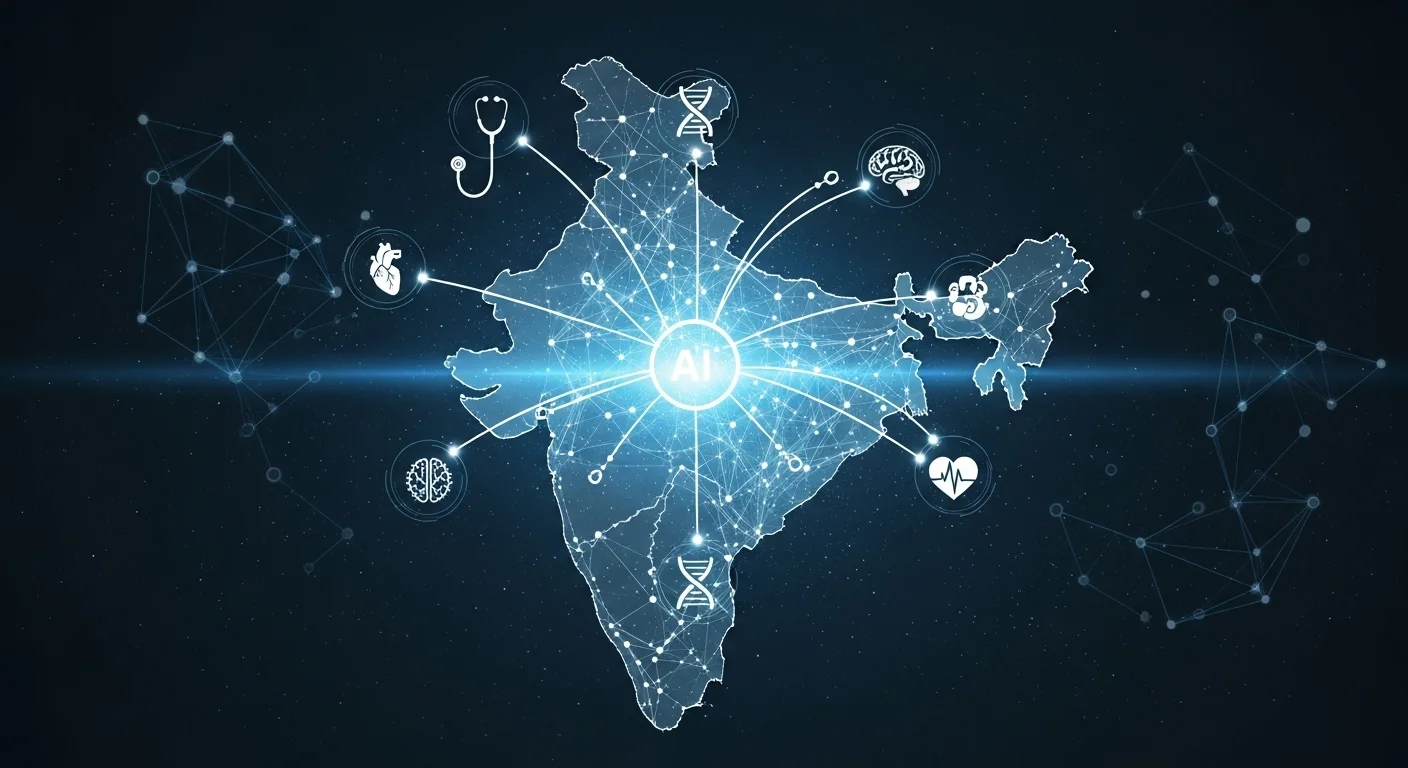
Interconnected digital network showing AI processing medical data points across various sectors, illustrating comprehensive health protocol layering

What Exactly Is an 'AI-Driven Protocol Layer' in Healthcare?

Simply putting data onto a cloud server is not a protocol layer; that is mere storage. A true AI-driven protocol layer is a sophisticated middleware that actively interprets, standardizes, and structures data streams in real-time. It moves beyond passive digitalization to achieve active, intelligent integration.

The system ingests heterogeneous data—a complex mix including digitized X-rays, handwritten notes scanned decades ago, real-time biometrics from wearables, and administrative inputs like insurance claim codes. The AI engine then performs multiple critical functions on this raw chaos:

  1. Normalization and Mapping: It doesn't just store the data; it maps diverse local terminologies (which vary by region and hospital) to globally recognized standards like SNOMED CT or ICD-10. This standardization is the single biggest technical hurdle it overcomes, creating true interoperability.
  2. Pattern Recognition: It utilizes machine learning to identify subtle patterns in longitudinal patient data. Instead of waiting for a diagnosed crisis, the system can flag high-risk individuals—for instance, detecting early markers that predict the deterioration of kidney function years before typical symptoms manifest.
  3. Process Automation: It handles the operational overhead, automating everything from pre-authorization checks for insurance claims to scheduling optimized based on real-time resource availability (e.g., booking an MRI slot that minimizes patient wait time).

How Does Svasth.ai Operationalize Data Capture in the Field?

A key technological triumph highlighted by this model is the reliance on low-friction, high-utility capture methods, such as QR-based protocols. This addresses a major systemic weakness: resource constraints and low digital literacy in rural settings. Instead of requiring patients or staff to use complex interfaces, the protocol uses simple, standardized triggers (like scanning a QR code at a checkpoint or at admission). This action instantly triggers a cascade of data capture—recording vital signs, confirming procedures, and flagging necessary protocols—all feeding immediately back into the centralized, secure health record.

Beyond the Electronic Record: Achieving True Interoperability

The industry has often struggled with siloed electronic health records (EHRs). A patient's cardiology records might reside on one platform, while their endocrinology records are on another, making a complete view impossible. The fundamental shift achieved by these platforms is the establishment of a unified protocol layer that speaks to all these disparate systems. This comprehensive view allows doctors, specialists, and care coordinators to make decisions based on 100% of the patient’s history, significantly improving care quality and reducing medical errors.

Key Pillars of the Transformation

Pillar Pre-Protocol State Post-Protocol State Impact
Data Visibility Siloed records; incomplete patient view. Unified, longitudinal view across all care points. Enables precise, holistic diagnosis.
Operational Flow Paper-based handoffs; manual reconciliation. Digital, automated workflow management. Reduces bottlenecks; improves hospital efficiency.
Preventive Care Reactive treatment following illness. Predictive analytics based on real-time risk signals. Shifts focus from treatment to prevention.
Billing & Claims Manual, error-prone claim submission. Automated, coded submissions directly from the source. Reduces administrative waste and cost.

Conclusion: The Future of Care

This evolution represents more than just a digital upgrade; it is a fundamental paradigm shift toward preventative, predictive, and personalized medicine. By institutionalizing a robust data protocol, these platforms are not just recording care—they are actively improving the system itself, ensuring that the right data reaches the right clinician, at the right time, saving both time and lives.


Key Takeaways for Stakeholders

  • For Healthcare Providers: Access to complete, real-time patient histories allows for superior diagnostic accuracy and optimized treatment pathways.
  • For Payers & Insurers: Improved data transparency reduces fraud, minimizes costly readmissions, and allows for proactive risk management.
  • For Patients: Empowerment through seamless care continuity, leading to better personal outcomes and greater trust in the medical system.

About the Author

F

Fintech Monster

Fintech Monster is run by a solo editor with over 20 years of experience in the IT industry. A long-time tech blogger and active trader, the editor brings a combination of deep technical expertise and extended trading experience to analyze the latest fintech startups, market moves, and crypto trends.