Bridging TradFi and DeFi: How Kraken’s Integration of Tokenized Stocks as Collateral Redefines Risk Management
Key Takeaways
Kraken is bridging the gap between traditional and digital finance by allowing users to utilize tokenized stocks and ETFs as collateral for crypto margin trading and futures.
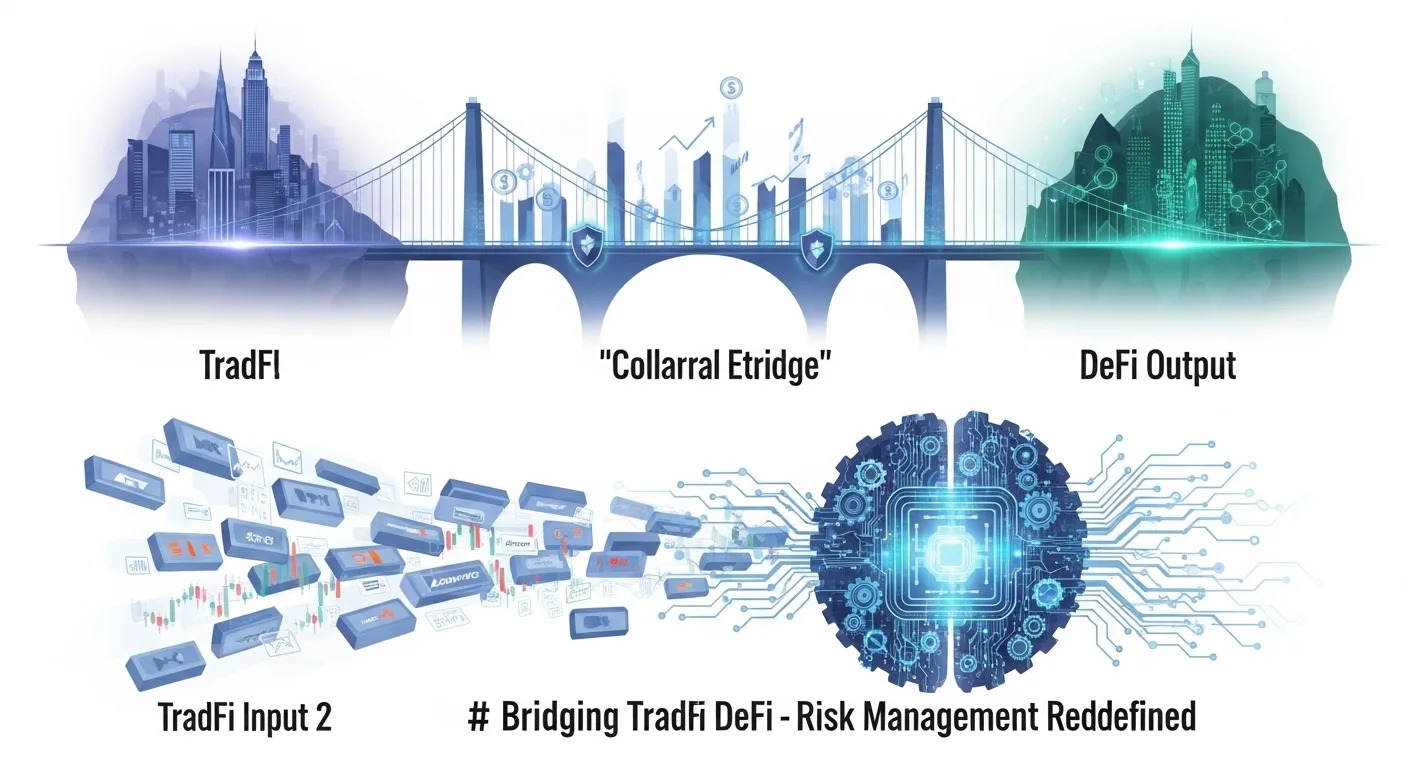
The financial landscape is undergoing a profound transformation as the boundaries between "traditional" assets and "digital" assets begin to blur into a singular, integrated ecosystem. Kraken’s latest move to integrate tokenized stocks and Exchange Traded Funds (ETFs) as collateral for margin trading and futures represents one of the most significant advancements in the Real-World Asset (RWA) sector this year. By allowing traders to leverage their existing equity holdings to gain exposure to crypto markets, Kraken is solving a long-standing infrastructure gap that has previously forced investors to choose between holding stable traditional assets or liquidating them to participate in the high-growth digital space.
This shift addresses a critical friction point for institutional and retail investors alike: capital efficiency. Historically, an investor who held a significant portfolio of blue-chip stocks would have to liquidate those positions—triggering immediate capital gains taxes and removing their exposure to equity markets—to obtain the margin necessary for trading cryptocurrency futures. By introducing tokenized securities that are 1:1 backed by physical assets in regulated custody, Kraken creates a symbiotic environment where traditional holdings can serve as the "buffer" for speculative digital moves. This doesn't just provide a new feature; it provides a bridge of liquidity between two previously siloed financial worlds.
Why is the shift toward "cross-collateralization" a game-changer for high-net-worth individuals?
For high-net-worth individuals (HNWIs) and institutional entities, the primary hurdle in adopting crypto has often been the complexity of managing multiple disparate accounts and the tax implications of moving capital between asset classes. Kraken’s cross-collateralization model allows these players to maintain their ownership of underlying assets while utilizing those assets' market value as a hedge or leverage tool for digital assets. This means an investor can keep their shares in a diversified ETF while using the "digital twin" (the tokenized version) of that ETF to back a long position on Bitcoin or Ethereum.
This mechanism is underpinned by advanced blockchain infrastructure, specifically designed to ensure that the link between the digital token and the physical asset remains unbroken. To maintain this integrity, a rigorous "Proof of Reserve" system is essential. This ensures that for every token issued on-chain, there is a corresponding, verified asset held in an approved custody institution. By integrating these assets directly into the collateral pool, Kraken provides a unified platform where portfolio management becomes streamlined and counterparty risk is mitigated through automated smart contracts.
How do they manage price volatility and liquidations across two different markets?
One of the most complex hurdles in this integration is the synchronization of valuation between the 24/7 cryptocurrency market and the traditional stock market. To solve this, Kraken utilizes high-frequency, low-latency "oracles." These are data feeds that provide real-time pricing for both the tokenized stocks and the crypto assets being traded against them.
The importance of these oracles cannot be overstated; they are the heart of the liquidation engine. Because the value of a stock can fluctuate relative to the price of a cryptocurrency, the system must constantly recalculate liquidation thresholds. If the underlying equity drops significantly in value, the smart contract automatically assesses whether the collateral is still sufficient to back the crypto position. This automated layer removes human error and ensures that the exchange remains solvent even during periods of extreme market volatility across both asset classes.
What does this mean for the future of the RWA movement?
Kraken’s move isn't just a product update; it is a validation of blockchain as a fundamental layer for global finance. By successfully managing tokenized securities—which must navigate complex regulatory landscapes regarding their classification—Kraken is helping to mature the Real-World Asset (RWA) sector. This transition from "experimental" crypto assets to "functional" integrated finance products marks a pivot point where digital infrastructure becomes the plumbing for traditional capital flows. As these systems become more robust, we can expect to see even more complex asset classes, such as private equity and real estate, integrated into similar collateral frameworks.
Key Facts
- Integration of tokenized stocks and ETFs as collateral for margin trading and futures.
- Elimination of the need to liquidate primary positions to gain crypto exposure.
- Introduction of "cross-collateralization" where equity value backs digital assets.
- Requirement of low-latency oracle feeds for real-time liquidation calculations.
- Implementation of "Proof of Reserve" to ensure 1:1 backing by physical assets.
- Reduction of capital gains tax triggers for investors moving between asset classes.
- Validation of smart contracts in managing complex, multi-asset collateral requirements.
Expert Commentary
From a trading perspective, this is the logical evolution of institutional-grade infrastructure. We are moving away from a "fragmented" model where crypto was an island and toward a "unified" model where the underlying asset class dictates the risk profile rather than the medium in which it is held. By allowing tokenized assets to serve as collateral, Kraken is effectively removing the "opportunity cost" of choosing between equity stability and crypto volatility.
The real winner here is liquidity. When you allow high-value traditional assets to move into the collateral pool without being liquidated, you increase the depth of the market for everyone involved. However, the success of this initiative hinges entirely on the reliability of the oracle layer and the robustness of the Proof of Reserve. If the link between the physical asset and the digital token is perceived as even slightly brittle, institutional confidence will waver. By tackling these technical hurdles head-on, Kraken is positioning itself not just as an exchange, but as a critical infrastructure provider for the next generation of global finance.
Google Search Preference
Add Fintech Monster to your preferred sources
Never miss deep, analytical fintech insights. Prioritize our stories in your Google Search, Discover feed, and AI Overviews with one click.
About the Author
Fintech Monster
Fintech Monster is run by a solo editor with over 20 years of experience in the IT industry. A long-time tech blogger and active trader, the editor brings a combination of deep technical expertise and extended trading experience to analyze the latest fintech startups, market moves, and crypto trends.