Decoding the Strategic Divorce: Why Bitcoin is Outpacing Traditional Narratives While Diverging from the AI Equity Surge
Key Takeaways
While the equity markets are currently dominated by a high-growth narrative fueled by Artificial Intelligence, Bitcoin’s divergence signifies a structural shift toward infrastructure-based value in stablecoins and real-world asset (RWA) tokenization.
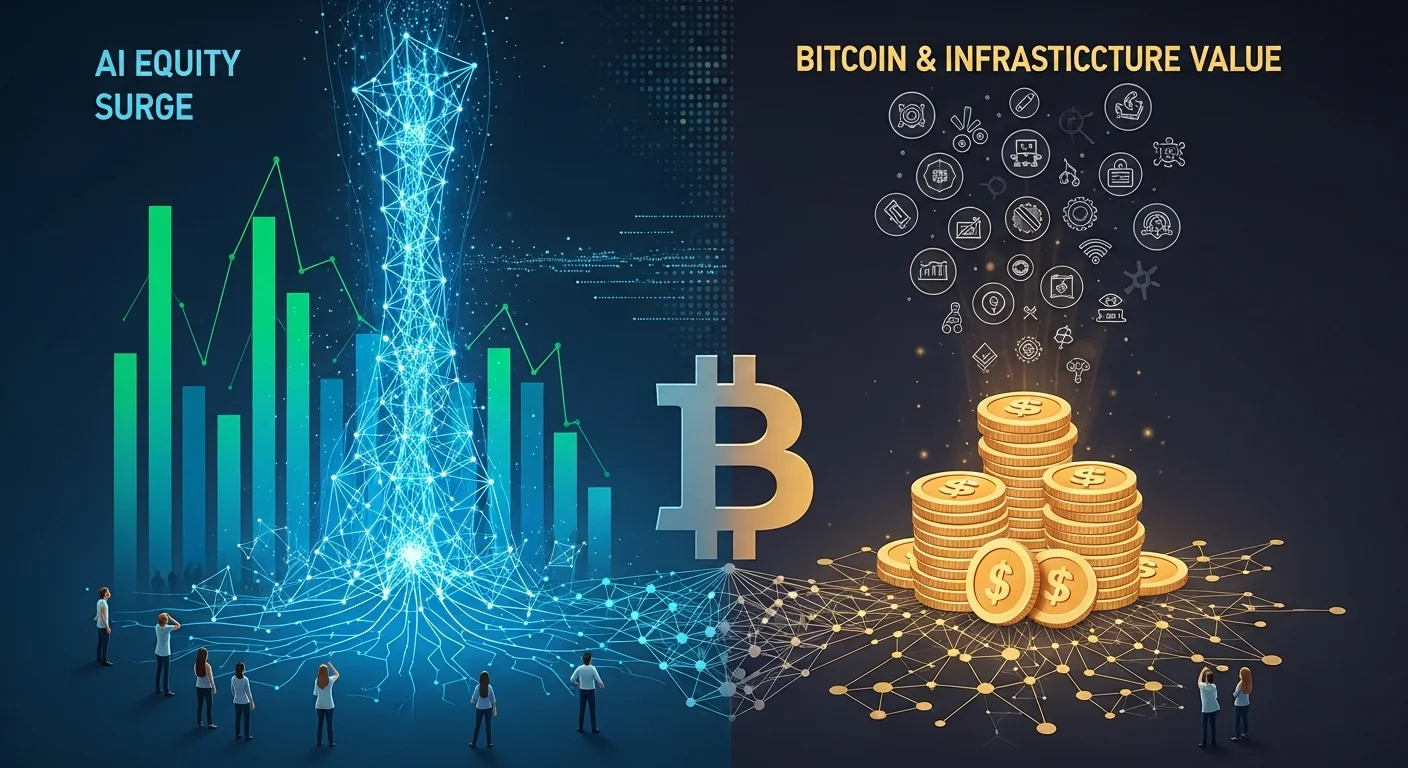
The current financial landscape is witnessing a fascinating, high-stakes decoupling between the performance of Bitcoin (BTC) and traditional U.S. technology equity markets. While the broader tech sector has surged to unprecedented heights fueled by the rapid integration of Artificial Intelligence (AI), Bitcoin has entered a phase of nuanced, slower growth relative to these AI-centric headlines. This divergence is not a sign of waning interest in digital assets; rather, it marks a distinct split between "narrative-driven" capital and "infrastructure-driven" investment.
This disconnect underscores a pivotal moment for institutional investors who must distinguish between immediate market hype and foundational technological utility. While the AI boom captures the spotlight through heavy infrastructure spend and software innovation, the blockchain ecosystem is quietly building the plumbing of the future financial system. The current period allows us to see how different asset classes respond to distinct catalysts: one fueled by a revolution in computation (AI) and the other by an evolution in settlement and ownership layers (Blockchain).
What is driving the massive capital rotation into AI?
The primary driver for the current gap in performance between Bitcoin and tech equities is a deliberate rotation of capital by institutional investors seeking immediate exposure to Artificial Intelligence. For many large funds, AI represents an "everything" play—impacting productivity, software, and hardware simultaneously. This has led to a concentration of liquidity into specific technology stocks that provide direct tools for the AI revolution.
However, while this movement is significant, it does not imply that Bitcoin's fundamentals are weakening. Instead, Hashdex analysis suggests that investors who prioritize immediate exposure to high-growth tech narratives may move toward equity, while those looking at long-term structural shifts in finance continue to favor digital assets. This rotation highlights a maturing market where different "buckets" of capital are searching for different types of rewards: one seeking the rapid growth of technological breakthroughs (AI) and the other seeking the security of digital scarcity and decentralized utility (Bitcoin).
How is the infrastructure of blockchain evolving?
While Bitcoin may appear to be moving at a different pace than AI stocks, its underlying ecosystem is experiencing explosive growth in metrics that indicate deep institutional integration. One of the most compelling indicators is the massive expansion in stablecoin transaction volumes. In the first half of 2025 alone, the volume for stablecoins surpassed all previous periods combined. This leap suggests that stablecoins are no longer just "trading pairs" but have become a primary vehicle for settlement and moving value across borders at scale.
The tokenization of real-world assets (RWAs) has shown immense momentum. The market value of these assets—encompassing everything from government bonds to physical property—has surged by more than 60% year-to-date. This trend is crucial because it moves the conversation away from "speculative crypto" and toward "useful blockchain." When real estate or treasury bills are tokenized, they enter a realm of finance where blockchain acts as the invisible plumbing, creating a foundation that remains robust regardless of whether the ticker symbol for Bitcoin matches the growth curve of a specific AI-related stock.
Why is Bitcoin’s price action so different right now?
The perceived "slowness" in Bitcoin's recent recovery compared to the explosive rally in tech stocks can be explained by the unique supply mechanics inherent in the network. Analysts at Charles Schwab have noted that current movements are highly consistent with historical post-halving cycles. These cycles typically involve a gradual accumulation phase where market participants absorb new supplies over time, leading to more stable price action as it aligns with production costs.
Several economic factors support this "structural floor" for Bitcoin: 1. Mining Costs: The cost to produce one Bitcoin has surged to approximately $95,000. This creates a significant hurdle for miners; at current levels, there is less urgency for large-scale liquidation of holdings, which restricts the circulating supply during periods of volatility. 2. Investor Cost Basis: The average investor cost basis is estimated near $80,000. This indicates that a vast portion of holders are currently in a "holding" mindset, not looking to exit their positions at these levels even if they feel the growth is slower than neighboring tech sectors.
Key Facts
- Stablecoin Growth: Transaction volume for stablecoins in H1 2025 exceeded all previous periods combined.
- RWA Explosion: The value of tokenized real-world assets increased by over 60% year-to-date.
- Production Floor: The current cost to mine one Bitcoin is approximately $95,000.
- Investor Loyalty: The average investor cost basis for Bitcoin stands at roughly $80,000.
Expert Commentary
From a trading perspective, the "decoupling" of Bitcoin from the AI-driven equity rally shouldn't be viewed as a failure of conviction in crypto; it’s a healthy diversification of the market. We are seeing two distinct investment horizons playing out simultaneously. The AI rally is a high-velocity play on the tools of future productivity, while the blockchain growth (specifically in RWAs and stablecoins) is an investment in the infrastructure of global finance.
The "slow" movement in Bitcoin compared to tech giants is a feature, not a bug. By aligning with production costs and establishing a heavy cost-basis floor, Bitcoin is proving its utility as a store of value that isn't solely dependent on immediate hype cycles to maintain its position. While AI captures the headlines today, the integration of real-world assets into blockchain provides a much more stable path for institutional capital to move from "speculative" trades to long-term "utility" investments. The current market structure suggests that while both technologies are revolutionary, their paths to maturity will look vastly different on the charts.
Google Search Preference
Add Fintech Monster to your preferred sources
Never miss deep, analytical fintech insights. Prioritize our stories in your Google Search, Discover feed, and AI Overviews with one click.
About the Author
Fintech Monster
Fintech Monster is run by a solo editor with over 20 years of experience in the IT industry. A long-time tech blogger and active trader, the editor brings a combination of deep technical expertise and extended trading experience to analyze the latest fintech startups, market moves, and crypto trends.