Fenwick & West Sued for $525M: Unpacking the Alleged Role of Legal Counsel in the FTX Collapse
Key Takeaways
Class-action lawsuits allege that Fenwick & West did more than merely advise on legal matters, accusing the firm of actively facilitating and concealing systemic financial fraud and the misappropriation of billions of dollars during the FTX collapse.
The legal fallout stemming from the spectacular implosion of FTX represents more than just a financial reckoning; it marks a profound ethical and governance crisis at the intersection of high finance, complex technology, and professional legal services. At the center of this escalating litigation is Fenwick & West LLP, a prominent Silicon Valley law firm, which is now facing class-action lawsuits seeking an estimated $525 million. The core allegation is staggering: that the firm, in its capacity as long-term primary outside counsel for FTX, was not merely a passive advisor but actively contributed to, or at least knowingly enabled, the systemic fraud and the subsequent theft of billions in customer assets.
The accusations have sharply reframed the scope of legal accountability within the digital asset space. Plaintiffs and victims are arguing that Fenwick & West's involvement went far beyond routine corporate legal services. Instead, they allege that the firm possessed deep, detailed knowledge of FTX's critical breaches of fiduciary duty—specifically, the systematic misappropriation of customer funds and the complex, misleading structuring of the exchange's finances. This suggests a level of complicity that elevates the case from a simple breach of contract to a fundamental question of professional duty and ethical oversight in an increasingly unregulated global market.
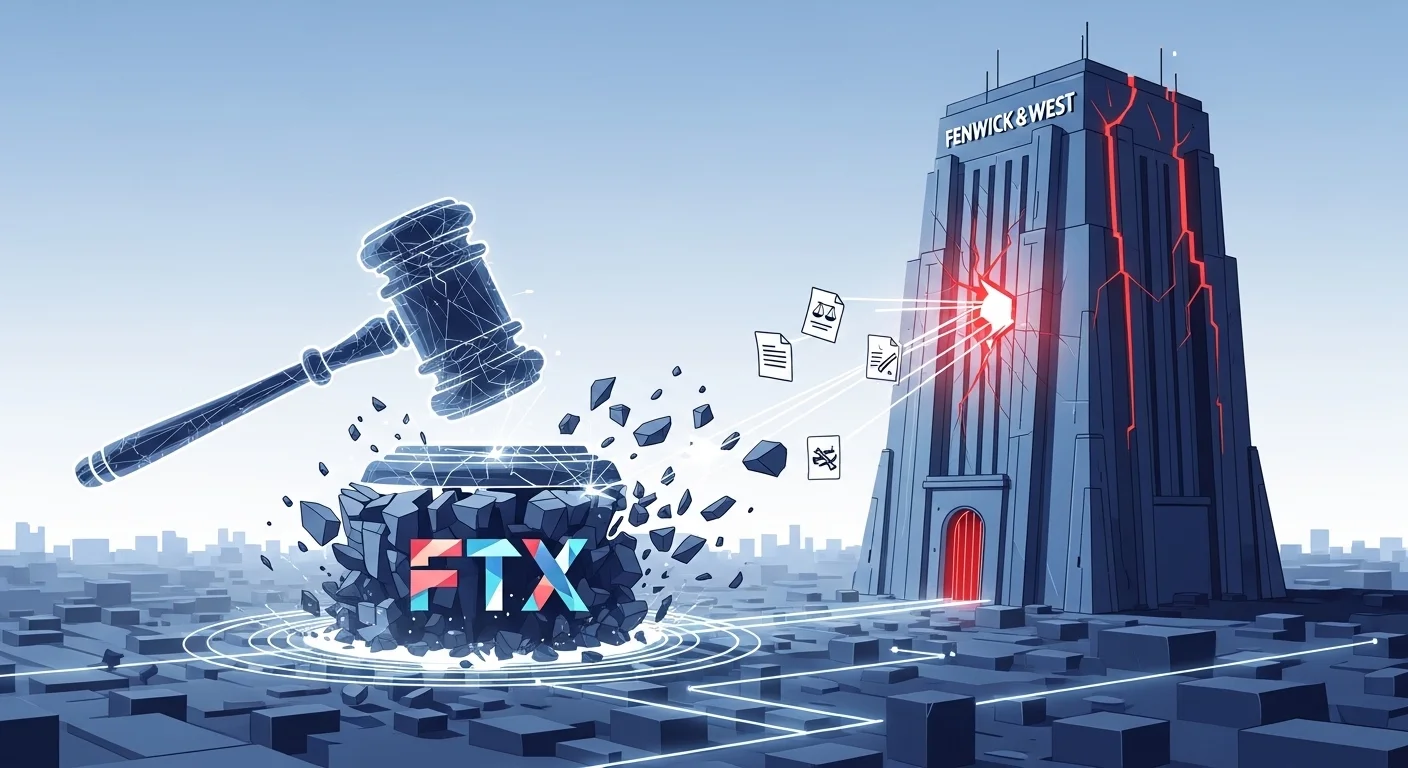
What Specific Actions Are Plaintiffs Alleging Against the Law Firm?
The lawsuits are not generic; they target highly specific actions related to professional misconduct. The central complaint is that the law firm played an integral part in maintaining and obscuring the infrastructure that allowed the fraud to flourish. These allegations suggest that Fenwick & West allegedly facilitated the creation of shell companies and complex, opaque communication controls. These structures were reportedly designed explicitly to obfuscate the true nature of transactions, hide the flow of customer assets, and obscure the mechanisms by which billions of dollars were secretly funneled out of the exchange's ecosystem.
This focus on systemic failure highlights a profound systemic vulnerability: the potential for trusted professional service providers to become effective conduits for illicit financial activity. When a law firm is embedded as primary counsel for years, it inevitably gains privileged access to internal operational details, making its professional conduct paramount. The litigation is designed to pierce this veil of privilege, demanding accountability for the oversight gaps and ethical lapses that allowed the fraud to go unchecked.
Why Does Professional Counsel Hold a Duty of Care in Decentralized Finance?
Historically, legal firms advising major financial institutions have operated within clear regulatory frameworks regarding fiduciary duty. In the nascent and often chaotic world of decentralized finance (DeFi) and centralized crypto exchanges (CEXs), those frameworks were perceived as lacking or non-existent. This legal vacuum, however, has not absolved counsel.
The case implicitly argues that the duty of care does not evaporate simply because the industry is "new" or "unregulated." Instead, the firm’s professional obligation expands to encompass advising on—and actively mitigating—material compliance risks. By allegedly failing to identify and warn against the severe malfeasance—such as the commingling of customer funds with operational funds—the firm's role shifts from purely advisory to one of active gatekeeper responsibility. This raises monumental questions for all service providers, from auditing firms to law firms, regarding their liability when advising on fundamentally flawed business models.
How Does the Testimony of Former Executives Impact the Lawsuit?
A critical accelerant in these legal actions is the testimony provided by key figures who chose to cooperate with government investigations. Notably, the insights offered by former executives who detailed the internal failures and operational misconduct have provided a narrative framework for the plaintiffs. These testimonies have illuminated the mechanisms by which the alleged malfeasance was sustained and concealed from regulators and investors alike.
This evidence has moved the narrative beyond mere circumstantial suspicion. It points toward systemic governance failures, suggesting that the firm's operational issues were not isolated incidents but part of a broader, systemic failure supported by advisory structures. For regulatory bodies and future litigants, this provides a powerful precedent: that the failure of corporate governance and oversight can have direct legal ramifications for the advisory and legal firms involved.
The pressure this places on professional service firms is immense, forcing a re-evaluation of standard diligence procedures in rapidly evolving, high-stakes digital asset markets.
Key Takeaways for Industry Oversight
The fallout from corporate collapses like this highlights several areas of increased risk and potential regulatory focus:
- Governance Diligence: Regulators are increasingly scrutinizing not just the company's financials, but its internal governance structures and the diligence performed by its professional advisors.
- Client Funds Protection: The focus on the segregation and safety of client assets remains paramount, with increased legal accountability for firms that fail to implement robust safeguarding protocols.
- Legal Liability Expansion: Legal firms and financial advisors are facing increased exposure regarding the scope of their duty of care, especially when operating in novel, unregulated sectors.
The complexity of the financial instruments and operational opacity inherent in some crypto-asset structures makes oversight challenging, but the legal fallout suggests that accountability mechanisms are hardening, placing a higher burden on all participants to maintain absolute transparency and ethical governance.
Google Search Preference
Add Fintech Monster to your preferred sources
Never miss deep, analytical fintech insights. Prioritize our stories in your Google Search, Discover feed, and AI Overviews with one click.
About the Author
Fintech Monster
Fintech Monster is run by a solo editor with over 20 years of experience in the IT industry. A long-time tech blogger and active trader, the editor brings a combination of deep technical expertise and extended trading experience to analyze the latest fintech startups, market moves, and crypto trends.