Fortifying European Silicon: The Strategic Significance of Germany’s New Semiconductor Hub
Key Takeaways
The European Commission's approval of €76 million for a German semiconductor testing facility marks a critical advancement in securing the EU's technological sovereignty and overcoming supply chain bottlenecks in advanced chip production.
The European Union has taken a decisive step toward reclaiming its industrial autonomy by approving €76 million in state aid to establish a pioneering semiconductor testing facility in Germany. This investment targets one of the most critical—yet often overlooked—bottlenecks in the global electronics lifecycle: the advanced testing and packaging of high-performance integrated circuits (ICs). By targeting this specific stage, Europe is moving beyond mere production numbers to focus on high-value, sophisticated manufacturing that is essential for the next generation of consumer electronics, telecommunications, and industrial infrastructure.
This move is not an isolated economic decision but a direct application of the objectives laid out in the EU Chips Act. For years, the European continent has grappled with a heavy reliance on East Asian hubs for the final stages of chip production, creating significant vulnerabilities in global supply chains. By establishing this "first-of-a-kind" facility, the EU aims to build a resilient domestic buffer against geopolitical instability and logistical disruptions. The project is designed to serve as a cornerstone for European technological sovereignty, ensuring that local innovators have access to high-quality hardware without the risks inherent in long-distance supply chains.
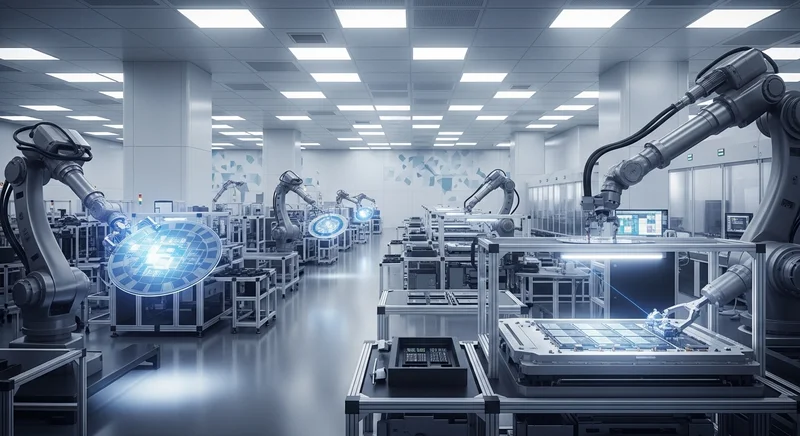
Why is "advanced packaging" the new frontier for European tech?
To understand why this €76 million investment is so critical, one must look at the physical limitations of modern silicon. As manufacturers push toward sub-7nm nodes, simply making a chip smaller is no longer enough to gain performance. Instead, the industry has shifted toward advanced packaging techniques, such as 2.5D and 3D integration using Through Silicon Via (TSV). These methods allow multiple "chiplets" to be integrated into a single package, significantly increasing processing power and efficiency.
However, these complex architectures are notoriously difficult to test and verify. The transition from monolithic designs to multi-die systems requires specialized facilities capable of sophisticated binning, wafer sorting, and final functional testing. This German facility is specifically engineered to handle these complexities. By mastering the nuances of 3D integration locally, European manufacturers can ensure that components for high-performance computing (HPC) meet the stringent reliability standards required for modern automotive electronics and 5G telecommunications networks.
How does this investment fuel the European AI ambition?
The explosion of generative AI and large language models has created an insatiable demand for specialized hardware, such as GPUs and custom ASICs. These chips are the backbone of the AI revolution, but they are also incredibly difficult to manufacture at scale with high yield rates. The newly funded facility provides a critical piece of the puzzle: it ensures that the high-performance components used in AI clusters can be tested, verified, and qualified within European borders.
By securing this infrastructure, European technology firms gain a significant competitive advantage. They will have access to a stable, locally-supported ecosystem for hardware development, which is essential for any nation aiming to compete in the global AI arms race. Instead of waiting on international logistical chains that are prone to delay, developers can rely on a domestic hub that understands the specific requirements of high-performance chips. This creates a ripple effect throughout the economy, fostering an environment where local startups and established giants alike can innovate with greater confidence in their hardware supply.
Creating a blueprint for European industrial growth
Beyond the immediate technical benefits, this project serves as a scalable model for regional development within the German high-tech sector. The establishment of such a specialized facility is expected to drive significant job creation across several disciplines, from chemical engineering and material science to advanced logistics. Furthermore, it creates a collaborative environment where small and medium-sized enterprises (SMEs) can engage with larger industrial players on shared infrastructure.
The "first-of--kind" designation of this project suggests its role as a prototype for broader European integration. By proving the viability of such a facility in Germany, the EU can more easily advocate for similar projects across other member states, eventually creating a seamless semiconductor corridor across the continent. This is not just about building one factory; it is about constructing an entire ecosystem that reduces economic vulnerability and positions Europe as a primary hub for advanced electronics manufacturing and design.
Key Facts
- Funding Amount: €76 million in approved state aid from the European Commission.
- Primary Objective: Construction of a pioneering semiconductor testing facility in Germany.
- Technical Focus: Testing and packaging of high-performance integrated circuits (ICs).
- Node Capabilities: Support for sub-7nm nodes and advanced 2.5D/3D integration techniques.
- Core Technologies: Specifically designed to handle Through Silicon Via (TSV) processes.
- Policy Alignment: Directly supports the mandates of the EU Chips Act.
- Strategic Goal: Reduced reliance on East Asian production hubs for critical circuit stages.
Expert Commentary
From a market perspective, this move is a classic example of "de-risking" as a core economic strategy. For years, investors and manufacturers have faced "concentration risk"—the danger that a single geographical region holds the keys to essential infrastructure. By investing in the packaging and testing phase, Europe isn't just trying to catch up with production numbers; they are attempting to capture the high-value engineering segment of the supply chain where technical complexity is highest.
For those tracking the semiconductor sector, the "first-of-a-kind" status is a vital indicator for future growth models. It suggests that the European Commission intends to use this project as a proof of concept to unlock further funding and infrastructure projects across the continent. By focusing on 2.5D/3D integration and sub-7nm nodes, Europe is positioning itself at the very top of the value chain. This provides a significant moat for domestic tech firms who can now iterate on hardware with local reliability. While the initial investment is €76 million, the long-term strategic equity being built in local technical expertise and supply chain independence is worth exponentially more to the continent's standing in the global AI and high-performance computing landscape.
About the Author
Fintech Monster
Fintech Monster is run by a solo editor with over 20 years of experience in the IT industry. A long-time tech blogger and active trader, the editor brings a combination of deep technical expertise and extended trading experience to analyze the latest fintech startups, market moves, and crypto trends.