Institutionalizing the Mine: Analyzing Riot Platforms’ Strategic Shift to NYDIG Custody
Key Takeaways
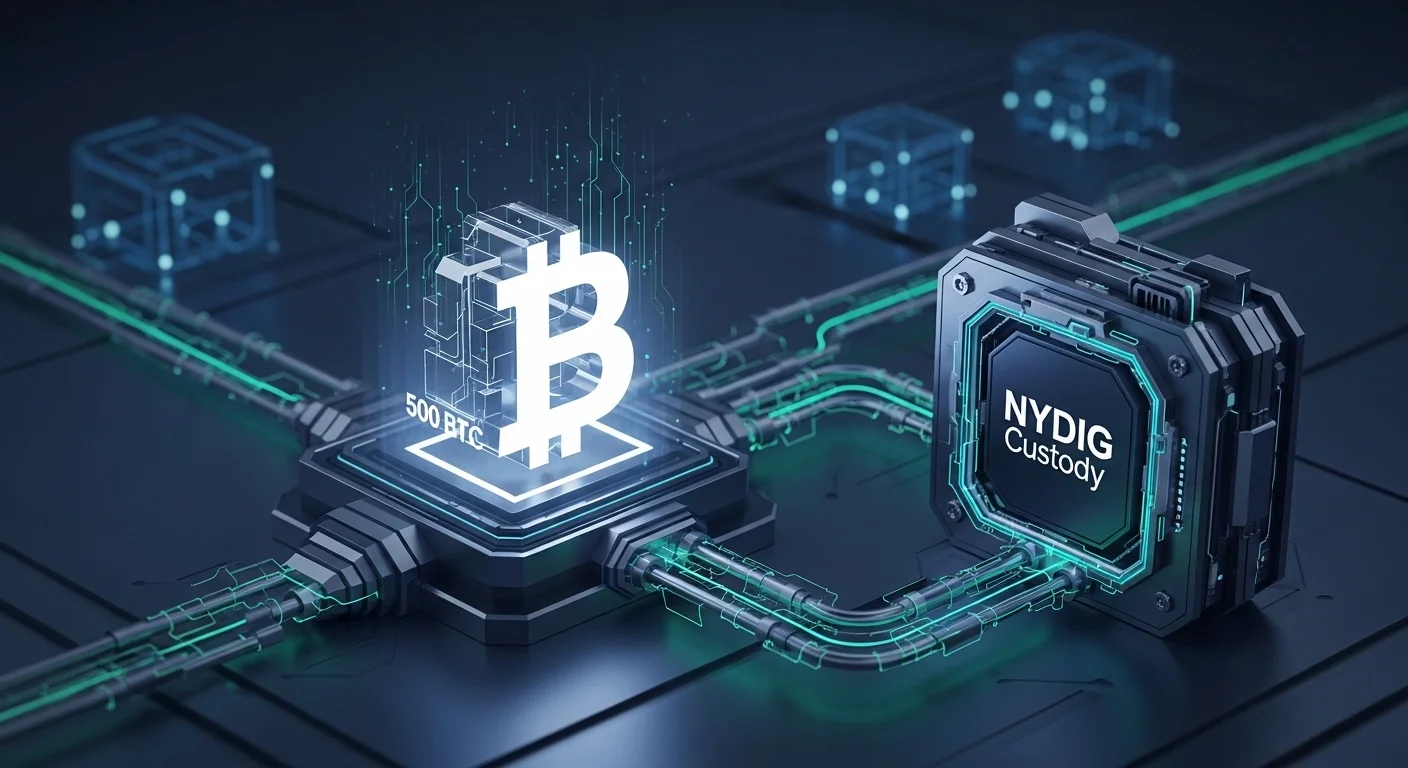
Riot Platforms successfully transferred 500 BTC into a regulated custody environment via NYDIG to enhance security and institutional oversight amidst significant infrastructure expansion.
The recent movement of 500 Bitcoin (BTC) by Riot Platforms into the NYDIG Custody ecosystem represents a pivotal moment in the evolution of corporate mining operations. Valued at approximately $30.7 million at the time of execution, this high-volume transfer has drawn significant scrutiny from market observers who closely monitor "whale" movements on-chain. While massive outbound transfers to exchanges often trigger panic regarding potential sell-offs, forensic analysis confirms that no liquidation took place; instead, the assets were transitioned into a regulated environment designed for institutional-grade security.
This transition marks a strategic pivot from the early-stage "hold and hope" mentality of the mining sector toward a sophisticated, corporate treasury model. As public entities like Riot Platforms scale their operations, the necessity for professional oversight becomes paramount. By selecting NYDIG—a provider specialized in regulated custody—Riot is insulating its core assets from the risks inherent in self-custody or less-regulated trading environments, effectively aligning its portfolio with traditional financial standards and heightened regulatory compliance requirements.
Why is the shift to NYDIG Custody significant for institutional miners?
The move into NYDIG Custody isn't just a change of address; it is an upgrade in corporate infrastructure. For a mining operation that functions as both a production entity and a massive holder of digital assets, "safety" is a multi-layered concept. By utilizing a regulated custodian, Riot Platforms can establish a clear audit trail for its balance sheet. This is particularly vital when dealing with large-scale holdings where the risk of loss or theft in non-regulated environments could have catastrophic implications for shareholders and company stability.
Furthermore, the move highlights a growing trend of "institutionalizing" the mining industry. As these companies grow, they are increasingly being viewed as high-tech infrastructure firms rather than just crypto miners. Aligning with regulated custodians like NYDIG signals to stakeholders that the organization is prioritizing security over speculative liquidity, ensuring that their 500 BTC holdings are properly protected within a framework of compliance and transparency.
How does this move impact Riot’s capital strategy?
To understand why this transfer occurred now, one must look at the broader corporate context of Riot Platforms. The company has navigated several complex financial hurdles recently, including periods of negative operating cash flow—a common challenge in the capital-intensive mining sector where massive investments are required for power, cooling, and hardware. Additionally, the presence of restricted collateral on their balance sheet suggests that while they hold substantial assets, not all of them are immediately available for general expenditure.
Moving 500 BTC into a dedicated custody account likely serves as a "parking" strategy. By placing these assets in a professional vault, Riot can better manage its liquidity while pursuing aggressive data center expansion projects. This move may also prepare the company for future financing rounds or partnerships; having assets held in a regulated institution makes it significantly easier to use those holdings as collateral or include them in institutional loan agreements. It demonstrates a sophisticated approach to asset management where the firm seeks to balance immediate operational needs with long-term safety and regulatory compliance.
What does this mean for market perception and volatility?
One of the primary risks for mining companies is "false signals." In the past, large movements of Bitcoin from miner wallets were often mistaken by automated trading algorithms as intent to dump on the market, leading to unnecessary price volatility. By moving assets to a known custodian like NYDIG, Riot provides a clearer narrative to the market. It distinguishes between a move for sale and a move for safety.
This level of clarity is essential for maintaining investor confidence. When a mining firm clarifies its treasury management through professional third-party services, it reduces the "noise" in the market. For investors following [related trends in crypto infrastructure], this transition reflects a maturing ecosystem where the primary goal is to bridge the gap between decentralized assets and the rigorous demands of corporate finance.
Key Facts
- Riot Platforms moved 500 BTC into NYDIG Custody.
- The transaction was valued at approximately $30.7 million during execution.
- Forensic analysis confirmed that no sale occurred during the transition.
- NYDIG provides specialized, regulated custody services for institutional users.
- Riot Platforms currently manages a portfolio with restricted collateral and negative operating cash flow.
- The company is actively pursuing plans for significant data center expansion.
Expert Commentary
From a trader’s perspective, this move by Riot Platforms is a masterclass in "de-risking" the balance sheet. In the early days of the mining boom, it was common to see miners holding large amounts of BTC in multisig wallets or on exchange accounts—practices that are increasingly frowned upon by institutional analysts due to security and compliance risks.
By moving 500 BTC into NYDIG Custody, Riot is essentially "professionalizing" their treasury. They are acknowledging that as a public entity with ambitious expansion goals, they cannot afford the ambiguity of non-regulated storage. The fact that they chose a specialized custodian rather than just holding the coins in a standard cold wallet suggests a very deliberate strategy to prepare for institutional scrutiny and potential debt financing. This isn't just about protecting the keys; it's about building a bridge toward traditional finance, where clear ownership, regulated custody, and transparent reporting are the currencies of trust. For investors, this is a bullish sign of organizational maturity within the mining sector.
Google Search Preference
Add Fintech Monster to your preferred sources
Never miss deep, analytical fintech insights. Prioritize our stories in your Google Search, Discover feed, and AI Overviews with one click.
About the Author
Fintech Monster
Fintech Monster is run by a solo editor with over 20 years of experience in the IT industry. A long-time tech blogger and active trader, the editor brings a combination of deep technical expertise and extended trading experience to analyze the latest fintech startups, market moves, and crypto trends.