Judicial Clearinghouse: How US Law Unlocked $71 Million ETH Recovery for Aave After Major DeFi Exploit
Key Takeaways
A ruling from a Manhattan federal judge provided the critical legal authorization to transfer $71 million in ETH to Aave, establishing a significant legal precedent for asset recovery in the complex world of cross-chain DeFi exploits.
The successful recovery of approximately 30,765 ETH, valued at roughly $71 million, represents far more than just the return of stolen funds—it marks a critical and complex milestone in the ongoing effort to restore stability and define the legal perimeter of the decentralized finance (DeFi) ecosystem. This recovery effort, spanning several months of intense technical and legal maneuvering, culminated when a Manhattan federal judge issued a ruling that cleared the final legal hurdle, explicitly permitting the transfer of the immobilized assets. This judicial authorization was pivotal because it provided the necessary green light for the Arbitrum Security Council to move the funds, which had been otherwise trapped under complex jurisdictional claims and legal restrictions.
The genesis of this massive asset freeze traces back to a catastrophic exploit that occurred on April 18, involving the KelpDAO cross-chain bridge. Attackers successfully exploited a vulnerability within this bridge, which utilized unbacked rsETH tokens as collateral within Aave V3 markets. The initial attack was massive in scale, leading to the borrowing of an estimated $230 million in ETH from the Aave protocol. This exploit did not only result in substantial financial losses; it created a multi-layered crisis involving technical vulnerabilities, cross-jurisdictional governance challenges, and escalating legal complexity, necessitating a multi-stage recovery plan that spanned multiple legal bodies and decentralized governance structures.
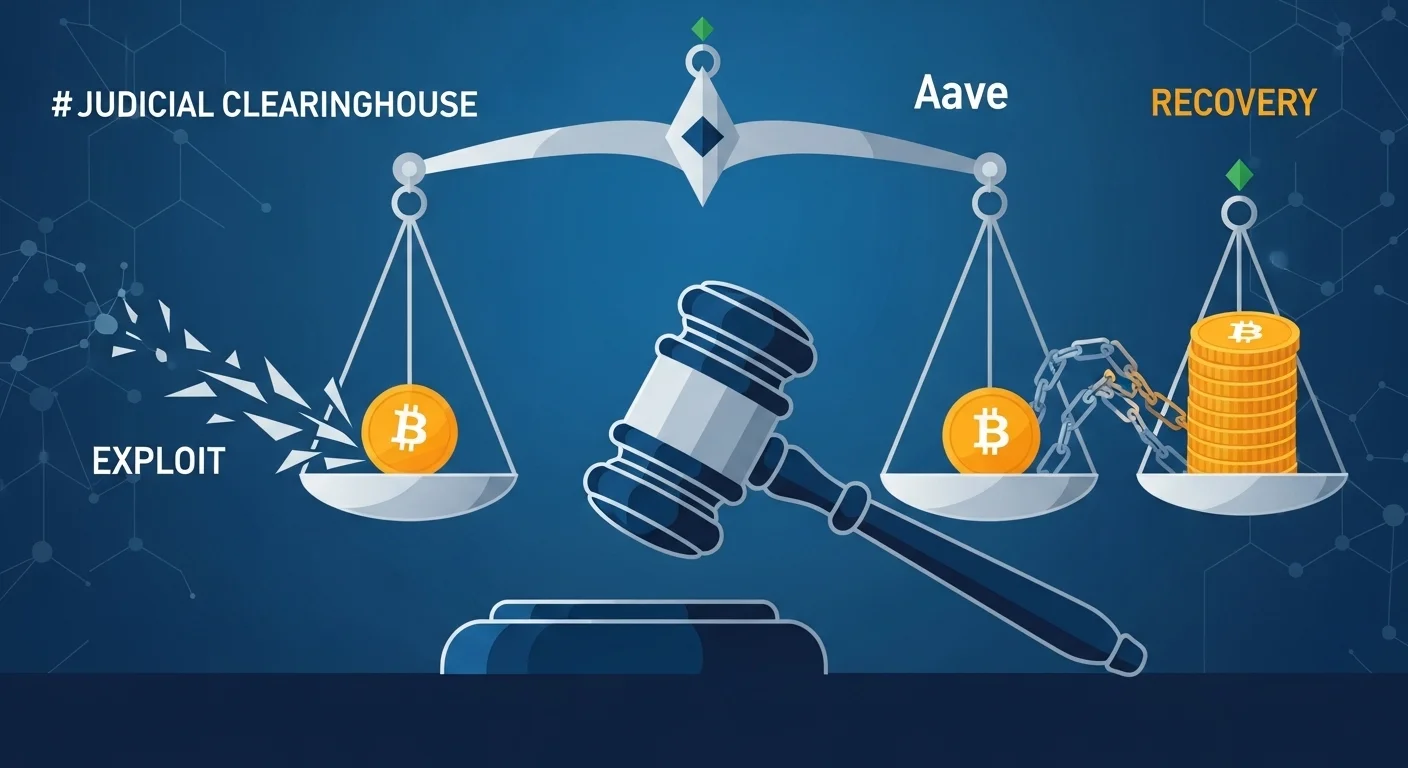
Why did a U.S. Judge's Ruling Matter for Global DeFi?
The legal victory hinged on the intervention of Judge Margaret Garnett. The assets in question were subject to a protective asset freeze, requiring a specific and highly detailed judicial order to move them. The judge's decision didn't just authorize a transfer; it provided legal clarity in a space where the underlying protocols are globally decentralized and supposedly jurisdiction-agnostic. By permitting the Arbitrum Security Council to execute the transfer, the ruling legitimized the recovery mechanism, framing the movement as a sanctioned on-chain governance action rather than a unilateral organizational decision. This judicial stamp of approval is critical because it establishes a legal bridge between the highly decentralized, code-based world of DeFi and the traditionally centralized, writ-based world of international law.
Navigating the Technical Maze: Governance and Restitution
The recovery process was extraordinarily intricate, requiring a perfect marriage of on-chain governance protocols and centralized judicial intervention. The initial freeze, while protective, rendered the $71 million ETH effectively inert. The solution required more than simple permission. The judge’s order permitted the Arbitrum Security Council to execute the transfer, which was carefully structured as an on-chain governance vote. This ensured that the transfer maintained its technical legitimacy within the DeFi framework, proving that the action was sanctioned by the relevant decentralized governance body. The funds were channeled to an Aave LLC-controlled wallet, establishing a centralized point of control crucial for coordinating the final steps of the recovery—specifically, the restoration of the underlying collateral ratio necessary for the protocol’s stability.
The core purpose of the released ETH was to re-anchor the compromised collateral structure. The released ETH was intended to back the rsETH bridge, fundamentally restoring the crucial 1:1 peg between the rsETH tokens and the underlying ETH collateral. If this peg were not restored, the entire solvency structure of the bridged asset would fail. This action underscores the technical gravity of the incident; the recovery was not merely about finding money, but about restoring foundational market primitives. Understanding how these foundational tokens function is paramount for anyone tracking the stability of cross-chain bridge risks, a topic we previously covered in depth on [the challenges of cross-chain interoperability].
Beyond the Code: Geopolitics and Legal Accountability
Adding significant depth to the financial recovery is the overlay of geopolitical complexity. The incident has been repeatedly linked to activities associated with North Korea-linked exploits. This association instantly elevates the event from a standard technical hack to a matter of international financial security and sanctions enforcement. This context is vital because it dictates how the recovered funds must be treated legally. The funds are not simply "clean money"; they are deeply intertwined with international legal disputes, particularly related to default judgments against North Korea for terrorism-related claims.
The involvement of established financial legal processes underscores the reality that large-scale exploits do not just affect code; they affect international legal status and national financial interests. This legal entanglement elevates the risk profile of decentralized finance, forcing regulators and institutions to treat DeFi exploits not just as technical bugs, but as complex, transnational financial crimes requiring advanced international legal mechanisms.
Key Takeaways for the Industry
This incident serves as a major case study defining the nexus between decentralized trust and centralized legal enforcement. It highlights three critical areas for the industry:
- Legal Infrastructure: The reliance on court orders and legal precedent confirms that even the most decentralized systems must interface with traditional legal structures for recovery and accountability.
- Operational Resilience: Protocols must build not just technical failure modes into their architecture, but legal and jurisdictional failure modes as well.
- Risk Modeling: Future risk models must incorporate political and geopolitical instability, recognizing that a state-level actor may be involved, thereby compounding the technical risk exponentially.
Key Industry Takeaways
- Governance Depth: The sophistication of the attack and the ensuing legal battle demand more robust, multi-stakeholder governance models that can interface with regulatory bodies.
- Custodial Risks: The recovery process underscores that even seemingly 'unowned' digital assets are treated as subject to jurisdiction, requiring better clarity on custody and liability frameworks.
- Regulatory Foresight: Regulatory frameworks must evolve from simply banning specific activities to creating clear operational playbooks for responding to sophisticated, state-sponsored financial attacks.
About the Author
Fintech Monster
Fintech Monster is run by a solo editor with over 20 years of experience in the IT industry. A long-time tech blogger and active trader, the editor brings a combination of deep technical expertise and extended trading experience to analyze the latest fintech startups, market moves, and crypto trends.