Klarna and Lands' End Signal the Structural Shift of BNPL into Core Retail Payment Infrastructure
Key Takeaways
The partnership between Klarna and Lands' End validates Buy Now, Pay Later (BNPL) as a critical, mainstream payment utility, signaling a deep structural re-evaluation of merchant revenue models and the future of credit access.
The strategic collaboration between Klarna and venerable department store Lands' End is more than a mere promotional payment option; it represents a seismic shift in the fundamental architecture of retail commerce. By integrating flexible BNPL solutions into the physical and digital stacks of a traditional brick-and-mortar retailer, the partnership elevates Buy Now, Pay Later from a niche e-commerce novelty to a sophisticated, essential payment utility. This trend signals that alternative financing mechanisms are no longer supplementary sales tactics but core components of modern merchant revenue models, demanding that the entire financial ecosystem—from card networks to banking processors—re-evaluate its approach to consumer spending power.
This maturity represents the formal passage of BNPL across a critical inflection point. Historically, flexible credit solutions were managed by dedicated credit card issuers or institutional banks. Today, specialized FinTech players are effectively building parallel, highly efficient payment rails. The sheer volume and breadth of adoption—escalating into the hundreds of billions of dollars globally—have forced incumbent payment processors and traditional financial institutions to rapidly adapt, signaling a structural re-evaluation of how merchants capture value from every transaction.
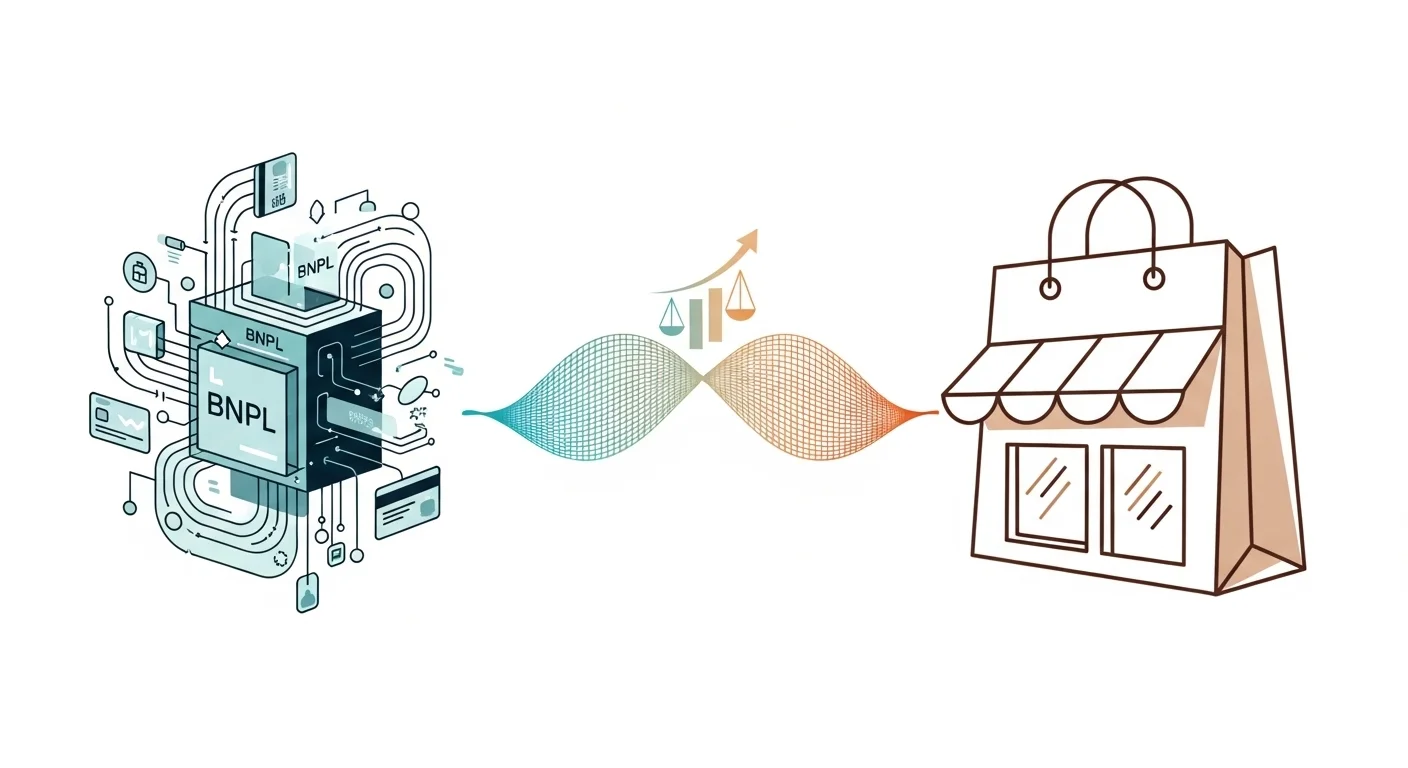
How has Buy Now, Pay Later (BNPL) matured into essential payment infrastructure?
The appeal of BNPL lies in its deceptively simple operational mechanism: immediate purchase capability with deferred, manageable payments. The most common structure, the 'Pay in 4' model, divides the total purchase cost into four fixed installments. The initial draw for consumers is the perceived boost in purchasing power, enabling them to acquire high-ticket items immediately. For the merchant, the operational benefit is even more pronounced.
From a technical perspective, the process requires the BNPL provider to pay the retailer the full transaction amount upfront. The merchant receives immediate cash flow—minus a predefined commission fee, typically ranging from 3% to 6%. This instant liquidity is invaluable for brick-and-mortar retailers, particularly during volatile economic cycles, as it dramatically improves cash flow forecasting and overall sales velocity. This immediate payout structure transforms the payment method from a simple transaction record into a crucial, highly attractive working capital tool.
What is driving the structural shift away from traditional credit cards?
The intensified competition between specialized BNPL lenders, traditional card networks (Visa, Mastercard), and banks is driving the structural shift. Traditional credit models, while robust, are often tied to high-interest interest rate structures and complex application processes. BNPL offers speed, simplicity, and an unparalleled consumer experience tailored to the modern digital shopper.
Payment processors are responding to this pressure by adopting 'BNPL-adjacent' features or acquiring smaller players. This market dynamic confirms that the consumer preference is trending toward flexibility over pure credit depth. The market is signaling that the value proposition is no longer credit per se, but access to capital at the point of sale, structured in discrete, digestible payments. Furthermore, the ability of BNPL providers to leverage sophisticated, real-time transaction data allows for a level of personalization in lending that traditional, slower banking models struggle to match.
How will regulatory scrutiny reshape the future of retail finance?
The explosive growth of BNPL has brought it under the intense, necessary spotlight of global regulators. Concerns are concentrated primarily on consumer protection, transparency in fees, and the risk of over-indebtedness.
Regulators are moving quickly to standardize consumer recourse and mandate clear communication regarding repayment terms and interest implications. This scrutiny is acting as a powerful maturation force for the industry. It is forcing BNPL providers to move beyond the 'payday loan' perception and adopt more robust risk management frameworks, potentially including mandatory credit scoring checks or usage limits. For the industry to sustain growth, it must successfully navigate this transition from a relatively unregulated growth phase into a fully compliant, regulated financial utility. This increased compliance demands the integration of stricter AI-driven risk models and data governance layers, fundamentally improving the overall integrity of the payment rails.
What are the strategic advantages for retailers adopting BNPL?
For a retailer like Lands' End, the integration of Klarna's platform is not merely a payment option listed on the checkout page; it is a powerful, measurable sales multiplier. By mitigating the initial financial hurdle for the customer, the ability to offer flexible terms directly impacts the consumer's perceived purchasing power, making high-value apparel and home goods feel within reach.
The strategic advantage manifests in several key metrics: 1. Increased Conversion Rate: Consumers who balk at a single high checkout total are more likely to proceed when faced with 'four easy payments.' 2. Higher Average Transaction Value (ATV): The perceived ease of payment encourages the consumer to add more items to the cart than they might have otherwise. 3. Data Generation: The partnership creates a symbiotic data loop. The retailer gains immediate sales data, while the BNPL provider gains deep insight into consumer purchasing habits and credit utilization patterns, further solidifying its position as an indispensable data intermediary.
Key Facts
- Operational Mechanism: BNPL providers pay the merchant the full transaction amount upfront to de-risk the sale.
- Market Trend: The industry is shifting from simple "Buy Now, Pay Later" to integrated "Earned Credit" models.
- Regulatory Focus: Regulators worldwide are increasing scrutiny on debt collection practices and transparency of variable APRs.
Conclusion: A New Financial Infrastructure
The evolution of BNPL signals a fundamental shift in consumer credit infrastructure. It is moving the transaction from a single, immediate liquidity event to a managed, installment-based financial service. Businesses that successfully integrate these payment rails are not just accepting payments; they are becoming integral parts of a complex, dynamic financial ecosystem.
Google Search Preference
Add Fintech Monster to your preferred sources
Never miss deep, analytical fintech insights. Prioritize our stories in your Google Search, Discover feed, and AI Overviews with one click.
About the Author
Fintech Monster
Fintech Monster is run by a solo editor with over 20 years of experience in the IT industry. A long-time tech blogger and active trader, the editor brings a combination of deep technical expertise and extended trading experience to analyze the latest fintech startups, market moves, and crypto trends.