Navigating the CLARITY Act Markup: How Federal Regulation is Redefining the Future of Stablecoins
Key Takeaways
The CLARITY Act wants to add the Treasury Department to oversee crypto. But its plan to ban yield on stablecoins is causing a major fight and could hurt DeFi innovation.
Table of Contents
The CLARITY Act is probably the biggest regulatory moment for crypto since stablecoins were invented. The draft tries to solve the regulatory confusion by creating a single federal framework. While clear rules are good for bringing in institutional money, the details—especially around stablecoins and yield—could seriously mess with how DeFi works.
Crypto has operated in a gray area for years, dealing with a messy mix of state rules and self-regulation. This confusion has kept big financial institutions from putting serious money into crypto. The CLARITY Act wants to fix that. Adding the Treasury alongside the SEC and CFTC shows a major push to create one clear set of rules for all digital assets. This structure is needed to unlock big money, but the details are causing arguments.
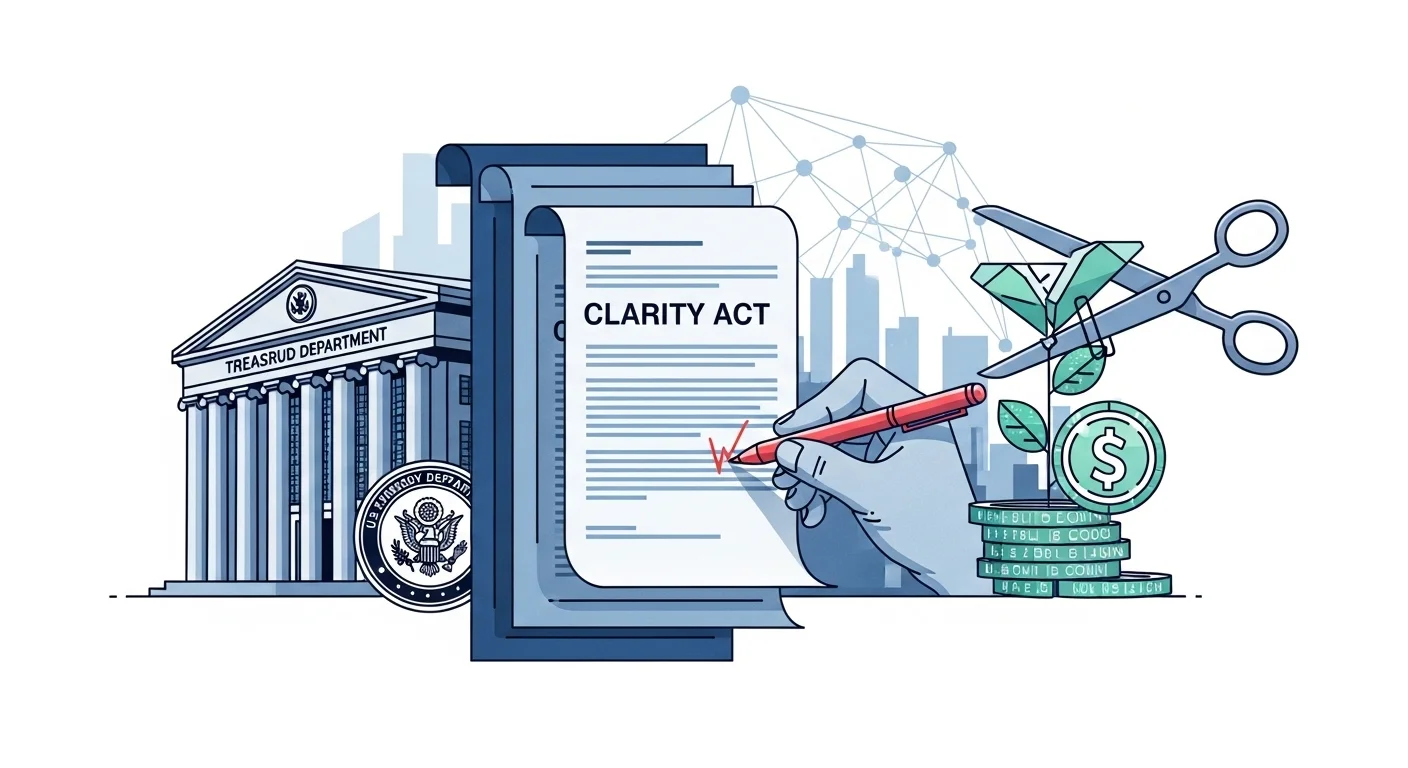
Why Is the CLARITY Act Markup So Hard to Pass?
The CLARITY Act is tricky because it has to merge the permissionless world of crypto with the strict, risk-averse world of traditional banking. The fight isn't about whether to regulate crypto, but how to draw the lines, especially when stablecoins act a lot like bank deposits. The debates show two very different goals: one side wants absolute financial stability, and the other wants innovation and freedom.
The biggest sticking point is the ban on stablecoins offering interest-like rewards. For many, earning yield on stablecoins is the whole point—it makes them a better alternative to low-interest bank accounts. The draft specifically targets yield that looks like a bank deposit.
How Does the Proposed Ban Impact DeFi and Stablecoin Utility?
The goal is to stop massive amounts of money moving from banks into stablecoins. Traditional banks view this as necessary to protect the banking system. They worry that high yields on stablecoins will drain cash from regulated banks into unregulated crypto pools.
But for DeFi, this restriction is a massive roadblock. DeFi relies on offering yield, staking, and lending interest. Calling a yield-bearing stablecoin a "deposit" could kill innovation and limit how useful stablecoins can be.
It's a tough balance: how do you regulate the risks without killing the real economic value being built?
Key Implications of the Proposed Legislation
This draft has some major implications:
- Operational Shifts: Stablecoin issuers might have to completely change how they generate yield to avoid being classified as a bank deposit. They might need more complex collateral or have to partner with regulated banks.
- Market Segmentation: The market might split: heavily regulated stablecoins on one side, and unregulated, experimental protocols on the other.
- Regulatory Clarity (or Paralysis): Even though the goal is clarity, the complex definitions could create loopholes and slow down DeFi adoption.
Google Search Preference
Add Fintech Monster to your preferred sources
Never miss deep, analytical fintech insights. Prioritize our stories in your Google Search, Discover feed, and AI Overviews with one click.
About the Author
Fintech Monster
Fintech Monster is run by a solo editor with over 20 years of experience in the IT industry. A long-time tech blogger and active trader, the editor brings a combination of deep technical expertise and extended trading experience to analyze the latest fintech startups, market moves, and crypto trends.
Related Articles
Recommended
Falcon Finance Launches fUSD: How OCC Regulation and Banking Partnerships Are Rewriting the Stablecoin Landscape
The launch of fUSD, backed by federally chartered Anchorage Digital Bank and governed by OCC compliance, marks a major structural shift, positioning stablecoins as bank-grade, yield-bearing instruments for institutional treasury management.

Kevin Warsh’s Fed Appointment Signals Major Shift in Digital Asset Regulation and Institutional Adoption
Kevin Warsh’s confirmed appointment to the Federal Reserve Board suggests a regulatory shift toward integrating digital assets, potentially leading to clearer stablecoin standards and a more sophisticated view of Bitcoin's role in global finance.
The Regulatory Fault Line: How Senator Warren’s Critique Exposes Systemic Risk in the Digital Asset Landscape
Senator Warren argues that current federal crypto oversight is fragmented and inadequate, risking systemic failure and allowing high-risk activities to evade established banking safeguards.

Franklin Templeton Digital Veteran Takes Helm at StablecoinX: A New Era of Institutional Governance for Stablecoins
The appointment of a veteran from Franklin Templeton to lead StablecoinX signals that major stablecoin infrastructure is maturing into fully regulated financial rails, prioritizing institutional compliance and governance over pure decentralization dogma.

Navigating the Ledger Labyrinth: What Banks Must Evaluate Before Adopting Stablecoins for Cross-Border Settlement
Banks must evaluate stablecoins through a tripartite risk framework—operational resilience, jurisdictional compliance (MiCA/Basel implications), and reserve asset transparency—to ensure seamless integration with existing core banking systems like SWIFT.