Resolv Plans Institutional-Grade Expansion in 2026 After Building Yield Architecture in 2025
Key Takeaways
Decentralized finance platform Resolv Labs shifts its strategic emphasis in 2026 toward institutional integration, diversified asset exposure, and stablecoin-as-a-service infrastructure.
Table of Contents
Key Facts on Resolv Labs' 2026 Roadmap:
- Primary Focus: Transitioning towards institutional integration and tokenized Real World Assets (RWA).
- New Service: Modular "stablecoin-as-a-service" for sovereign stablecoin deployments.
- Goal: Elevating external observability of risk models and establishing institutional trust.
Resolv Labs, a decentralized finance (DeFi) platform focused on yield‑bearing stablecoin architecture, is shifting its strategic emphasis in 2026 toward institutional integration and diversified asset exposure. The protocol’s 2026 roadmap, originally detailed on their blog, announces a transition from foundational yield engineering to broad financial‑infrastructure positioning, part of a deliberate effort to attract durable capital from professional allocators.
This strategic shift follows the strong integration-led TVL expansion detailed in their Q4 2025 Foundation Report.
How Does the Current Stablecoin Architecture Work?
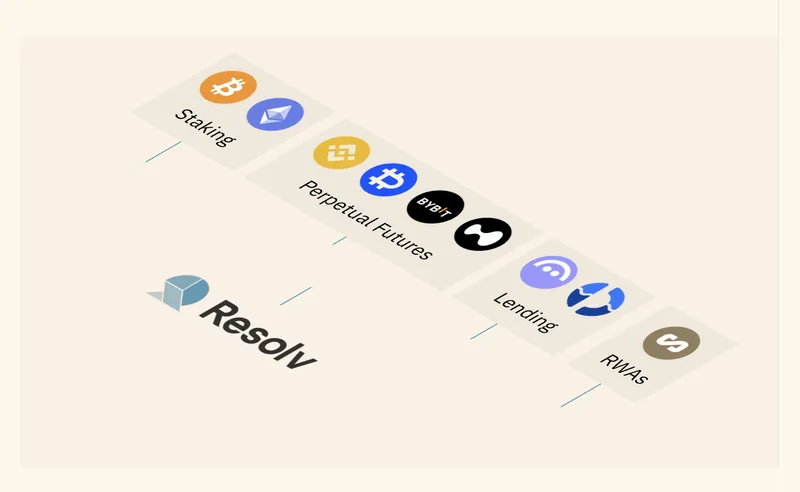
Resolv developed its foundational framework in 2025 by integrating yield sources across multiple decentralized money markets and hedged trading strategies. This framework was structured into four principal collateral clusters:
- Delta-Neutral Layer: Using large liquid assets such as ETH and BTC hedged through perpetual markets.
- DeFi Lending: USD‑denominated allocations from decentralized money markets.
- Yield Alpha: Higher‑yield delta‑neutral positions in less liquid cryptocurrencies with explicit risk limits.
- Real-World Assets (RWA): Tokenized traditional assets for on‑chain exposure.
The flagship stablecoin issued by Resolv is USR, a dollar‑pegged token engineered to generate yield without directional exposure. Governance and value accrual are mediated by the RESOLV token.
 Resolv's roadmap transitions from yield engineering to a platform targeting institutional-grade stability.
What is the Institutional-Grade Reframing?
The 2026 roadmap identifies institutional trust and capital resiliency as the central objectives. Resolv’s strategy frames “prime” infrastructure as having clearly defined risk frameworks, diversified yield sources, and resilient operation under stress.
Resolv plans to expand RWA integration by allocating to additional tokenized investment‑grade vehicles and acting as an underwriting participant. Moreover, Resolv intends to extend its delta‑neutral approach into commodities and equities indices via on‑chain derivatives.
Will There Be Better Transparency and Operational Standards?
A key theme of the roadmap is enhancing external observability of risk models and governance parameters. This includes articulating underwriting logic, exposure limits, and capital allocation decisions. Resolv also plans to engage external risk expertise for periodic review, responding to institutional due diligence concerns.
What is Stablecoin-as-a-Service?
Resolv’s roadmap articulates a second growth vector in modular infrastructure for institutions and businesses seeking to deploy sovereign stablecoins. This “stablecoin‑as‑a‑service” offering leverages Resolv’s integration stack, risk controls, and diversified yield allocation mechanisms. Partners using this infrastructure gain issuance, redemption protocols, and embedded risk limits.
How Are Partnerships Driving Growth?
Resolv emphasizes organic, fee‑aligned revenue growth and positive unit economics. The protocol also highlights a partnership‑driven growth model with collaborators such as ether.fi and others.
What Are the Systemic Implications?
Resolv’s 2026 positioning reflects broader structural shifts within decentralized finance. The rapid growth of tokenized real‑world assets and yield products suggests that DeFi protocols are evolving beyond pure crypto markets into hybridized financial infrastructure. Successfully bridging traditional finance instruments with on‑chain liquidity and risk models could attract significant institutional capital, though it also elevates the need for robust risk and compliance frameworks.
Google Search Preference
Add Fintech Monster to your preferred sources
Never miss deep, analytical fintech insights. Prioritize our stories in your Google Search, Discover feed, and AI Overviews with one click.
About the Author
Fintech Monster
Fintech Monster is run by a solo editor with over 20 years of experience in the IT industry. A long-time tech blogger and active trader, the editor brings a combination of deep technical expertise and extended trading experience to analyze the latest fintech startups, market moves, and crypto trends.
Related Articles
Recommended
Resolv’s Recovery Plan Reveals the Real Structure of DeFi Risk
Resolv's recovery plan for its March 2026 exploit reveals the hidden capital structures inside stable yield products and signals an industry shift toward permissioned institutional architecture.

Polymarket Prepares Trading Engine Overhaul and Native Stablecoin Launch
Polymarket is launching its largest infrastructure upgrade to date, CTF Exchange V2, introducing a hybrid order matching engine and a new native stablecoin called Polymarket USD.
Resolv Stablecoin Incident Exposes Structural Weakness in Off-Chain Controlled DeFi Systems
An in-depth analysis of the multi-stage infrastructure breach at Resolv that resulted in the illicit minting of 80 million USR, highlighting the structural risks of hybrid DeFi systems.

Exploit at Resolv Labs Underscores Structural Risks in Yield-Bearing Stablecoin Architecture
On March 22, 2026, Resolv Labs suffered a major exploit resulting in the unauthorized minting of tens of millions of unbacked USR stablecoins.

Resolv, Centrifuge and Janus Henderson Expand Institutional Credit in DeFi via Aave Horizon Integration
Decentralized finance participants Resolv Labs and Centrifuge announce a structured deployment of up to $100 million of tokenized institutional credit (JAAA) into Aave Horizon lending markets.