SEC Pivots: The Structural Framework for Tokenized Securities and Institutional Adoption
Key Takeaways
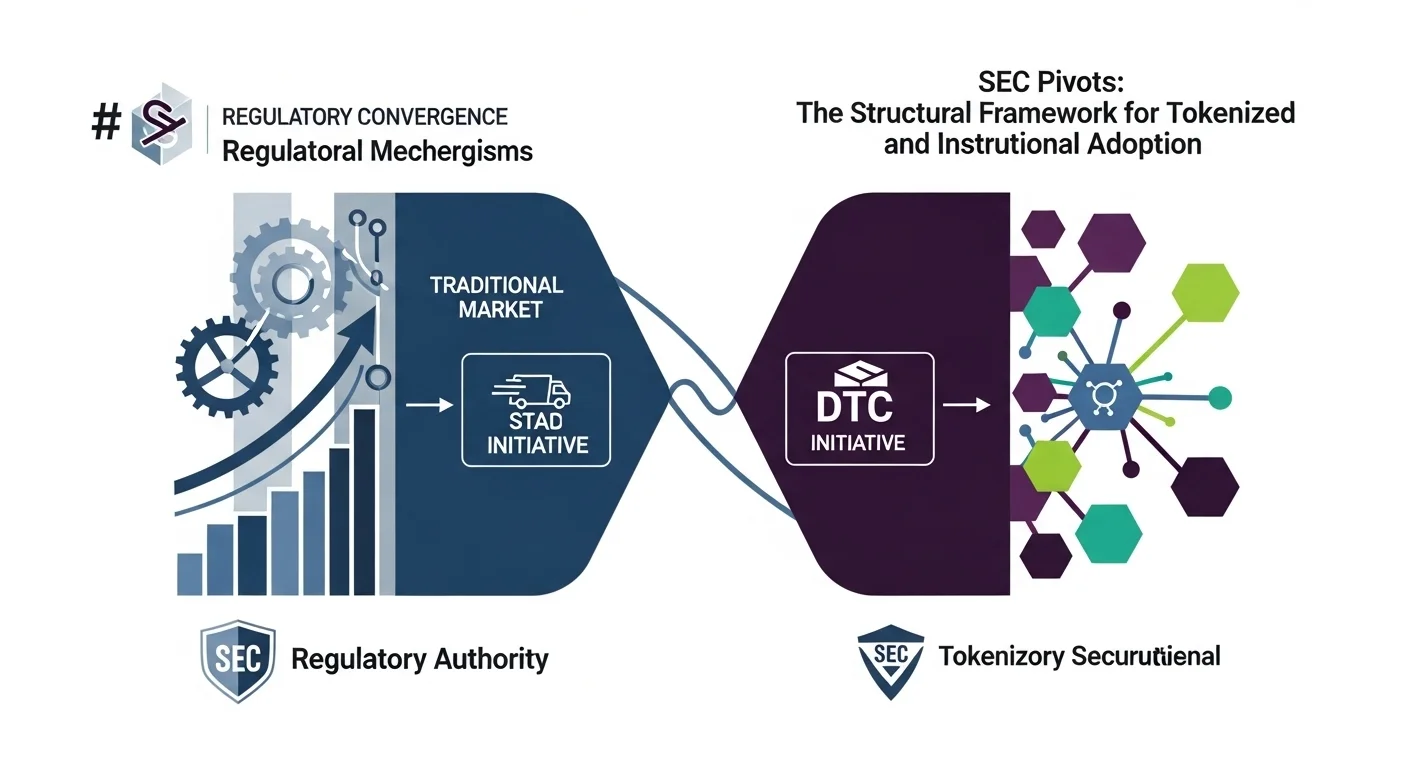
The SEC is moving beyond outright prohibition, establishing a phased, dual-track regulatory framework—involving pilot programs like the DTC initiative—to allow tokenized securities to operate alongside traditional financial mechanisms.
The market narrative surrounding tokenized stocks has undergone a dramatic reversal, shifting rapidly from the initial regulatory skepticism of the SEC toward the methodical development of a defined, structured framework. This pivot represents a pivotal moment in financial technology, signaling that the integration of digital securities is not merely a speculative crypto narrative, but an emerging structural component of institutional capital markets. The current focus is on creating a "dual-track" system that allows tokens to exist and trade while maintaining legal parity and interoperability with traditional clearing mechanisms, a move designed to de-risk and professionalize the entire asset class.
Historically, the SEC's initial response to tokenized assets was one of caution, primarily concerned with enforcing existing securities laws and preventing consumer fraud in decentralized markets. This initial scrutiny viewed many tokens as mere speculative commodities, far removed from the tangible rights and protections afforded by traditional corporate equity. However, the involvement of established market heavyweights—specifically the Depository Trust Company (DTC) and major exchanges like Nasdaq—suggests a fundamental acceptance that the underlying technology can, and should, be integrated into the regulated financial plumbing. This convergence of regulatory authority and market infrastructure is what validates the transition from a fringe crypto experiment to a core piece of global financial architecture.
Why Is the SEC Implementing a Dual-Track System for Digital Securities?
The most crucial regulatory development is the establishment of a controlled, multi-tiered approach rather than a single, sweeping mandate. This dual-track system is meticulously designed to mitigate systemic risk while embracing innovation. In practice, it means that a security, whether it is a physical certificate, a traditional digital record, or a token on a blockchain, can all be represented and cleared. This pragmatic approach addresses the deep-seated concerns of institutional investors—namely, ensuring that the tokens possess the same legal standing and predictable settlement finality as established equities.
The core challenge being solved is the "securitization layer." Before tokenization, the process of issuing fractional shares or cross-border assets required cumbersome, siloed legacy systems. By proposing tokens that are "functionally equivalent" to traditional ownership rights, the SEC is effectively allowing the legal and financial weight of old finance to ride on the efficiency rails of new technology. This drastically reduces the friction and counterparty risk inherent in global transactions, allowing for near-instantaneous, T+0 settlement—a game-changer for modern capital flows.
How Does the Involvement of the DTC and Nasdaq Validate the Market?
The participation of the Depository Trust & Clearing Corp. (DTC) is arguably the most significant piece of evidence regarding institutional acceptance. The DTC is the custodian and settlement backbone for most major US financial assets. When the DTC, alongside Nasdaq, adapts its rules to accommodate tokenized settlement preferences, they are doing more than adjusting rules; they are validating the financial maturity of the asset class.
This suggests that regulatory clarity has shifted from "if" tokenized stocks will be traded, to "how" they will be integrated. The implications for market liquidity are profound. By making tokenized assets fungible and settling them through established clearing houses, the market significantly widens its addressable investor pool. This appeals not just to retail crypto users, but to sovereign wealth funds, pension funds, and traditional asset managers who demand the reliability and compliance of the established financial rails. This is a transition from speculation-driven capital to institutional-grade, regulated capital.
What is the Strategic Value of Tokenized Ownership Beyond Speed?
Beyond the immediate benefits of T+0 settlement and lower costs, the strategic value of tokenized ownership lies in its programmability and fractionalization. Programmatic finance (DeFi 2.0) means that the ownership rights embedded in the token are not merely static records; they can be coded with specific rules, such as automatically distributing dividends, enforcing voting rights, or triggering liquidity events.
This unlocks complex financial instruments that were previously difficult to execute. For instance, a tokenized security could be programmed to automatically vote a certain percentage of shares on a specific corporate action, or to automatically adjust dividend payouts based on verifiable real-world economic indicators. This ability to encode law and agreement into code represents the next frontier of asset management, offering levels of transparency and efficiency that no traditional physical ledger can match.
Key Facts
- Regulatory Mechanism: The anticipated framework is an 'innovation exemption' or a pilot program, allowing controlled testing of tokenized securities without destabilizing existing market infrastructure.
- Core Infrastructure Involvement: The integration of the Depository Trust Company (DTC) and exchanges like Nasdaq validates the technology for institutional use.
- Efficiency Gain: The technology promises to move settlement timelines from multiple business days to near real-time (T+0), dramatically reducing counterparty risk.
- Investor Shift: The market is shifting focus from simply digitalizing assets to radically overhauling the process of asset ownership and exchange.
Google Search Preference
Add Fintech Monster to your preferred sources
Never miss deep, analytical fintech insights. Prioritize our stories in your Google Search, Discover feed, and AI Overviews with one click.
About the Author
Fintech Monster
Fintech Monster is run by a solo editor with over 20 years of experience in the IT industry. A long-time tech blogger and active trader, the editor brings a combination of deep technical expertise and extended trading experience to analyze the latest fintech startups, market moves, and crypto trends.