Silicon Sovereignty: Baidu’s $50 Billion Play to Dominate the AI Chip Landscape
Key Takeaways
Baidu’s semiconductor division, Kunlunxin, is seeking a $50 billion valuation in Hong Kong to secure domestic hardware independence and optimize the "Ernie" LLM ecosystem through a unique pre-purchase investment model.
Table of Contents
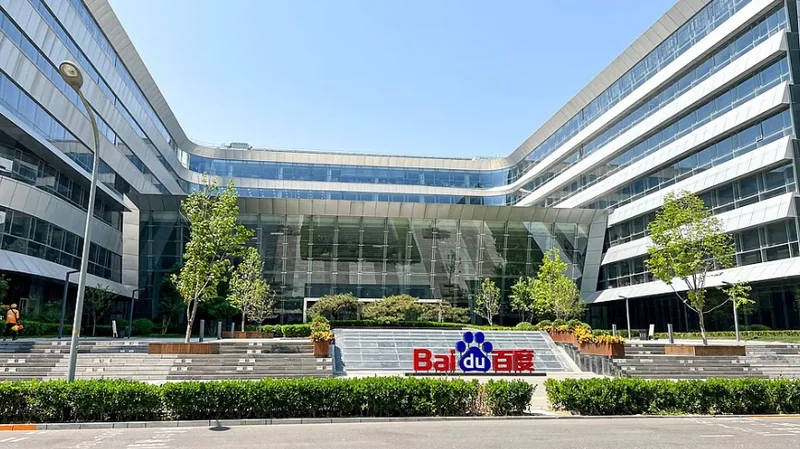
Baidu is making a high-stakes move that could fundamentally redefine the hierarchy of AI infrastructure in East Asia. By preparing its semiconductor division, Kunlunxin, for an ambitious $50 billion IPO in the Hong Kong market, Baidu is signaling a transition from a software powerhouse to a fully integrated vertically-aligned hardware and software giant. This isn't just a capital play; it is a strategic move to insulate its proprietary AI technologies from global supply chain volatility and international trade restrictions that have complicated access to high-end Western silicon.
The backdrop for this maneuver is the intensifying "chip war" and the subsequent push toward technological self-sufficiency in domestic markets. As reliance on external manufacturers becomes a liability, Kunlunxin represents Baidu’s internal fortress—a way to ensure that the hardware layer of their ecosystem is as robust as their software layer. By developing proprietary silicon, Baidu intends to offer a tailored environment where its "Ernie" large language models can perform with deeper optimization than they would on standardized third-party chips from global giants like NVIDIA or AMD.
Why is the $50 billion valuation so aggressive for a semiconductor unit?
The massive price tag reflects a premium on what industry insiders call "sovereign technology." In the current geopolitical climate, the ability to manufacture and supply high-performance AI chips independently of Western-centric manufacturing hubs carries a significant strategic premium. Investors are not just valuing the current production capacity of Kunlunxin; they are pricing in the necessity of domestic infrastructure. As enterprises seek to insulate themselves from potential trade barriers, a reliable, locally controlled supply chain for AI components becomes invaluable. The $50 billion figure captures the massive demand for high-performance computing (HPC) and the security that comes with internalizing the hardware stack.
What makes the "pre-purchase" investment model so unique?
One of the most fascinating aspects of the Kunlunxin IPO is the innovative financial structure involving a pre-purchase commitment. In this model, potential investors are required to commit to purchasing specific quantities of semiconductors as a condition of their equity stake. This serves two primary purposes: first, it provides Kunlunxin with a guaranteed revenue forecast and immediate market traction—a critical factor when trying to justify a multi-billion dollar valuation in the volatile chip sector. Second, it offers investors a dual value proposition. They aren't just buying into a high-growth tech company; they are securing an immediate, tangible supply of hardware required to build out their own AI capabilities, effectively "locking in" their role as early adopters within the ecosystem.
Key Facts
- Target Valuation: $50 billion for the Kunlunxin IPO.
- Primary Exchange: Hong Kong is the designated listing site due to its status as a global gateway for Asian capital.
- The Core Objective: Establishing vertical integration to power "Ernie" large language models (LLMs) with optimized hardware.
- Key Strategy: Use of a "pre-purchase" model to secure long-term contracts and guaranteed revenue at the point of investment.
- Competition Context: Direct competition with industry leaders like NVIDIA and AMD, countered by specific optimization for domestic software environments.
How does Kunlunxin position itself against global giants?
While it is impossible to ignore the dominance of firms like NVIDIA and AMD in the global market, Kunlunxin’s strategy isn't necessarily about out-generalizing them; it is about specialized optimization. By owning the hardware stack, Baidu can fine-tune the interaction between the silicon and its specific neural network architectures. This minimizes "translation" errors that often occur when running custom models on off-the-shelf chips, leading to potentially lower operational costs and higher inference speeds for large-scale deployments.
The strategic role of Hong Kong in this expansion
Choosing Hong Kong as the listing venue is a masterstroke in capital navigation. It provides a familiar regulatory environment while serving as a bridge to international institutional investors who are looking for exposure to the massive growth in AI infrastructure within Asia. By leveraging Hong Kong, Kunlunxin can tap into the liquidity necessary to fund heavy R&D and manufacturing costs while maintaining its foothold as a domestic champion. This dual-track strategy allows them to build the capital needed to compete on both local scale and global quality.
Expert Commentary
From a trading perspective, the "pre-purchase" model is the most intriguing variable in this equation. It effectively de-risks the IPO by creating an immediate, non-speculative demand for the product. When a company can prove its customers are already committed to buying the hardware at the point of entry, it drastically reduces the volatility typically associated with early-stage semiconductor manufacturing investments.
Furthermore, we should view Kunlunxin not just as a chip maker, but as a strategic "moat" for Baidu's software dominance. In the AI era, whoever controls the hardware has a massive advantage in margins and scalability. By creating a closed-loop system where their own chips are perfectly tuned to run their proprietary LLMs, Baidu is attempting to insulate its profitability from the pricing power of international chip giants. For investors, this represents a play on "sovereign tech" premiums—where the value isn't just in the silicon itself, but in the freedom and stability that having homegrown hardware provides in an increasingly fractured global market.
Google Search Preference
Add Fintech Monster to your preferred sources
Never miss deep, analytical fintech insights. Prioritize our stories in your Google Search, Discover feed, and AI Overviews with one click.
About the Author
Fintech Monster
Fintech Monster is run by a solo editor with over 20 years of experience in the IT industry. A long-time tech blogger and active trader, the editor brings a combination of deep technical expertise and extended trading experience to analyze the latest fintech startups, market moves, and crypto trends.
Related Articles
Recommended
SK Hynix Targets Nasdaq Listing to Fuel the High-Band1 Memory Revolution
SK Hynix has filed an F-1 registration statement to list on the Nasdaq under ticker 'SKHY', aiming to secure capital for next-generation high-bandwidth memory production.

Beyond Silicon: How SK Hynix and Samsung are Engineering the Architecture of Global Intelligence
SK Hynix and Samsung Electronics are launching a massive $713 billion expansion to transition from hardware manufacturers to the primary architects of global AI infrastructure.

Beyond the Hype Cycle: XDOF's $1.2B Valuation Signals AI Infrastructure Maturity
XDOF's rapid pursuit of a $1.2B valuation highlights the shift in deep tech investment from generalized AI models to specialized, proprietary industrial data infrastructure necessary for real-world robotics automation.

Beyond Apps: How China is Redefining Smartphones via Agentic AI
The smartphone industry is pivoting from an application-centric model to an agentic architecture where AI agents act as the primary interface for complex tasks and seamless financial transactions.

The Architecture of Trust: How EdVisorly’s Series A Signals a Shift in Automated Data Normalization
EdVisorly’s $13.3 million Series A investment highlights the massive market potential for AI-driven data normalization, providing a technical blueprint for solving "messy" data problems in both education and cross-border financial compliance.