Solving the Identity Crisis of Autonomous Agents: Oak’s $60M Mission to Secure the Agentic Economy
Key Takeaways
Oak has emerged from stealth with a $60 million seed round to build the verification layer for autonomous agents, solving the "identity mess" in machine-to-machine interactions.
The transition of artificial intelligence from passive conversational tools to active, autonomous "do-bots" has reached a critical inflection point that the current internet architecture is unprepared to handle. As enterprises begin deploying AI agents to manage complex workflows—ranging from supply chain logistics to automated financial transactions—a massive security gap has emerged: the lack of a verifiable identity for non-human actors. Oak’s recent emergence from stealth, backed by a substantial $60 million seed funding round, signals a major shift toward building the essential infrastructure required to govern these interactions. By providing "verifiable identities" for agents, Oak aims to become the foundational trust layer in an era where human intent must be preserved even as it is executed by autonomous machines.
For years, the digital world has relied on protocols like OAuth and SAML to verify that a human user is who they claim to be before granting access to data or services. However, these frameworks were not designed for delegated agency. When an AI agent performs a multi-step task across various platforms, it often requires broad permissions that create a "master key" risk; if the agent acts outside of its intended scope, there is no clear way to distinguish between a valid user command and an autonomous error or malicious exploit. This creates a significant liability for organizations, particularly when trying to maintain compliance with rigorous standards like GDPR or SOC2, which demand precise audit trails for every instance of data access.
Why is the "identity mess" a roadblock for enterprise AI?
The core challenge facing the modern enterprise isn't just whether an AI can perform a task, but whether that AI has the legal and technical authority to do so. In current systems, if an autonomous agent manages a payment gateway, the system often sees the agent’s activity as a direct action from the user. This lack of granularity means that if an agent is compromised via prompt injection or a logic error, it could execute actions that are technically "authorized" by its broad permissions but were never intended by the human principal.
Oak’s mission focuses on breaking this cycle by introducing a protocol where agents possess unique, scoped identities. Instead of giving an AI "all-or-nothing" access to a corporate account, Oak’s infrastructure allows for the creation of granular tokens that define exactly what an agent can do, which systems it can touch, and the specific timeframe in which those actions are valid. This creates a "sandbox of authority," ensuring that even if an agent malfunctions or is hijacked, its ability to cause systemic damage is strictly limited by its verified identity profile.
How does Oak differentiate from traditional authentication?
While standard providers focus on the "who" (the human), Oak focuses on the "on whose behalf." This distinction is critical for the emerging Agentic Economy. By establishing a clear chain of custody, Oak allows enterprises to map every automated action back to a specific human authorization. This isn't just a security upgrade; it is a compliance necessity. For companies operating under SOC2 frameworks, having a verifiable record of why an AI was allowed to access sensitive customer data is the difference between seamless operation and massive regulatory fines.
Furthermore, Oak’s approach facilitates interoperability. As different companies build different types of agents—one for scheduling, one for data analysis, and another for procurement—a standardized identity layer allows these disparate systems to interact securely. Without such a standard, firms are forced to maintain siloed permissions, creating a fragmented and inefficient operational environment that hinders the scalability of autonomous workflows.
Key Facts
- Oak emerged from stealth with $60 million in seed funding.
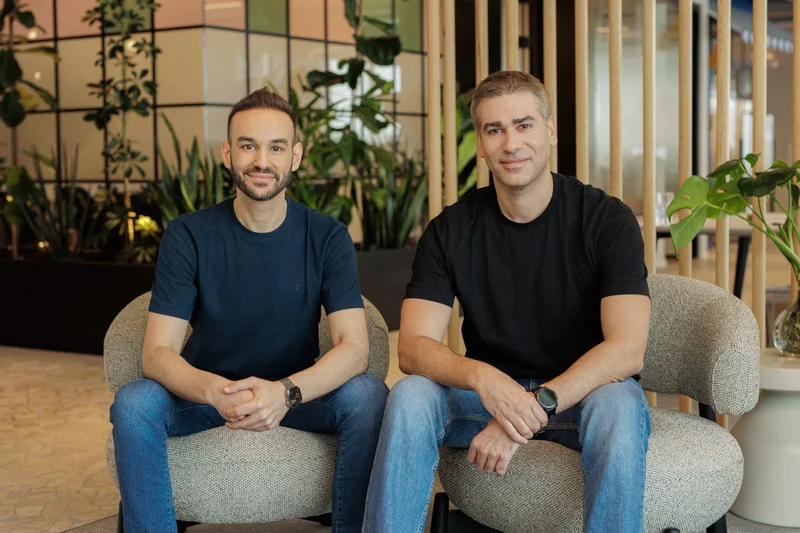
- The company was co-founded by Shai Morag, a serial entrepreneur known for scaling complex technical products.
- Oak’s core mission is to provide "verifiable identities" for autonomous AI agents.
- The platform addresses the limitations of traditional OAuth and SAML protocols in agentic contexts.
- The infrastructure aims to satisfy regulatory requirements like GDPR and SOC2 by providing clear audit trails for machine-to-machine (M2M) communication.
The strategic shift toward a "Do-Bot" economy
The investment into Oak reflects a broader trend where investors are moving away from simple AI wrappers and toward the "picks and shovels" of the AI revolution. We are moving away from an era of "Chatbots"—where humans ask questions to machines—tow_towards "Do-bots," where humans assign goals to machines that then execute them autonomously across the web. In this reality, identity is the ultimate currency.
By positioning itself as the infrastructure layer for agentic trust, Oak is solving a primary hurdle for the enterprise adoption of AI: the liability gap. When an autonomous system acts on behalf of a human, there must be a verifiable "handshake" that confirms the machine’s authority. By creating this mechanism, Oak provides the fail-safe required to navigate the risks of prompt injection and unauthorized data access. The successful implementation of such a layer will likely become a prerequisite for any enterprise-grade AI application involving financial transactions or personal identifiable information (PII).
Expert Commentary
From a market perspective, the $60 million seed round for Oak indicates that heavy hitters in the VC space recognize that identity is the "missing piece" in the current AI stack. We are seeing a transition from experimental AI to production-grade Agentic workflows. In these environments, trust cannot be an assumption; it must be architected into the code.
Oak is essentially building the "identity rails" for the next decade of internet infrastructure. Just as Stripe revolutionized how we handle payments and AWS redefined how we access compute power, Oak is targeting the foundational layer of agency. For any firm looking to integrate autonomous agents into their core operations, the ability to prove—via a verifiable identity protocol—that an agent stayed within its "sandbox" is not just a luxury; it is the only way to scale while maintaining compliance and security in a high-stakes environment. The company isn't just selling a tool; they are building the trust infrastructure for the autonomous era.
Google Search Preference
Add Fintech Monster to your preferred sources
Never miss deep, analytical fintech insights. Prioritize our stories in your Google Search, Discover feed, and AI Overviews with one click.
About the Author
Fintech Monster
Fintech Monster is run by a solo editor with over 20 years of experience in the IT industry. A long-time tech blogger and active trader, the editor brings a combination of deep technical expertise and extended trading experience to analyze the latest fintech startups, market moves, and crypto trends.