Sui Shatters Scalability Limits: Decoding the Architecture Behind 6 Million TPS
Key Takeaways
Sui's public mainnet successfully achieved a peak of over 6 million transactions per second (TPS), demonstrating the power of its object-centric model and parallel execution engine to solve core scalability hurdles.
The announcement that the Sui blockchain has hit a staggering peak transaction per second (TPS) exceeding 6 million on its public mainnet is more than just a headline-grabbing statistic; it represents a fundamental shift in how we approach decentralized infrastructure. For years, the industry has grappled with the "scalability trilemma," attempting to balance security, decentralization, and speed. By achieving these numbers, Sui isn't just moving the needle—it is redefining the ceiling for what a high-performance Layer 1 protocol can achieve in a live environment, positioning itself as a formidable backbone for global institutional adoption.
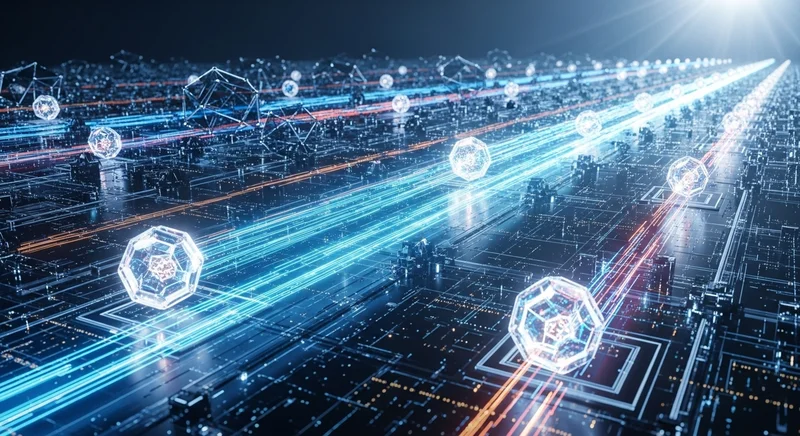
To understand the magnitude of this milestone, one must look back at the limitations of traditional account-based systems. Most legacy blockchains process transactions linearly, meaning each transaction must wait for the one before it to be verified and finalized. This creates significant bottlenecks during periods of high demand, leading to the dreaded "gas spikes" and network congestion that have historically hindered mainstream adoption. Sui’s architecture departs from this methodology entirely, utilizing a unique design philosophy that treats data as individual objects rather than monolithic accounts, allowing the network to process multiple independent transactions simultaneously without compromising integrity.
Why is an object-centric model such a game changer?
Most blockchains, including those built on the Ethereum Virtual Machine (EVM), function by updating account balances and states in a sequential chain. Because the system cannot guarantee that two transactions won't conflict unless they are processed one by one, the network becomes a single-lane road during peak usage. Sui’s transition to an "object-centric" model fundamentally changes this dynamic. By storing data in individual objects, the protocol can identify which actions do not affect each other.
Imagine a digital marketplace: if User A is buying a skin from Seller X, and User B is purchasing a separate item from Seller Y, there is no logical reason for these transactions to wait for one another. Sui’s infrastructure recognizes this lack of conflict. This allows the network to function like a multi-lane highway where transactions headed toward different "destinations" can travel at full speed simultaneously. This distinction is critical for high-frequency environments like decentralized exchanges (DEXs) and gaming metaverses where millisecond latency can be the difference between success and failure.
How does Move provide a safety net for enterprises?
A major hurdle for corporate entry into the blockchain space has been the inherent risks associated with smart contract vulnerabilities, particularly reentrancy attacks common in the Solidity environment. Sui addresses this by utilizing the Move programming language. Unlike many other languages used in web3, Move was engineered specifically for blockchain environments with a "resource-oriented" philosophy.
In Move, assets are treated as resources that cannot be copied or accidentally duplicated; they can only be moved from one location to another. This inherent logic provides a layer of protection against common exploits. Because Move is optimized for the hardware level, it facilitates faster execution and higher security at the protocol layer. For enterprises looking to move real-world assets (RWA) onto the chain, this technical guardrail is essential for compliance and risk management.
What does 6 million TPS mean for the future of DeFi?
The practical implications of such high throughput are most visible in the realm of Decentralized Finance (DeFi). One of the greatest "pain points" for professional traders has been the window for front-running and sandwich attacks. In a linear processing model, savvy bots can see a transaction waiting in the mempool and "jump" ahead of it by paying a higher fee.
Because Sui utilizes a parallel execution engine, the window for these manipulations is significantly narrowed. When transactions are processed simultaneously based on non-conflicting data, there is less opportunity for a malicious actor to intercept or manipulate an order. Additionally, the scalability provides high-frequency traders with near-instant finality, making it possible to build sophisticated automated market makers (AMMs) that behave more like traditional centralized exchange (CEX) counterparts while remaining fully decentralized.
How does Sui compare to other high-performance networks?
While other Layer 1 solutions, most notably Solana, have achieved impressive speeds through Proof of History and parallel execution, Sui offers a distinct architectural path. While some networks rely on "sharding"—splitting the network into pieces to increase throughput—Sui's design allows for horizontal scaling. This means that as more nodes are added to the network, the capacity increases proportionally without requiring the complex cross-shard communication overhead that can complicate decentralization and security.
Key Facts
- Sui’s public mainnet achieved a peak transaction per second (TPS) exceeding 6 million.
- The network utilizes an object-centric model for data storage instead of traditional account-based models.
- A parallel execution engine allows the system to process non-conflicting transactions simultaneously.
- Move is used as the primary programming language, offering "resource-oriented" security against reentrancy attacks.
- Infrastructure provides protection against gas spikes and network congestion during high demand.
- Parallel processing reduces the windows available for front-running and sandwich attacks in DeFi.
- The architecture supports horizontal scaling where additional nodes increase capacity without compromising decentralization.
Expert Commentary
From a trading perspective, the move toward 6 million TPS is less about raw "speed" and more about predictability. In the institutional space, volatility is often exacerbated by infrastructure failures; when a network becomes congested, liquidity dries up and slippage spikes. By solving for gas stability through parallel execution, Sui addresses one of the primary barriers to entry for institutional market makers.
The integration of the Move language provides a level of "developer confidence" that many standard EVM chains struggle to offer. When you move from a system where security is often an afterthought of the smart contract code to a system where security is baked into the language itself, the risk profile for deploying large-scale capital changes significantly. While the market remains crowded with L1 contenders, those who can prove they can handle millions of transactions while maintaining high-integrity "resource" safety are the ones who will capture the enterprise migration.
Google Search Preference
Add Fintech Monster to your preferred sources
Never miss deep, analytical fintech insights. Prioritize our stories in your Google Search, Discover feed, and AI Overviews with one click.
About the Author
Fintech Monster
Fintech Monster is run by a solo editor with over 20 years of experience in the IT industry. A long-time tech blogger and active trader, the editor brings a combination of deep technical expertise and extended trading experience to analyze the latest fintech startups, market moves, and crypto trends.