Taurus Secures MiFID II License: De-risking the Future of Tokenized Assets in the EU
Key Takeaways
Swiss digital asset infrastructure leader Taurus has secured a comprehensive MiFID II investment firm license, unlocking fully regulated trading and settlement of tokenized securities across the European Union.
Table of Contents
Swiss digital asset technology powerhouse Taurus has achieved a major regulatory milestone, securing a comprehensive investment firm license under the European Union’s Markets in Financial Instruments Directive II (MiFID II). This regulatory authorization represents a watershed moment for the institutional tokenization sector, establishing a compliant, institutional-grade bridge that enables regulated banks, asset managers, and financial market infrastructures (FMIs) to issue, trade, and settle tokenized securities seamlessly across all 27 EU member states.
The digital asset industry has long operated under a bifurcated regulatory reality. While the EU’s Markets in Crypto-Assets (MiCA) regulation established comprehensive rules for utility tokens and stablecoins, it explicitly excluded financial instruments—such as tokenized equities, corporate bonds, and structured debt funds—which remain firmly within the purview of traditional securities laws under MiFID II and the EU DLT Pilot Regime. By securing full MiFID II authorization, Taurus effectively eliminates the legal uncertainty that has historically prevented tier-1 institutional balance sheets from deploying multi-billion-euro capital allocations into tokenized real-world assets.
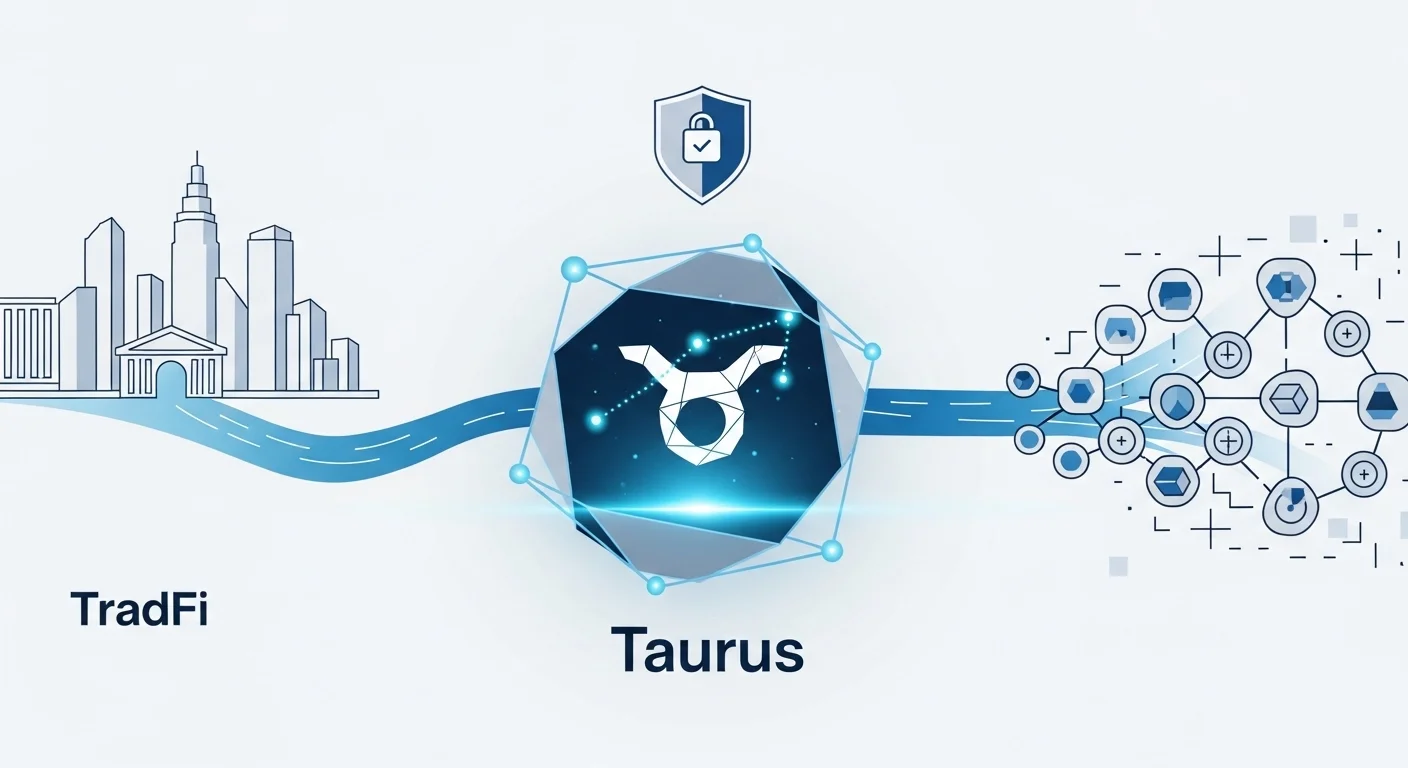
How does the Taurus TDX platform integrate regulated securities with public blockchain rails?
The operational centerpiece of Taurus’s regulatory offering is Taurus Digital Exchange (TDX), a fully regulated multilateral trading facility (MTF) engineered specifically for digital securities and private assets. TDX operates in direct synergy with Taurus-PROTECT (an institutional-grade HSM custodial solution) and Taurus-CAPITAL (a smart contract asset lifecycle management engine), creating a unified end-to-end technology stack for institutional clients.
Under the MiFID II framework, TDX enables direct market access, automated continuous order matching, and multilateral trading of tokenized assets with atomic Delivery-versus-Payment (DvP) settlement. Issuers can tokenize equity, debt, and real estate assets on both private ledgers and public blockchains (including Ethereum, Polygon, and Tezos) while TDX ensures strict compliance with anti-money laundering (AML), market abuse regulation (MAR), and best execution mandates. This hybrid architecture gives institutions the liquidity and composability of distributed ledgers alongside the regulatory finality of a regulated European exchange.
Key Facts
- Regulatory Milestone: Taurus awarded full MiFID II investment firm license, enabling pan-European secondary market trading of tokenized securities.
- Core Technology: TDX regulated trading platform integrated with Taurus-PROTECT custody and Taurus-CAPITAL token lifecycle infrastructure.
- Institutional Client Base: Trusted by tier-1 global institutions including Deutsche Bank, Credit Suisse (UBS), Santander, and Arab Bank Switzerland.
What are the competitive and macroeconomic ramifications for European capital markets?
Taurus’s regulatory expansion directly accelerates the modernization of Europe’s fragmented capital markets. Private debt and venture-backed equity markets across Europe have historically suffered from severe illiquidity, manual paper-based clearing workflows, and high administrative overhead, locking out mid-market enterprises and retail wealth managers from efficient capital formation.
By tokenizing these illiquid assets and listing them on a regulated MiFID II platform, Taurus reduces issuance costs by up to 80% and unlocks instant secondary market liquidity. Furthermore, this moves the European Union a significant step closer to realizing its long-standing vision of a Capital Markets Union (CMU). Regulated digital asset rails allow a German asset manager to seamlessly invest in a tokenized French infrastructure bond with zero cross-border clearing friction, unifying continental liquidity pools under a single cryptographic and regulatory framework.
Expert Commentary
Having analyzed European financial regulation and market plumbing through the rollouts of MiFID I, MiFID II, and post-financial-crisis Basel accords, Taurus’s licensing is one of the most substantial structural developments in the digital asset space this decade. For years, crypto enthusiasts claimed that technology would simply bypass regulation; the reality on Wall Street and in Frankfurt is that institutional capital only moves when regulation provides an airtight, unambiguous sandbox.
Taurus understood this dynamic early. Instead of chasing fleeting offshore retail trading volumes, they methodically spent years building bank-grade custody technology and courting the most conservative financial regulators in Switzerland and the European Union. Backed by strategic investments from Deutsche Bank and Arab Bank, Taurus is now positioned as the indispensable infrastructure provider for European digital finance.
Looking forward, I predict that traditional European stock exchanges that have delayed their distributed ledger transitions will be forced to acquire or partner with licensed fintechs like Taurus to remain relevant. The future of securities trading is continuous, atomic, and tokenized. Taurus has positioned itself as the undisputed tollbooth operator for that future.
Google Search Preference
Add Fintech Monster to your preferred sources
Never miss deep, analytical fintech insights. Prioritize our stories in your Google Search, Discover feed, and AI Overviews with one click.
About the Author
Fintech Monster
Fintech Monster is run by a solo editor with over 20 years of experience in the IT industry. A long-time tech blogger and active trader, the editor brings a combination of deep technical expertise and extended trading experience to analyze the latest fintech startups, market moves, and crypto trends.
Related Articles
Recommended
How Asset-Backed Lending Is Reshaping European Institutional Finance
Fuels Capital addresses Europe's institutional financing gap by securitizing diverse revenue streams into specialized Asset-Backed Lending (ABL) solutions, optimizing capital access outside traditional banking constraints.

AMC CEO vs. Robinhood: Why Institutional Leaders Are Shutting Down Stock Tokens
The conflict between AMC leadership and Robinhood signals a fundamental industry pivot, suggesting that traditional brokerage models are rejecting the immediate deployment of pure tokenized equity due to profound regulatory risk regarding securities classification.

The Architecture of Capital: How Financial Giants are Mandating Fully Electronic IPOs
The global financial industry is mandating a shift toward fully electronic IPOs by standardizing the entire capital raising lifecycle using advanced protocols like FIX and digital securities rails.

Robinhood’s L2 Ambition: How Infrastructure Overhaul is Reshaping Retail Brokerage
StoneX predicts a significant upside for Robinhood by highlighting its strategic shift towards deploying a proprietary Layer 2 chain to enable complex tokenized assets and decentralized prediction markets.

Block's Mega Bet: Why Jack Dorsey Is Betting Big on Federal Bank Charters
Block’s pursuit of a federal bank charter signals a pivot from mere payment processing to owning core banking infrastructure, mitigating third-party risk and elevating its systemic importance within the financial ecosystem.