The Battle Over Clarity: Why the Garlinghouse-Dimon Clash Defines the Future of Stablecoins
Key Takeaways
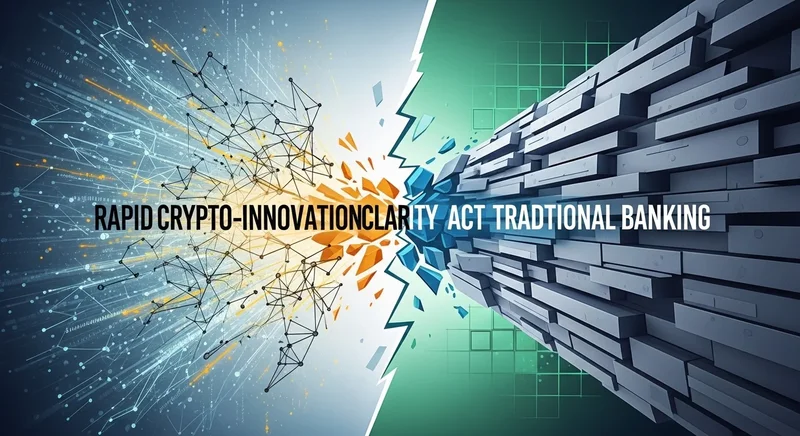
The public clash between Ripple and JPMorgan over the CLARITY Act highlights a fundamental divide between rapid crypto-innovation and the "safety-first" mandates of traditional banking.
The digital asset landscape is heating up, and the friction is no longer just about technology, but about who gets to write the rulebook for the next era of global finance. The public exchange between Ripple CEO Brad Garlinghouse and JPMorgan Chase CEO Jamie Dimon regarding the CLARITY Act has emerged as a definitive litmus test for the U.S. financial system's readiness to integrate blockchain. This is a collision between the "move fast" ethos of the crypto-native world and the "protect at all costs" doctrine of established central banking institutions.
This conflict comes down to what "clarity" really means. For proponents of the digital asset space, the CLARITY Act represents the necessary legislative infrastructure to separate commodities from securities, ending the era of "regulation by enforcement." For traditional giants like JPMorgan, any move toward simplifying these definitions is viewed as a potential backdoor for less-regulated entities to bypass rigorous Anti-Money Laundering (AML) and Know Your Customer (KYC) protocols. This debate will likely dictate whether stablecoins—and specifically Ripple's RLUSD initiative—will be permitted to function as primary settlement layers or remain relegated to the fringes of the "experimental" market.
Why is the "Clarity" debate so intense right now?
The problem is how the government defines a digital asset. Garlinghouse argues that without specific legislative boundaries, innovation is suffocated because firms cannot accurately predict their compliance obligations. In his view, the CLARITY Act would provide the roadmap necessary for institutional players to move into stablecoins with confidence. Conversely, Jamie Dimon’s stance is rooted in the fear of "regulatory arbitrage." From a banking perspective, providing "clarity" could be interpreted as diluting the stringent oversight that prevents bad actors from infiltrating the global financial infrastructure. The question isn't just whether crypto is safe, but whether the proposed legislation offers safety at the expense of utility
Google Search Preference
Add Fintech Monster to your preferred sources
Never miss deep, analytical fintech insights. Prioritize our stories in your Google Search, Discover feed, and AI Overviews with one click.
About the Author
Fintech Monster
Fintech Monster is run by a solo editor with over 20 years of experience in the IT industry. A long-time tech blogger and active trader, the editor brings a combination of deep technical expertise and extended trading experience to analyze the latest fintech startups, market moves, and crypto trends.