The Bipedal Dilemma: Why Humanoid Robots Face Friction in the Reality of Modern Warfare
Key Takeaways
While humanoid robots offer unique navigation in human environments, the attrition-heavy reality of modern conflict favors mass-producible wheeled platforms that offer superior reliability and cost-efficiency.
The integration of autonomous robotics into modern warfare has reached a critical inflection point, particularly within the Ukrainian theater where machines are moving from experimental prototypes to essential components of battlefield logistics and engagement. While there is immense interest—and even initial authorization—for humanoid robot development in these zones, the technical reality of conflict creates a sharp divide between "aspirational" robotics and "practical" warfare. The core question facing developers today is whether it is better to build a machine that looks like a human or one that functions as effectively as possible within the constraints of high-intensity attrition.
Historically, the push for bipedal movement in robotics was driven by the necessity of navigating a world designed specifically for humans. In urban environments, a humanoid frame allows a robot to navigate stairs, manipulate handles on doors, and utilize tools engineered for human hands. However, the engineering complexity required to maintain balance on two legs while carrying heavy payloads—such as batteries, sensors, or ammunition—is immense. To achieve this, developers must create sophisticated actuators, high-density power sources, and complex gait algorithms that are currently difficult to mass-produce at a cost-effective rate for use in large-scale conflict zones.
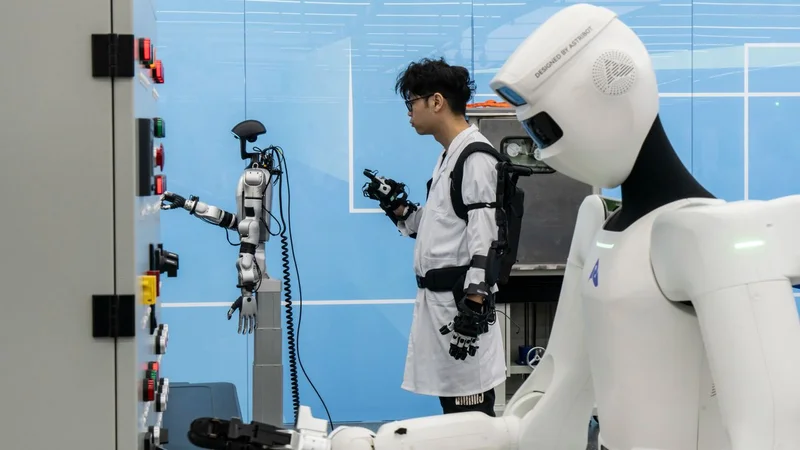
Why is the humanoid form factor so difficult to scale for front lines?
The primary hurdle for humanoids in a combat zone isn't just the difficulty of walking; it is the economic and mechanical cost of maintaining that ability under stress. In modern conflict, particularly those characterized by high attrition, the value of a robotic unit is inversely proportional to its complexity. A humanoid robot capable of complex movement often costs hundreds of thousands of dollars to manufacture. Such a machine becomes an extremely "high-value target." If a $300,000 humanoid is destroyed in a scouting mission that could have been performed by ten $30,000 wheeled units, the strategic loss is catastrophic.
Furthermore, the mechanics of bipedal movement are inherently less efficient for heavy work. Moving on wheels requires significantly less power than balancing a bipedal frame, allowing more energy to be diverted toward sensor processing and communication. Additionally, a wheeled platform provides a lower center of gravity, making it far less likely to be overturned by artillery blast waves or during transport over rugged terrain. While humanoids excel in the "interaction" category—such as navigating an apartment building or warehouse—they suffer from significant mechanical overhead that makes them less ideal for the "execution" phase of front-line combat.
What advantages do wheeled and tracked systems offer?
When analyzing the feasibility of mass production, wheeled or tracked platforms emerge as the dominant choice for immediate military application. These systems can be manufactured using standardized components, allowing for rapid deployment in swarms. From an engineering standpoint, a simple motor in a wheeled vehicle is significantly easier to repair in the field than a complex, multi-axis actuator in a humanoid limb. A failed actuator often renders the entire unit immobile, whereas a damaged wheel or track can frequently be bypassed or repaired with basic tools.
Moreover, wheeled systems have the capacity to carry larger batteries and more robust sensor suites without compromising their structural integrity. Because they do not need to expend massive amounts of power just to stay upright, they can operate for longer periods away from charging stations. While both bipedal and wheeled robots rely on advanced Artificial Intelligence—specifically Simultaneous Localization and Mapping (SLAM), object recognition, and pathfinding—the "brain" does not strictly require a human-shaped body to be effective. A wheeled robot equipped with high-level AI can perform roughly 90% of the same tasks as a humanoid in a combat zone without the prohibitive mechanical costs of walking.
Key Facts
- Humanoid robots offer unique advantages in navigating stairs and interacting with tools designed for human hands.
- Bipedal designs face extreme challenges in maintaining balance while carrying heavy payloads in high-risk zones.
- The "attrition model" of modern warfare favors low-cost, mass-producible units over expensive, complex machines.
- Wheeled systems offer superior stability due to a lower center of gravity compared to bipedal frames.
- Moving on wheels is significantly more energy-efficient than maintaining a bipedal gait.
- Wear and tear on wheeled components is easier to manage in field conditions than sophisticated humanoid actuators.
- Both robot types utilize similar AI stacks for navigation, object recognition, and obstacle avoidance.
- A high-level AI can enable a simple wheeled frame to perform most tasks required of a humanoid in a combat zone.
The path toward "Pragmatic Automation"
The current trajectory suggests a bifurcation in the robotics market. We are likely moving toward a "pragmatic automation" model where humanoids will find their niche in specialized roles, such as search and rescue (SAR), high-end logistics in populated areas, or complex urban maintenance. In these scenarios, the ability to interact with human infrastructure justifies the high cost of the bipedal form factor.
However, for the bulk of kinetic operations and territory holding, the industry will lean heavily toward robust, mass-producible wheeled platforms. These machines provide a better return on investment by being cheaper to build, easier to maintain, and capable of operating in swarms. The evolution of this technology indicates that while the "body" of the robot may be dictated by the environment it inhabits, the "intelligence" remains a universal requirement for both designs. Ultimately, the winning systems will be those that balance high-level AI autonomy with the most cost-effective and durable physical frame possible.
Expert Commentary
From a market analysis perspective, we are seeing a classic divergence between "innovation-prime" technology and "application-ready" infrastructure. The investment capital flowing into humanoid robotics is fueled by the long-term goal of general-purpose labor—a "moonshot" that appeals to venture capital looking for transformative leaps in human-machine interaction. However, when we pivot to defense applications, the metrics change from "novelty" to "reliability and volume."
Investors should note that while humanoid startups will likely capture the imagination of the public and high-end industrial sectors, the immediate growth in military-industrial contracts will favor companies producing autonomous wheeled platforms. In a conflict zone, redundancy is a survival strategy; one expensive robot that can do everything well is often less valuable than ten cheap robots that can do 90% of the same things. The market for "tactical automation" favors the scalable and the robust. While we should expect humanoids to eventually dominate logistics in retail or urban centers, the primary front lines will remain the domain of the wheel and the track.
Google Search Preference
Add Fintech Monster to your preferred sources
Never miss deep, analytical fintech insights. Prioritize our stories in your Google Search, Discover feed, and AI Overviews with one click.
About the Author
Fintech Monster
Fintech Monster is run by a solo editor with over 20 years of experience in the IT industry. A long-time tech blogger and active trader, the editor brings a combination of deep technical expertise and extended trading experience to analyze the latest fintech startups, market moves, and crypto trends.