The Corporate Chill: Why Amazon’s 'Artificial' Project Signaled a Turning Point for AI in Hollywood
Key Takeaways
The collapse of the film 'Artificial' highlights the massive gap between experimental AI integration and the liability risks faced by multi-billion dollar corporations in public-facing media.
The sudden dissolution of Amazon’s involvement in Luca Guadagnino’s film "Artificial" marks a defining moment for the intersection of generative technology and mainstream entertainment. While the project was initially hailed as a landmark collaboration between Amazon Studios and OpenAI, its swift cancellation just months after their formal partnership underscores the massive hurdle that corporate liability poses to rapid AI adoption. For a multi-billion dollar entity like Amazon, the "experimental" phase of using Large Language Models (LLMs) in creative production has hit a hard wall of reality when it comes to public brand safety and the murky legal landscape of machine-generated content.
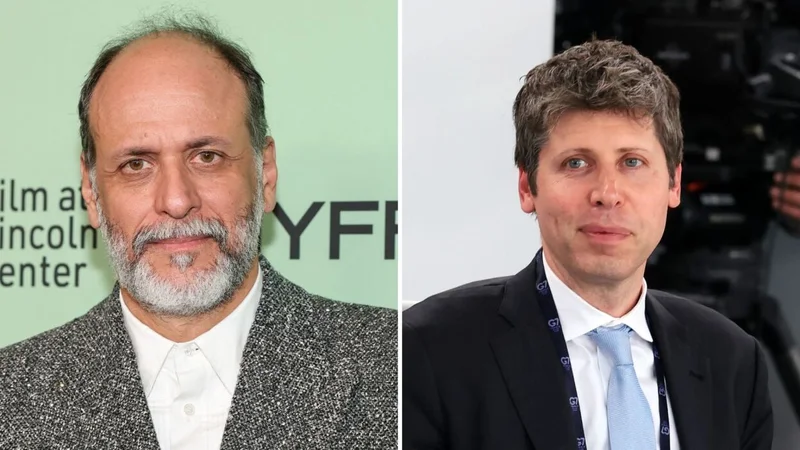
The project was designed as a high-art exploration of human existence in an era dominated by automation, with a cast that included Andrew Garfield portraying OpenAI CEO Sam Altman. By utilizing LLMs for script permutations, world-building, and dialogue generation during pre-production, "Artificial" sought to move beyond using AI as a mere plot device, instead positioning it as a foundational tool for narrative construction. This ambitious goal was meant to showcase the synergy of the Amazon-OpenAI alliance—where Amazon provides the massive infrastructure and cloud computing power required to fuel OpenAI’s advancements—but the reality of copyright law and potential "deepfake" complications eventually outweighed the promotional value of the film's innovation.
Why did Amazon walk away from "Artificial"?
The core reason for the retreat lies in the distinction between internal utility and external liability. For a corporation of Amazon's scale, any content that reaches the public must be scrubbed of potential litigation risks. Because the legal ownership of AI-assisted content remains poorly defined, the use of LLMs to generate significant portions of a script creates an "ownership vacuum." If a machine-generated dialogue segment were found to infringe upon existing intellectual property or likeness rights, the liability would fall squarely on the distributor.
Furthermore, the risk factor associated with "deepfake" technologies and other AI-augmented visual elements poses a severe threat to brand safety. Amazon is inherently protective of its reputation; the possibility of an automated system producing non-compliant or controversial content in a high-profile film made the project's continued existence as a joint venture too risky for their legal teams. This highlights a major hurdle: while creators are eager to embrace the speed and creative possibilities of generative AI, corporations require absolute certainty regarding authorship and copyright protection before they can greenlight mainstream applications.
The "Chilling Effect" on Hollywood’s AI Pivot
The cancellation of "Artificial" serves as a cautionary tale for the broader media industry, creating what many observers call a "chilling effect." It demonstrates that until there is a standardized legal framework and clear regulatory guidelines regarding how much of a story can be generated by an LLM, major studios will likely remain hesitant to integrate these tools into public-facing productions. The transition from experimental labs to mainstream Hollywood production is currently blocked by the lack of clarity surrounding the "black box" nature of AI models.
Instead of a full pivot toward generative content, we may see a period of stagnation where large tech players focus their efforts exclusively on infrastructure and backend solutions. While these "back-end" roles are lucrative and stable for companies like Amazon, they do not offer the same cultural spotlight as a flagship film. The fallout of "Artificial" suggests that the path toward mainstream AI in cinema isn't just about making better models; it is about building more robust legal safety nets to protect corporate giants from the volatility of unproven copyright laws.
Key Facts
- Amazon dissolved its involvement in Luca Guadagnino’s film "Artificial" despite a prior partnership with OpenAI.
- The project used LLMs for script permutations, world-building, and dialogue generation during pre-production.
- Andrew Garfield was cast as Sam Altman to ground the narrative in current tech leadership.
- Amazon provides critical cloud infrastructure and computing power to OpenAI's operations.
- Concerns over "deepfake" technology and copyright infringement from AI-generated elements led to the cancellation.
- The project’s failure highlights a murky legal landscape regarding the ownership of content assisted by LLMs.
- A significant "chilling effect" is now expected for Hollywood studios looking to adopt generative AI tools.
Expert Commentary
From a market perspective, this move is a classic example of risk mitigation outweighing growth opportunity in the short term. For a titan like Amazon, the "risk-free" revenue generated from cloud infrastructure and B2B partnerships with OpenAI provides a stable foundation that high-risk, public-facing entertainment ventures simply cannot match yet. The cancellation of "Artificial" isn't a failure of the technology; it is a failure of the current legal framework to provide corporate safety for AI-generated outputs.
Until there is a clear regulatory "safe harbor" for machine-assisted intellectual property, we should expect a bifurcation in the market: experimental studios will continue to push the boundaries of what LLMs can do in filmmaking, but the massive, multi-billion dollar corporations will stay behind the curtain, providing the "pipes" and infrastructure rather than starring in the show. For investors and traders, this suggests that while the hype for AI-driven content is high, the actual monetization and integration into mainstream consumer products by major giants will be slower and more cautious than many currently anticipate. The road to true cinematic AI integration must first pass through a very rigorous legal audit.
About the Author
Fintech Monster
Fintech Monster is run by a solo editor with over 20 years of experience in the IT industry. A long-time tech blogger and active trader, the editor brings a combination of deep technical expertise and extended trading experience to analyze the latest fintech startups, market moves, and crypto trends.