The Great Attribution War: Navigating Creative IP in the Age of Generative AI
Key Takeaways
The rapid rise of generative AI has forced a critical confrontation between existing intellectual property laws and the data-hungry mechanisms of modern machine learning.
Table of Contents
The intersection of generative artificial intelligence (AI) and intellectual property (IP) law represents a significant conflict in the digital economy. As Large Language Models (LLMs) and sophisticated image generators become foundational components of corporate infrastructure, they are disrupting sectors ranging from literature and music to visual arts and software development. The speed of this technological integration has outpaced the capacity of current legal frameworks to govern how content is consumed, processed, and reproduced by non-human actors.
This tension is rooted in a core paradox: the data required to make AI capable often involves the unauthorized ingestion of human-created works. Because generative models require massive quantities of information to learn patterns, styles, and linguistic nuances, they frequently rely on datasets scraped from the public internet. This creates a legal grey area where the line between "transformative" use—akin to a student studying existing texts—and the unauthorized commercialization of copyrighted content becomes increasingly blurred.

Is training AI on public data actually "fair use"?
The central legal battleground currently centers on the legality of the data pipeline. While copyright law traditionally grants exclusive rights to the original creator, judicial systems are struggling to categorize whether scraping copyrighted material for model training constitutes an infringement. Many legal scholars argue that since the models generate new outputs rather than copy text verbatim, the process qualifies as transformative use. Critics point out that these models are essentially consuming the creative output of professionals to build products that may eventually replace those same creators in the marketplace.
The scale of this issue is massive. When a model learns the distinct style of a contemporary illustrator or the syntax of a specific niche of technical writing, it goes beyond copying data points to distill and monetize human creativity. This has led to calls for new legal doctrines that recognize style and pattern as protectable assets, moving beyond mere textual reproduction to address the essence of creative identity.
Who owns a masterpiece created by a prompt?
The second major hurdle in this transition involves the concept of authorship. If an LLM produces a novel chapter or a complex piece of musical notation, identifying the owner of that content is difficult. Current jurisdictions generally require significant human authorship for any work to receive copyright protection. This creates a precarious situation for prompt engineers and tech firms: if the output is deemed an automated process with insufficient human intervention, it may fall into the public domain immediately upon creation.
This ambiguity forces developers and content creators into a difficult choice. To ensure their AI-generated content remains protected as intellectual property, they must prove that the human input—the specific, iterative instructions provided to the machine—was substantial enough to constitute originality. This is currently being tested in courts across several jurisdictions, where the definition of human effort in the age of automation remains undefined.
How are corporations building their own protective shields?
Because waiting for legislative changes can take years, technology firms and financial institutions are proactively developing internal governance frameworks to mitigate risk. These companies know that using data with unclear provenance is a liability that could lead to litigation or forced takedowns. To solve this, they are implementing three core protections:
First, organizations are employing advanced watermarking and metadata tagging systems to track data provenance. This allows them to trace the lineage of both the training data and the resulting output, creating a paper trail for intellectual property rights.
Second, there is a movement toward walled garden models where developers train their AI on licensed datasets. Instead of scraping the open web, companies pay creators for the right to include their work in the training pool, shifting from an extract and use model to a license and reward structure.
Third, engineers are building hard-coded guardrails into LLMs to prevent them from generating content that mimics specific individuals or brands too closely. These filters act as a safety net, ensuring the AI doesn't produce outputs that would clearly violate existing copyright claims.
Key Facts
- AI's massive data needs are clashing with established intellectual property protections for human creators.
- Most jurisdictions require significant human authorship to grant copyright protection, leaving many AI-generated contents in a legal limbo.
- Legal scholars are pushing for new doctrines that recognize the value of creative patterns and styles as protectable assets rather than just literal text.
- Companies are turning toward watermarking, dedicated licensing platforms, and automated guardrails to ensure their AI products remain legally viable.
Expert Commentary
From a market analysis perspective, we are observing a dual-track reality for AI investment. Initially, companies prioritized raw capability—the ability to generate high-quality content regardless of data provenance. Now, the value is shifting toward compliance infrastructure.
Investors are evaluating firms specializing in clean data pipelines and automated IP verification tools. These features are essential for enterprise adoption. A company that can guarantee its AI outputs aren't derived from potentially infringing material holds a significantly lower risk profile than a competitor using an unrestricted scraping model. The leaders in this space will be those who own the most defensible legal ecosystem around their data. The market is moving toward a standard where copyright indemnity is as important a metric as parameter count when evaluating AI startups.
Google Search Preference
Add Fintech Monster to your preferred sources
Never miss deep, analytical fintech insights. Prioritize our stories in your Google Search, Discover feed, and AI Overviews with one click.
About the Author
Fintech Monster
Fintech Monster is run by a solo editor with over 20 years of experience in the IT industry. A long-time tech blogger and active trader, the editor brings a combination of deep technical expertise and extended trading experience to analyze the latest fintech startups, market moves, and crypto trends.
Related Articles
Recommended
GPT-6 Astra Unveiled: Is This AI the End of Modern Cybersecurity?
OpenAI's GPT-6 Astra represents a paradigm shift from predictive modeling to active adversarial exploitation, forcing immediate regulatory reckoning across all critical financial infrastructure.

The $76M Validation: How Media Giants Are Pushing Generative AI into Enterprise Infrastructure
Major media investments from Sony and Warner signal that generative AI has crossed the chasm from experimental tools to regulated enterprise infrastructure, demanding a focus on content provenance, synthetic data integrity, and institutional compliance for Fintech adoption.

The Great AI Cost Filter: Why Economic Scrutiny is a Breakthrough for LegalTech
The market shift from hype to mandated economic utility is forcing specialized scrutiny of generative AI costs (TCO and ROI), accelerating the viability and defensibility of niche LegalTech solutions.

The Death of the Neutral Stack: How Geopolitics is Redrawing the Tech Map for SEA Startups
The "neutral stack" era in Southeast Asia is ending as geopolitical tensions and strict data sovereignty laws force startups to choose between Western-centric or regional-specific infrastructure.
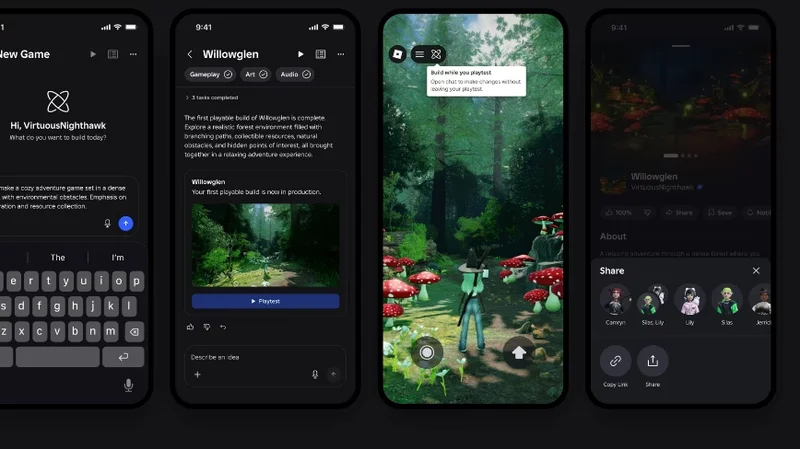
From Scripting to Summoning: How Roblox’s "Build" Tab Redefines Digital Creation
By integrating LLMs and procedural generation into a mobile interface, Roblox's "Build" tool transforms users from manual developers into creative directors, radically lowering the barriers to entry for game creation.