The Great Talent Migration: Why Nobel Laureate John Jumper’s Move to Anthropic Signals a New Era for Scientific AI
Key Takeaways
Nobel laureate John Jumper’s transition from Google DeepMind to Anthropic signals a strategic shift toward safety-aligned architectures as the primary vehicle for high-stakes scientific innovation.
The departure of Nobel laureate John Jumper from Google DeepMind to join Anthropic marks more than just a high-profile executive shuffle; it represents a fundamental pivot in how the global tech sector perceives the "center of gravity" for scientific AI development. By moving one of the primary architects of AlphaFold—a system that revolutionized structural biology and protein folding—to a competitor, the landscape is shifting toward a model where safety-centric frameworks are seen as the essential prerequisite for breakthroughs in fields like drug discovery and materials science.
This transition highlights a widening philosophical divide between the major AI players. While Google DeepMind has spent years championing "Scientific AI" to solve complex physical problems, Anthropic’s rise is anchored in its "Constitutional AI" framework. Jumper's move suggests that for elite researchers in high-stakes fields, the assurance of reproducible, safety-aligned outputs may now outweigh the sheer scale and computational dominance offered by larger tech conglomerates.
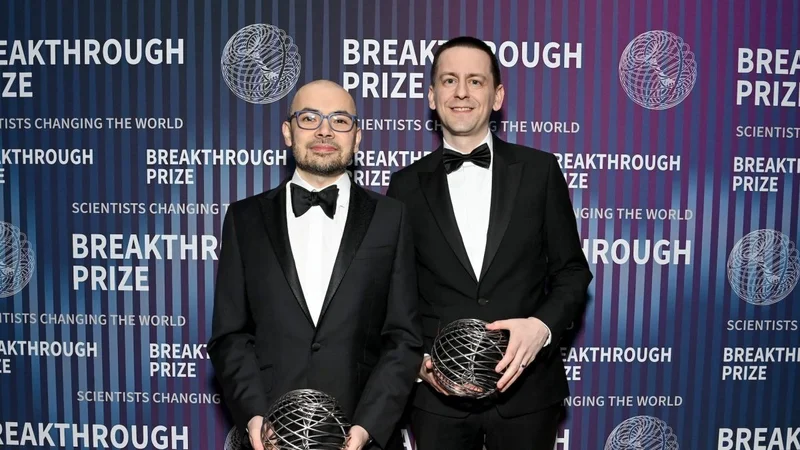
Why is John Jumper’s move such a significant blow to Google DeepMind?
For years, Google DeepMind has positioned itself as the vanguard of AI for scientific good. Jumper was not just an employee; he was a visionary who proved that neural networks could solve biological hurdles that had remained stagnant for decades. His involvement in AlphaFold provided DeepMind with immense credibility in the pharmaceutical and biotech sectors. By losing his leadership, Google faces a critical challenge in maintaining its dominance in "Scientific AI." The move implies that some of the most brilliant minds in the field believe that technical challenges—such as aligning large strides in machine learning with rigorous scientific constraints—may be more effectively solved within Anthropic’s specialized environment.
What does Anthropic’s acquisition of Jumper mean for the future of research?
Anthropic's strategic move to recruit a Nobel laureate is a masterstroke in branding and technical positioning. By integrating Jumper into their ecosystem, Anthropic is signaling that it is moving beyond simple conversational AI toward high-precision applications where "hallucination" is not an option. In fields like oncology or chemistry, the cost of error is catastrophic. Anthropic’s "Constitutional AI" approach provides a structured environment where models are governed by specific rules, creating a sense of reliability that appeals to academic and industrial researchers who are wary of the "move fast and break things" philosophy often associated with massive consumer-facing platforms.
Is the industry moving toward a "Safety-First" paradigm?
The migration of top-tier talent indicates a maturing market where the "arms race" is evolving from one of scale to one of trust. We are witnessing a bifurcation in the AI landscape: while larger players like Google will continue to excel in general-purpose intelligence and massive-scale multimodal applications, specialized entities like Anthropic are carving out the territory for high-integrity infrastructure. This trend suggests that the next decade of AI value creation will be driven by how well a model can adhere to strict safety protocols while providing scientifically accurate outputs. Investors and research institutions are increasingly looking for "verifiable" progress over "generative" novelty.
Key Facts
- John Jumper is a Nobel laureate whose work in protein folding and AlphaFold revolutionized structural biology.
- In 2026, John Jumper officially transitioned from Google DeepMind to join the team at Anthropic.
- DeepMind’s core initiative for scientific application is known as "Scientific AI."
- Anthropic utilizes a unique "Constitutional AI" framework to ensure safety and alignment.
- The transition indicates a trend toward choosing infrastructure that favors precision over raw scale in high-stakes domains.
Expert Commentary
From a market analysis perspective, Jumper’s move should be viewed as a tactical "de-risking" of the research process by top-tier talent. In the previous phase of AI growth, capital flowed toward whoever had the most GPUs and the largest datasets—a race for volume. However, we are entering the era of high-value precision. In this environment, the "premium" is no longer on scale; it is on reliability. Anthropic’s success in poaching Jumper suggests that the market is pricing in a massive premium for safety-aligned architectures. For institutional investors and pharmaceutical partners, a model that follows a "constitution" is significantly more valuable than one that simply has higher output volume but lacks rigorous constraints. We expect to see a consolidation of capital into firms like Anthropic that can provide high-integrity AI for critical infrastructure, as the liability risks associated with unconstrained models in scientific fields become increasingly difficult for corporations to ignore. This shift underscores a transition toward "Constitutional" development where safety is not an add-on feature but a core architectural requirement for future market dominance.
About the Author
Fintech Monster
Fintech Monster is run by a solo editor with over 20 years of experience in the IT industry. A long-time tech blogger and active trader, the editor brings a combination of deep technical expertise and extended trading experience to analyze the latest fintech startups, market moves, and crypto trends.