The Localization Paradox: How PayAdmit is Re-Engineering European SaaS Expansion
Key Takeaways
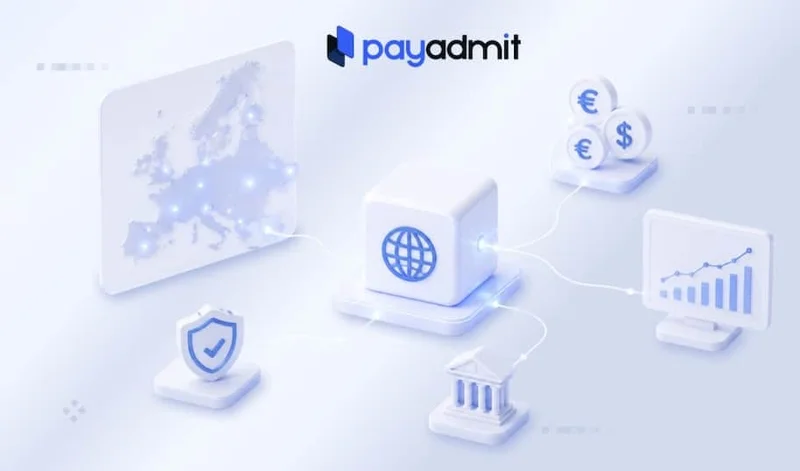
PayAdmit provides a sophisticated abstraction layer that enables SaaS brands to offer local payment methods (LPMs) across Europe while managing multi-currency processing and settling in a single base currency.
The expansion of Software-as--a-Service (SaaS) platforms across the European continent has reached a pivotal moment where digital borderlessness is colliding with deeply localized financial infrastructures. While a software product can be deployed instantly from Berlin to Paris, the mechanism used to collect subscription fees often remains trapped in antiquated, geography-specific silos. For many emerging and established SaaS brands, the primary hurdle to scaling across the Eurozone isn't the quality of the software, but rather the "localization of experience" at the point of transaction.
To understand this friction, one must look at the historical reliance on systems like SWIFT. While robust for global banking, the SWIFT network is often plagued by high transaction fees, sluggish settlement times, and a lack of transparency regarding intermediate bank costs. For SaaS providers operating on recurring billing models—where margins are thin and high-frequency transactions are the norm—these legacy hurdles can erode profitability significantly over time. Moderner solutions are now emerging to replace these "heavy" rails with agile, API-driven fintech infrastructure that leverages local clearing houses to provide a seamless experience for the end consumer.
Why do European consumers demand specific local payment methods?
In the European market, consumer loyalty to local payment methods (LPMs) is not merely a preference; it is often a requirement for conversion. Research into current purchasing behaviors indicates that foreigner-centric checkout pages—those that only offer standard credit cards—see much higher abandonment rates in specific regions. For example, French consumers frequently opt for Carte Bancaire as their primary choice; similarly, Dutch users have a strong preference for iDEAL, and Belgian customers consistently look for Bancontact.
By providing an abstraction layer, PayAdmit allows SaaS brands to offer these localized options without the need to maintain separate merchant accounts for every country. This ensures that when a customer in Amsterdam sees "iDEAL" at checkout, they feel an immediate sense of trust and familiarity. By removing these cultural hurdles, companies can drastically reduce cart abandonment and improve their overall conversion rates, ensuring that the transition from "interested lead" to "paying subscriber" is as frictionless as possible.
Moving beyond legacy infrastructure to API-driven rails
The shift toward modern fintech infrastructure represents a fundamental move away from traditional correspondent banking. By utilizing local clearing houses and real-time payment rails, advanced systems can bypass the complexities of the SWIFT network. This transition allows SaaS companies to process payments in multiple currencies (such as EUR and GBP) while settling those amounts into a single base currency.
This technical architecture is particularly vital for multi-national SaaS firms. Instead of managing dozens of different local accounts and reconciling various pots of money, finance teams can operate from one unified dashboard. This automation reduces the operational overhead associated with cross-border commerce and simplifies the reconciliation process, allowing the company to scale its operations across borders without a linear increase in administrative costs.
Managing currency risk and liquidity in a fractured market
One of the most overlooked challenges of international expansion is the constant exposure to currency fluctuations. When a SaaS brand sells a subscription in Euros but reports its revenue in Pounds (or vice versa), it faces significant "invisible" risks. Even minor swings in exchange rates can lead to unpredictable revenue figures and complicate tax reporting across different jurisdictions.
Modern fintech solutions like PayAdmit address this by providing real-term conversion rates and integrated, automated hedging mechanisms within the payment flow. By consolidating various local currencies into a single operational account at the point of entry, companies can maintain stable liquidity levels. This protects the company's margins from volatility while simplifying the accounting work required to navigate European tax laws.
Why is compliance the ultimate "go-to-market" accelerator?
Navigating the regulatory landscape in Europe requires more than just a good user interface; it demands strict adherence to complex security standards. The Payment Services Directive 2 (PSD2) and the upcoming PSD3 standards mandate high levels of security, including Strong Customer Authentication (SCA). For many small to mid-sized SaaS brands, building these custom security layers for every new country is an insurmountable technical hurdle.
A centralized gateway that is pre-configured for European compliance allows brands to "turn on" a new market almost instantly. By using an infrastructure that is already tuned for local anti-fraud protocols and identity verification requirements, companies can focus their engineering resources on product innovation rather than the heavy lifting of international financial compliance.
Key Facts
- High Loyalty: European consumers show significant preference for localized options like Carte Bancaire (France), iDEAL (Netherlands), and Bancontact (Belgium).
- Settlement Efficiency: API-driven rails allow for multi-currency processing while settling in a single base currency, reducing operational complexity.
- Risk Mitigation: Integrated tools provide real-time conversion rates and automated hedging to protect against currency volatility.
- Seamless UX: Providing the preferred local method at point of sale significantly reduces cart abandonment.
- Regulatory Readiness: Centralized gateways pre-configured for PSD2/PSD3 ensure compliance with Strong Customer Authentication (SCA) requirements.
Expert Commentary
From a market analysis perspective, we are witnessing the "de-commoditization" of payment infrastructure in the SaaS space. In earlier stages of the internet's growth, payment was a simple utility; today, it is a strategic moat. For a SaaS brand, a successful conversion isn't just about a happy customer—it’s about the stability of the recurring revenue stream.
The move away from SWIFT-style heavy lifting toward specialized abstraction layers like PayAdmit highlights a broader trend: infrastructure is becoming "invisible." The winners in the European market won't necessarily be the ones with the best code, but those who remove the most friction between the user and the payment gateway. By solving the localization puzzle—both in terms of currency and cultural payment preferences—SaaS companies can move from being local players to continental leaders without the traditional "tax" of complex international finance.
Google Search Preference
Add Fintech Monster to your preferred sources
Never miss deep, analytical fintech insights. Prioritize our stories in your Google Search, Discover feed, and AI Overviews with one click.
About the Author
Fintech Monster
Fintech Monster is run by a solo editor with over 20 years of experience in the IT industry. A long-time tech blogger and active trader, the editor brings a combination of deep technical expertise and extended trading experience to analyze the latest fintech startups, market moves, and crypto trends.