The New Sovereigns of Seamless Settlement: Why Denmark and Singapore Dominate the 2026 Cross-Border Landscape
Key Takeaways
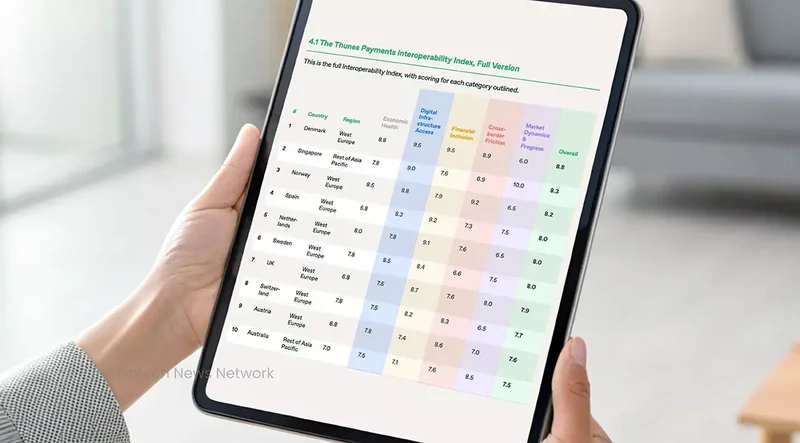
Denmark and Singapore have emerged as the global leaders in cross-border payment interoperability by successfully merging advanced digital maturity with either unified regulatory frameworks or aggressive regional hub strategies.
Table of Contents
The push for "frictionless" finance is no longer just a corporate goal; it's a reality. Right now, two clear winners are leading this change: Denmark and Singapore. As capital moves across borders with increasing velocity, these two nations have successfully dismantled the traditional hurdles of correspondent banking, establishing themselves as the gold standard for payment infrastructure. They aren't just using new software; they've managed to build out the technical infrastructure and align the laws to build real-time payment rails that skip the old roadblocks.
This shift was driven by the need to get rid of the hidden costs and delays that usually come with international transactions. While previous decades were defined by the limitations of batch processing and heavy reliance on intermediary banks, the current era is defined by direct rail connectivity. Nations connecting their local payment systems to global networks are seeing huge growth in liquidity, while those sticking to old, isolated systems are getting left behind.
Why are Denmark and Singapore leading the way?
These two nations show how different approaches can lead to the same result: easy cross-border payments. Even though they took different paths, both figured out how to handle the mess of moving multiple currencies.
Denmark’s dominance is rooted in "Regulatory Harmony." By operating within the European Union's unified framework, Denmark has benefited from a massive network effect where common standards across many borders allow for frictionless capital movement. This creates a pre-cleared corridor where compliance hurdles are minimized because they have already been solved at the regional level. This setup means Danish financial institutions can focus on building new things instead of dealing with confusing regulations, making them a great entry point to the European market.
Singapore, on the other hand, relies on its position as a hub and its technical agility. Rather than relying solely on a broad regulatory bloc, Singapore has positioned itself as a global gateway through aggressive integration. By linking its local payment systems—most notably PayNow—directly with regional counterparts, it creates "fast-lanes" that bypass traditional banking hurdles. The Monetary Authority of Singapore (MAS) has championed a pro-innovation stance, creating a fertile environment for fintechs to experiment with real-time cross-border settlements. Their success is a demonstration of the power of intentional infrastructure investment and strategic international partnerships.
How technical advancements are fueling this shift
A big driver here is the shift to global messaging standards and new payment rails. The move toward ISO 20022 is perhaps the most critical structural change in years. By providing a framework for richer, more granular data transmission, it allows systems to automate complex compliance checks—such as Anti-Money Laundering (AML) and Know Your Customer (KYC)—at speeds that were previously impossible under older standards.
Moving from batch processing to real-time payments has also completely changed how much liquidity banks need on hand. When settlement happens in seconds rather than days, the need for large capital reserves to cover pending transactions is reduced. This shift toward direct rail connectivity—where a payment travels directly from one local system to another without a chain of intermediary "middlemen"—drastically reduces costs and delays. These aren't just nice-to-have features anymore—they're essential for any country that wants to stay competitive in the financial world.
Key Facts
- Standardization Excellence: Both nations have heavily adopted ISO 20022, enabling richer data flow and automated compliance across borders.
- Infrastructure Synergy: Denmark utilizes EU regulatory harmony while Singapore leverages proactive hub integration of local payment systems like PayNow.
- Real-Time Evolution: The shift from batch processing to RTP rails has significantly lowered liquidity requirements for participating financial institutions.
- The Insularity Gap: Regional successes are often hindered by "insularity," where a lack of international standard alignment prevents seamless
Google Search Preference
Add Fintech Monster to your preferred sources
Never miss deep, analytical fintech insights. Prioritize our stories in your Google Search, Discover feed, and AI Overviews with one click.
About the Author
Fintech Monster
Fintech Monster is run by a solo editor with over 20 years of experience in the IT industry. A long-time tech blogger and active trader, the editor brings a combination of deep technical expertise and extended trading experience to analyze the latest fintech startups, market moves, and crypto trends.
Related Articles
Recommended
Rho Elevates Invoicing to a Financial OS: The Impact of Card Payments on B2B Cash Flow
Rho's integration of card payments transforms its invoicing platform from a simple utility into a critical, centralized financial operating system for B2B cash flow management.

ECB's Plan to Link TIPS and Pix: Redefining Global Instant Payment Interoperability
By linking the Eurosystem’s TIPS with Brazil's Pix system, the ECB is creating a blueprint for global instant payment interoperability that drastically lowers cross-border friction and challenges traditional correspondent banking corridors.

Ant International’s BCB License: How Does Global Tech Cement Its Role as a Regulated Payments Powerhouse in LATAM?
Ant International’s acquisition of the Payment Institution (PI) license from Brazil's Central Bank solidifies its regulated position, enabling deep cross-border integration and advanced FinAI services across Latin America.

Why Your Domestic Payment Rate is a Dangerous Myth for Cross-Border Merchants
True cross-border Merchant Discount Rates (MDRs) are a complex composite function that includes local acquirer markups, global scheme interchange fees, and dynamic FX spreads, making simple domestic rate comparisons fundamentally misleading for revenue forecasting.

How Diameter Pay is Rebuilding Cross-Border Payments with Middleware Infrastructure
Diameter Pay secured $10M in Series A funding to build compliant middleware rails, offering B2B clients a real-time alternative to legacy cross-border settlement systems.