The Physical Limits of AI: Why Manufacturing Hurdles are Shaking Asian PCB Stocks
Key Takeaways
Recent reports of significant manufacturing delays for Nvidia’s Kyber NVL144 systems have triggered a sharp sell-off in Asian printed circuit board (PCB) manufacturers due to the growing complexity of high-density interconnect technologies.
The sudden volatility in the Asian technology sector highlights a critical turning point in the AI revolution: the shift from chip fabrication to physical assembly challenges. Following reports that Nvidia’s Kyber NVL144 AI server rack system is facing manufacturing delays of more than one year, major components and materials suppliers saw immediate and sharp declines in market value. This reaction underscores a growing realization among investors that while the demand for artificial intelligence remains insatiable, the physical infrastructure required to support it—specifically high-density printed circuit boards (PCBs)—is hitting a significant production "choke point."
Historically, the primary bottleneck in the semiconductor industry was front-end wafer fabrication, where the struggle was simply making enough high-quality chips. However, as we move into an era of unprecedented scale, the constraint is shifting toward back-end assembly and packaging. The complexity of integrating massive amounts of compute power into single rack systems, like the Kyber NVL144, has outpaced current PCB manufacturing capabilities. To maintain signal integrity across thousands of connections, these boards require a level of precision in material science and multi-layer construction that few manufacturers can currently execute at scale.
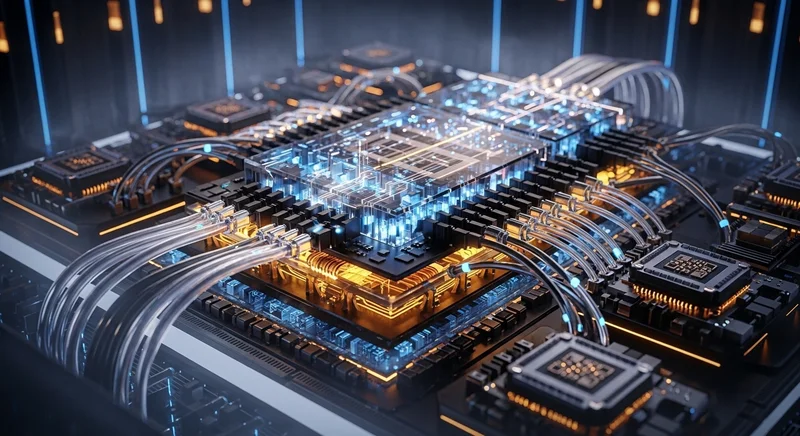
What is causing the massive delay in the Kyber NVL144?
The technical hurdles facing the Kyber NVL144 are not merely matters of production volume, but rather issues of advanced engineering and material physics. To support the high-speed requirements of modern GPU clusters, these systems require multi-layer PCBs featuring more than 20 layers. Manufacturing such dense boards is an immense challenge; they must be constructed to withstand extreme stresses without "warping" or internal delamination, which can occur when layers are laminated under high heat and pressure.
Furthermore, the infrastructure for AI requires specialized materials that offer low-loss characteristics and high thermal stability. High-frequency signals in these environments demand that traces and vias be manufactured at microscopic scales while resisting electromagnetic interference (EMI). The integration of these elements into a single system is incredibly complex because the signal integrity (SI) and power integrity (PI) must be maintained across massive power distributions. Any minor flaw in the fabrication process can lead to failure in the high-speed data lanes, making it extremely difficult for manufacturers to ramp up production rapidly enough to meet current demand.
Why did Asian tech stocks react so sharply to the news?
The market’s reaction was swift because many of these companies are highly specialized "linchpin" suppliers in the global AI supply chain. Because their business models are heavily tied to Nvidia's roadmap, any delay in a flagship product like the Kyber NVL144 translates directly into perceived risk for their order books.
| Company | Region | Impact (%) | Context |
|---|---|---|---|
| Ibiden Co. | Japan | -10% | Key provider of high-end server boards and multi-layer PCB solutions. |
| Kingboard Laminates | Hong Kong | -18% | Major supplier of the specialized laminate materials required for high-temp environments. |
| Elite Material Co. | Taiwan | -10% | Essential supplier of advanced materials for high-frequency circuits. |
| Samsung Electro-Mechanics | South Korea | -11% | Large-scale manufacturer facing concerns over volume for specialized components. |
The fact that the average decline across these firms was roughly 10% indicates a broad market sentiment: investors are beginning to price in "execution risk." While the AI narrative remains powerful, the physical reality of manufacturing complex hardware is now becoming a measurable metric for investment valuations. This has been reflected in a broader movement within the sector, with some segments of the MSCI gauge seeing an 8% drop over a two-week period as news of these hurdles circulated.
What does this mean for the future of AI infrastructure?
The one-year delay for the Kyber NVL144 platform has systemic implications that go beyond just share prices. Hyperscale cloud providers, including major entities like Microsoft and Google, operate on multi-year hardware roadmaps. A year of delay in a core server rack architecture forces these giants to recalibrate their capacity expansion plans, potentially slowing the rollout of new large language model (LLM) training capabilities.
Additionally, this "bottleneck" may force a faster pivot toward Advanced Packaging technologies, such as 2.5D and 3D IC packaging, which can bypass some of the physical limitations of traditional PCB layouts. If manufacturing hurdles for standard multi-layer boards continue to escalate, the industry will likely move toward more integrated, vertically stacked architectures to reduce the reliance on massive, high-count PCB layers.
Key Facts
- The primary constraints in AI scaling have shifted from front-end wafer fabrication to back-end assembly and packaging.
- Nvidia’s Kyber NVL144 system is reportedly facing a delay of more than one year due to manufacturing hurdles.
- High-performance boards for these systems require more than 20 layers to manage signal integrity and power distribution.
- The demand for low-loss and high-thermal-stability materials has created significant sourcing challenges for manufacturers.
- Market reactions were severe, with Ibiden (-10%), Kingboard (-18%), Elite Material (-10%), and Samsung Electro-Mechanics (-11%) all seeing significant declines following the report.
Expert Commentary
From a trader's perspective, this is a classic case of "infrastructure reality" colliding with "software hype." For several years, the market has treated AI as a software-first revolution where hardware was merely an invisible utility. However, the sharp decline in these Asian PCB manufacturers proves that the physical infrastructure—the actual copper, resin, and high-density boards—is the hard ceiling of the current cycle.
The 18% drop for Kingboard Laminates is particularly telling; it shows that even if the chip design is perfect, the material science must also be flawless. We are entering a phase where "execution risk" in the supply chain will be a major driver of volatility. Investors should no longer just look at GPU shipments, but rather at the capacity and success rates of the manufacturers producing the high-layer count boards. If these firms cannot solve the manufacturing hurdle for 20+ layer boards, the pace of AI infrastructure deployment will slow, regardless of how much demand exists in the software space. We are seeing a pivot from "can we build it?" to "how efficiently can we manufacture it at scale?"
Google Search Preference
Add Fintech Monster to your preferred sources
Never miss deep, analytical fintech insights. Prioritize our stories in your Google Search, Discover feed, and AI Overviews with one click.
About the Author
Fintech Monster
Fintech Monster is run by a solo editor with over 20 years of experience in the IT industry. A long-time tech blogger and active trader, the editor brings a combination of deep technical expertise and extended trading experience to analyze the latest fintech startups, market moves, and crypto trends.