The Rise of Sovereign AI: How Firmus and Nvidia are Powering Southeast Asia’s Data Revolution
Key Takeaways
Firmus Technologies is partnering with Nvidia to build a 360MW "Nvidia DSX" AI Factory in Batam, Indonesia, targeting $30 billion in off-take deals.
The announcement of a strategic eight-year partnership between Firmus Technologies and Nvidia marks a watershed moment in the industrialization of artificial intelligence. By developing a massive 360-megawatt (MW) "Nvidia DSX" AI Factory campus, Firmus is not just building a data center; they are constructing a foundational pillar for sovereign AI infrastructure in the Asia-Pacific region. With an estimated valuation of $5.5 billion and a project footprint designed to support thousands of high-density GPUs, this initiative signals a shift away from centralized Western hubs toward localized "AI factories" capable of handling the intensive demands of large language models (LLMs) and generative AI at scale.
This move comes as the global demand for high-performance computing (HPC) outpaces existing infrastructure capabilities. As Southeast Asia becomes a primary theater for digital transformation, the need for local data processing—driven by both performance requirements and national data sovereignty laws—has become a critical bottleneck. Firmus Technologies is positioning itself to solve this bottleneck by providing "AI-as--a-Service" (AIaS) through high-density facilities that integrate advanced cooling technologies and sophisticated power management systems, ensuring that regional enterprises can innovate without compromising on performance or compliance.
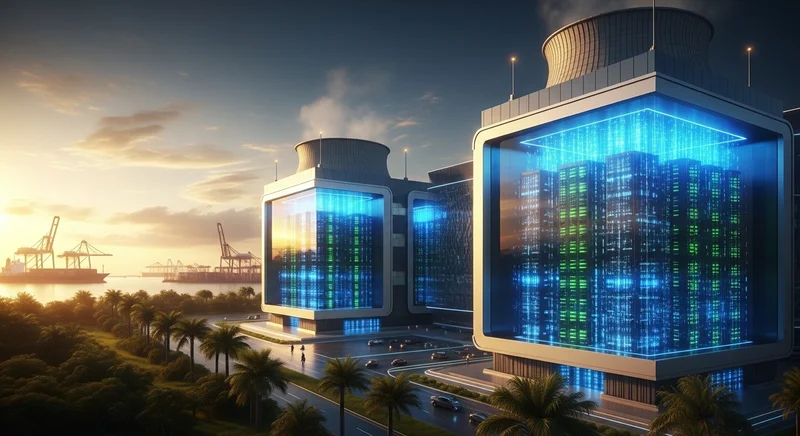
Why is the selection of Batam so strategically vital?
The choice of Batam, Indonesia, as the home for this 360MW facility is no coincidence; it is a calculated move to capture the overflow from Singapore’s hyper-saturated data market. Located just off the coast of Singapore, Batam serves as a premier gateway for regional data traffic. By establishing a massive infrastructure hub here, Firmus and Nvidia are creating a "spillover" zone where high-density compute can be deployed more expansively than in urban Singapore.
Furthermore, Batam offers a unique environment for large-scale industrial expansion. The proximity to major shipping lanes and existing telecommunications corridors makes it an ideal site for the "Nvidia DSX" architecture. This specific designation implies an infrastructure designed specifically for the extreme heat generation and power requirements of next-generation GPUs. By building in Indonesia, Firmus also addresses the critical issue of data localization. Many regional governments are implementing strict rules on where citizen data can be processed; a domestic facility allows local firms to utilize world-class Nvidia hardware while keeping sensitive data within national borders.
What do the $30 billion off-take projections signify?
The most striking metric in this development is the projected $30 billion in off-take deals expected from the Batam facility. This figure is a staggering indicator of market confidence and the looming demand for localized AI capabilities. These aren't just speculative figures; they represent potential long-term contracts with multinational corporations, government entities, and telecommunications providers who are looking to secure "sovereign" capacity.
These agreements suggest that Firmus isn't merely acting as a landlord for hardware. Instead, the company is positioning itself as a primary provider of integrated AI solutions. By securing high-volume off-take deals early, Firmus can amortize the massive capital expenditure required to build 360MW of power infrastructure. This move effectively de-risks the investment by creating a guaranteed pipeline of customers who need consistent, high-performance compute for training and inference tasks.
Navigating the complexities of high-density energy and infrastructure
Building a facility capable of pulling 360MW from a regional grid presents significant engineering hurdles. Such a massive load requires sophisticated power management systems and likely necessitates dedicated high-voltage transmission lines or localized energy solutions to maintain stability without impacting local residential supply. The collaboration with Singapore-based DayOne is pivotal here, as they provide the operational framework and local expertise needed to navigate Indonesian regulatory landscapes while maintaining the strict technical standards required by Nvidia’s ecosystem.
The "industrialization" of AI means that we are moving away from boutique research labs toward industrial production lines. The Batam project serves as a blueprint for this evolution. By integrating high-density power distribution, advanced cooling systems, and localized proximity to end-users, Firmus and Nvidia are creating a reproducible model for how AI can be scaled across different geographies. This move decentralizes the AI economy, allowing regional powers in Southeast Asia to build their own technological foundations rather than relying on distant, overburdened hubs.
Key Facts
- Firmus Valuation: Approximately $5.5 billion.
- Partnership Duration: A strategic eight-year commitment between Firmus Technologies and Nvidia.
- Facility Scale: 360-megawatt (MW) "Nvidia DSX" AI Factory campus.
- Primary Location: Batam, Indonesia, serving as a gateway for Southeast Asian data traffic.
- Projected Revenue: $30 billion in expected off-take deals from the facility.
- Strategic Partner: DayOne (a Singapore-based firm) providing local expertise and operational oversight.
- Economic Impact: Significant expansion of sovereign AI capabilities in the Asia-Pacific region.
Expert Commentary
From a trader's perspective, the real story here isn't just the "AI" buzzword; it’s the massive grab for scarce resources: land, power, and high-density compute. We are entering an era where "compute is the new oil," and firms like Firmus that can secure 360MW of dedicated power in a strategic gateway location are building a formidable economic moat. The $30 billion off-take projection suggests that enterprise demand for "sovereign AI"—where data stays within local borders—is reaching a boiling point. By partnering with Nvidia and leveraging DayOne’s regional expertise, Firmus is positioning itself as the primary landlord of the next decade's infrastructure. Investors should watch this closely; whoever owns the physical pipeline for high-density compute in emerging markets will command the ultimate premium in the AI economy.
Google Search Preference
Add Fintech Monster to your preferred sources
Never miss deep, analytical fintech insights. Prioritize our stories in your Google Search, Discover feed, and AI Overviews with one click.
About the Author
Fintech Monster
Fintech Monster is run by a solo editor with over 20 years of experience in the IT industry. A long-time tech blogger and active trader, the editor brings a combination of deep technical expertise and extended trading experience to analyze the latest fintech startups, market moves, and crypto trends.