The Sneakernet Threat: How USB-Mediated Malware is Breaching the Crypto "Air-Gap"
Key Takeaways
A newly identified malware strain leverages "Sneakernet" tactics and HID emulation to bypass network perimeters and target high-value private keys via physical USB media.
The security perimeter of the decentralized finance (DeFi) ecosystem is facing a sophisticated new challenge as cybercriminals pivot toward "Sneakernet" tactics—the use of physical media like USB sticks to bypass traditional firewalls. Microsoft recently identified a specialized malware strain designed specifically to hijack cryptocurrency wallets by infecting devices through physical connections rather than network-based entry points. This shift represents a significant escalation in threat complexity, targeting the very hardware that many high-net-worth holders believe provides an "air-gap" layer of protection against remote hackers.
This development highlights a critical vulnerability in how private keys are managed across both retail and institutional platforms. While traditional cyberattacks often rely on phishing emails or malicious links to deliver payloads over the internet, this malware targets the physical interaction point between the user and their hardware. By infiltrating systems through USB ports, attackers can reach "offline" devices that might not be constantly connected to the public web, effectively bypassing many of the standard network-based security measures that define modern digital asset defense strategies.
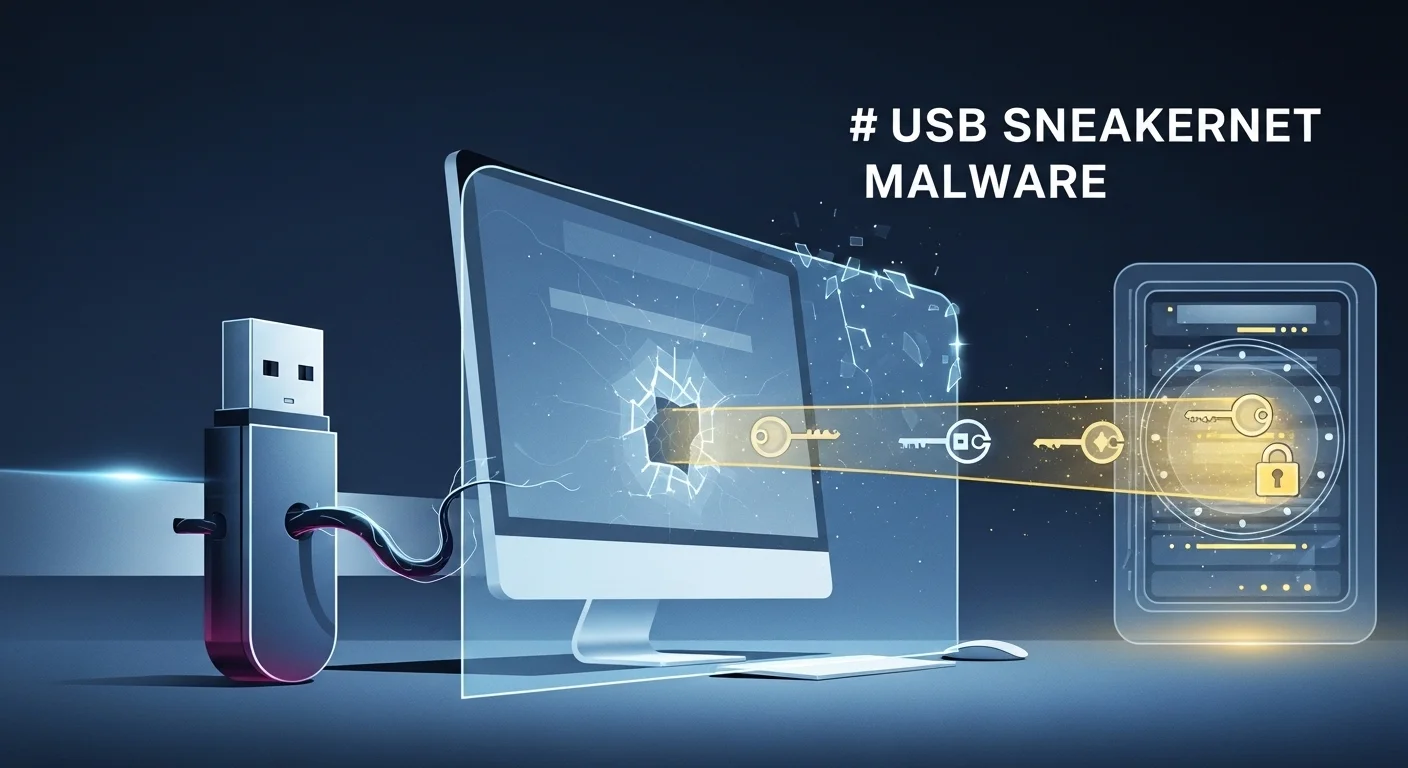
How "Sneakernet" tactics bypass standard defenses
The sophistication of this malware lies in its multi-layered approach to infection and persistence. One primary method is HID (Human Interface Device) Emulation, where the malicious USB device identifies itself to the host operating system as a keyboard or mouse. By doing so, it can execute scripted commands at high speeds that appear as legitimate user inputs, allowing the malware to bypass several layers of security prompts. Additionally, for older or unpatched systems, the strain exploits AutoRun/AutoPlay protocols, ensuring immediate execution upon connection. Once inside the system, the malware hides within non-obvious directories on the USB drive, establishing a foothold that remains dormant until specific conditions are met.
What triggers the search for private keys?
Rather than acting as a generic virus, this malware is highly targeted. It performs environment fingerprinting, specifically scanning the host machine for indicators of cryptocurrency activity. This includes searching for installed wallet software such as MetaMask and Trust Wallet, as well as checking for specific browser extensions associated with DeFi protocols. The script scans for critical high-value keywords: 'mnemonic', 'seed phrase', 'private key', and 'vault'. If these strings are found within files or memory blocks, the malware hooks into the application processes to capture keystrokes or scrape memory. This targeted approach allows the malware to ignore irrelevant system data and focus exclusively on assets of high financial value.
Why are "whale" accounts the primary target?
The attackers aren't just looking for any wallet; they are specifically targeting "Whale" accounts—wallets that hold significant quantities of stablecoins or participate heavily in decentralized protocols. By filtering their targets based on specific software signatures and high-value keyword detections, the threat actors can ignore smaller retail accounts and focus their resources where the potential ROI is highest. To further evade detection by security teams, the malware employs an asynchronous exfiltration strategy. It captures and encrypts the stolen data, storing it in a hidden local directory before transmitting it to a Command-and-Control (C2) server only once a stable internet connection is detected, thereby avoiding real-time spikes in network traffic that often trigger security alerts.
Key Facts
- The malware utilizes HID Emulation to appear as a keyboard and execute scripts automatically.
- It identifies specific wallets like MetaMask and Trust Wallet through environment fingerprinting.
- The primary objective is the theft of private keys and seed phrases.
- Stolen data is encrypted and staged locally before being sent to a C2 server.
- Targeted assets include significant holdings in DeFi protocols and stablecoins.
How can institutions defend against physical-media threats?
To combat this evolution in cyber tactics, security experts recommend moving beyond simple software firewalls. A primary defense is the implementation of Hardware Port Lockdown, where Group Policy Objects (GPOs) or hardware-level blocks are used to disable USB ports for any device not explicitly whitelisted by IT. Furthermore, organizations should deploy advanced Endpoint Detection and Response (EDR) systems capable of monitoring for suspicious process behaviors, such as an unauthorized script attempting to access the memory space of a known crypto application. For truly high-value assets, the industry standard is shifting toward Hardware Security Modules (HSMs) and multi-signature requirements. These technologies ensure that even if one piece of hardware or a single private key is compromised via physical means, the attacker cannot move funds without compromising multiple independent keys across different infrastructures.
Expert Commentary
From a trading and risk management perspective, this shift toward "Sneakernet" tactics highlights a fundamental truth in the crypto space: your security is only as strong as your most convenient point of entry. For years, the narrative has been about protecting against remote hackers on the internet; however, as DeFi matures and institutional capital flows in, the "attack surface" naturally moves closer to the physical device.
The move toward HID emulation isn't just a technical hurdle; it’s a strategic pivot by attackers who know that high-value whales often use more rigorous network protections but might have laxer restrictions on local hardware interactions. We are seeing a transition where "good enough" security—like simple seed phrase storage or standard mobile wallets—is no longer sufficient for large holdings. The integration of HSMs and multi-sig protocols isn't just an optional extra for the wealthy anymore; it is becoming a foundational requirement to mitigate the risks inherent in physical media vulnerabilities. If you are holding substantial positions, the age of "simple" security has passed; it is time to move toward institutional-grade architecture where no single point of failure—physical or digital—can result in a total loss of assets.
About the Author
Fintech Monster
Fintech Monster is run by a solo editor with over 20 years of experience in the IT industry. A long-time tech blogger and active trader, the editor brings a combination of deep technical expertise and extended trading experience to analyze the latest fintech startups, market moves, and crypto trends.