Unifying the Rail: How Payment Asia and HSBC’s PayMe are Redefining Merchant Connectivity in Hong Kong
Key Takeaways
The integration of PayMe by HSBC into the Payment Asia ecosystem creates a unified payment corridor for HK merchants, combining institutional trust with fintech agility.
The rapid evolution of the Hong Kong financial landscape has reached a critical inflection point where "unified acceptance" is no longer a luxury but a necessity for survival. The recent integration of PayMe by HSBC into Payment Asia’s infrastructure marks a significant leap forward in this direction, effectively bridging the gap between institutional banking reliability and the streamlined agility of fintech platforms. By enabling merchants to accept payments from one of the region's most prominent wallets within a single unified ecosystem, the partnership addresses the core pain point of fragmented payment processing that has historically plagued small-to-medium enterprises (SMEs) in high-density urban environments.
Historically, the challenge for merchants in Hong Kong has been managing the complexity of multiple payment rails—each requiring separate software integrations, hardware configurations, and reconciliation workflows. As mobile penetration soared and the shift toward a cashless society accelerated, the need for a "one-stop" solution became paramount. This move by Payment Asia to integrate PayMe directly into their core offerings highlights a broader trend in fintech: the consolidation of payment gateways to simplify the consumer experience while providing merchants with more robust tools. By leveraging HSBC’s deep institutional footprint and Payment Asia's technical expertise, both entities are positioning themselves at the forefront of Hong Kong's next-generation payment infrastructure.
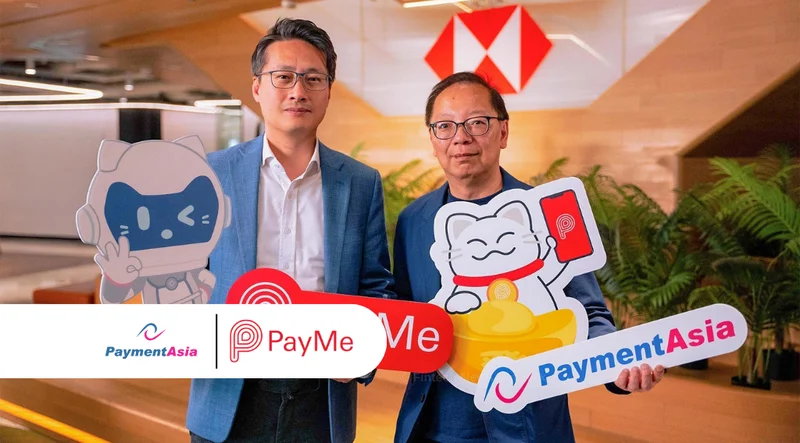
Why is this integration a game-changer for local merchants?
For many retailers, the primary barrier to adopting new payment methods isn't just consumer demand; it is the operational overhead of managing multiple systems. By integrating PayMe into the PA Pay application and Smart POS Terminals, Payment Asia effectively removes these hurdles. For high-volume retail environments where every second counts at checkout, having a single interface that can process various digital wallets—including those backed by major institutions like HSBC—is vital for maintaining customer flow.
The inclusion of PayMe specifically provides a layer of institutional trust. Because PayMe is backed by HSBC, it carries a level of credibility that resonates with both merchants and end-users. When this is bundled into the Payment Asia ecosystem, it creates a "hybrid" model where the merchant gains the reliability of a global bank's wallet while utilizing the sophisticated, modern technology stack offered by a nimble fintech provider. This synergy ensures that even smaller shops can provide a high-end, seamless transaction experience.
How does the smart hardware play into the strategy?
One of the most critical components of this integration is the rollout of Smart POS Terminals designed to handle multiple payment rails simultaneously. In the past, a merchant might have needed several devices or complex switching software to accept different types of mobile wallets and traditional cards. The "Smart" in these terminals refers to their ability to identify and process various inputs on one piece of hardware.
This hardware-centric approach means that physical storefronts can operate with much leaner operations. Whether a customer chooses to pay via the PA Pay app or directly through the PayMe wallet, the merchant's interface remains consistent. This uniformity reduces training requirements for staff and minimizes the chance of transaction failures caused by mismatched software versions across different payment types.
What kind of data insights are merchants actually getting?
A common mistake in payments is viewing a transaction as a simple "success" or "failure" ping. The integration between Payment Asia and PayMe moves beyond this binary. By integrating these systems, the platform provides real-time transaction data that includes precise timestamps, total volume, and specific sales metrics.
For an SME owner, this data is gold for operational intelligence. Rather than waiting until the end of the month to reconcile accounts, merchants can now view their performance in real-time. They can identify peak traffic hours, track which payment methods are most popular among their customer base, and better manage inventory by seeing high volumes instantly reflected on their dashboard. This level of transparency allows for data-driven decision-making, such as adjusting staffing levels during high-volume periods or identifying products that resonate most with mobile-first shoppers.
Key Facts
- PayMe by HSBC is a premier digital wallet backed by the global banking giant HSBC.
- The integration targets two primary touchpoints: the PA Pay application and Smart POS Terminals.
- Merchants using the platform can now accept payments directly from the PayMe wallet without switching systems.
- Smart POS terminals are engineered to handle multiple payment rails simultaneously, streamlining hardware requirements.
- Real-time transaction data—including sales figures, timestamps, and volume metrics—is provided to merchants instantly.
- The partnership allows HSBC to tap into Payment Asia's extensive merchant network more effectively.
- This move addresses the "unified acceptance" requirement essential for Hong Kong's rapid shift toward cashless transactions.
Expert Commentary
From a strategic standpoint, this is a textbook example of how institutional banking and fintech are moving away from competition and toward "co-opetition." By integrating PayMe, Payment Asia isn't just adding a payment method; they are absorbing the trust equity of a Tier-1 bank into their tech stack. For investors watching the HK market, this signifies that the ultimate winner in the payment space won't be the one with the most "cool" features, but the one who can provide the most invisible and seamless infrastructure for the merchant.
The focus on "multi-rail" hardware is particularly telling. It suggests a move toward a unified commerce model where the friction between different payment methods is completely eliminated from the user's perspective. For Payment Asia, this creates a powerful moat; they are no longer just a software provider, but an infrastructure layer that simplifies the complex web of regional regulations and banking requirements into a single, manageable interface for the merchant. This move reinforces the "infrastructure as a service" (IaaS) model in fintech, where the complexity is handled by the backend so the front-end experience remains flawlessly simple.
About the Author
Fintech Monster
Fintech Monster is run by a solo editor with over 20 years of experience in the IT industry. A long-time tech blogger and active trader, the editor brings a combination of deep technical expertise and extended trading experience to analyze the latest fintech startups, market moves, and crypto trends.