Unmasking the Laundromat: Analyzing the Alex Saab Indictment and Global State Corruption Networks
Key Takeaways
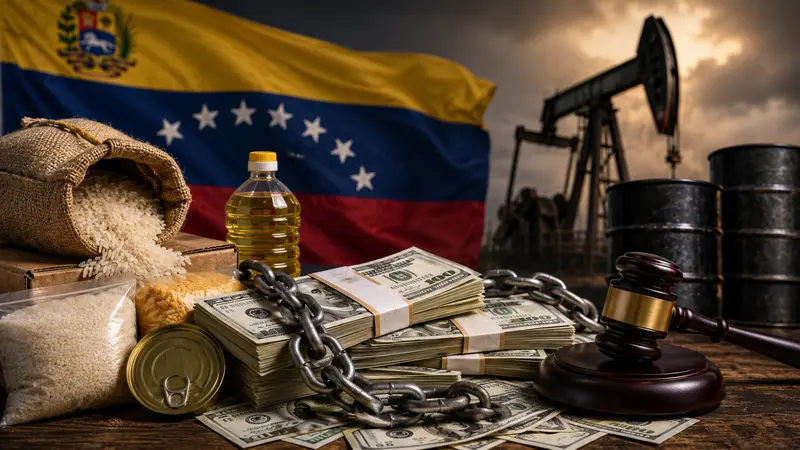
The indictment of Alex Saab reveals a sophisticated international conspiracy involving the diversion of billions of dollars meant for Venezuelan food aid and the illicit sale of national oil reserves.
The recent indictment of Alex Saab marks a significant flashpoint in the global fight against state-sponsored financial malfeasance, exposing a complex network of international illicit finance. At the heart of the charges are allegations of a systematic, multi-billion dollar scheme to siphon funds intended for basic human welfare—specifically, food aid for the Venezuelan populace—and to systematically strip the country of its national oil wealth. This case is not merely a local political scandal; it is a deeply technical and alarming examination of how advanced shell company structures and manipulated international trade mechanisms can be utilized to bypass global financial safeguards, transforming public aid into private enrichment for ruling elites and their associates.
For years, the international financial community and geopolitical analysts have struggled to trace the financial decay within Venezuela, a nation once synonymous with hydrocarbon wealth. The charges brought by the U.S. Department of Justice (DOJ) detail a coordinated, global-scale effort involving multiple layers of financial intermediaries and offshore corporate entities. The criminal conspiracy described transcends simple corruption; it represents a highly organized industrial process—a professional laundromat—designed to systematically convert national resources (oil and humanitarian aid) into untraceable, liquid private wealth. This complex financial engineering highlights critical vulnerabilities in global Anti-Money Laundering (AML) and Know Your Customer (KYC) protocols, especially when state structures are compromised or controlled by non-transparent actors.
How Do Shell Companies Function in State-Level Money Laundering?
The complexity of the alleged crime hinges on the strategic use of corporate veil. In the context of the Saab charges, investigators allege the creation of a sprawling web of shell companies—entities that exist only on paper—registered in jurisdictions with lax corporate transparency laws. These structures are not used for legitimate business operations but rather as financial buffers to obscure the true beneficial owners and the ultimate origin or destination of the funds. Funds intended for, say, grain purchases, would be invoiced by these shell companies, moving the money through a sequence of international accounts before being dispersed to individual beneficiaries or foreign holding accounts unconnected to the public aid program.
Furthermore, the scheme illustrates the vulnerability of commodity markets. The diversion of oil revenue is particularly noteworthy. Instead of following the established state revenue channels, the proceeds are allegedly channeled through complex maritime and trading deals, circumventing national banking controls. This speaks to a deep integration of financial crime with physical commodity trade, a nexus point of significant vulnerability for global financial governance. The allegation implies a sophisticated understanding of international trade finance—manipulating Letters of Credit (LCs) and over-invoicing/under-invoicing commodities—to facilitate the systematic siphoning of wealth.
Analyzing the Food Aid Diversion Mechanisms
The specific charges regarding the misuse of foodstuff funds are perhaps the most morally significant, given the humanitarian angle. The alleged pathway shows that funds earmarked for essential goods were not simply diverted through petty theft, but through formalized trade mechanisms. We see a pattern where international grants and aid funds, which typically come with stringent oversight requirements from donor nations, were intercepted.
To successfully execute this, the conspirators needed expertise across multiple domains: international law, accounting practices, maritime shipping logistics, and financial market instruments. This suggests the operation was not the work of a small group of corrupt officials, but rather a multi-disciplinary financial syndicate operating with significant institutional support and tacit permission, allowing them to move capital at an unprecedented scale against the backdrop of national economic collapse. The sheer volume of capital involved—running into billions—demands an equally sophisticated institutional complicity.
What Does the Oil Proceeds Scheme Reveal About Sovereignty?
The oil sector is traditionally viewed as a bedrock of national sovereignty and revenue stability. The alleged theft of oil proceeds directly challenges the notion that a nation's natural resources can be secured solely through domestic regulation. The indictment suggests that the control of revenue was decentralized and privatized through illicit means.
The modern financial playbook used here is a calculated attempt to decouple physical assets (oil barrels) from governmental control and instead treat them as a globally tradable, fungible commodity whose cash proceeds can be laundered through the existing global finance architecture. This reveals a profound shift: the asset is no longer controlled by the state, but rather by private, unregulated transnational financial mechanisms that prioritize speed and anonymity over compliance or ethical governance. This fundamentally undermines the rule of law and the concept of sovereign financial integrity.
Key Facts
Key Facts
- The charges involve allegations of laundering billions of dollars, encompassing misused food aid and illicit oil proceeds.
- The financial mechanisms detailed include the use of shell companies and complex offshore corporate structures.
- The investigation is spearheaded by the U.S. Department of Justice (DOJ), confirming the international scope of the alleged crime.
- The scheme required sophisticated manipulation of international trade finance, including Letters of Credit and commodity markets.
Implications for Global Compliance
This case underscores several critical vulnerabilities in the global financial system: the reliance on cross-border payments mechanisms, the difficulty in tracing fungible assets (like oil), and the challenge of enforcing sanctions against non-state actors or state-sanctioned corrupt entities. For international financial institutions, this serves as a massive red flag, demanding enhanced due diligence not only on the origin of funds but on the purpose and intended end-use of large commodity transactions.
The sheer scale and complexity of the financial fraud detailed here represent a systemic risk, forcing regulators globally to re-evaluate the effectiveness of anti-money laundering (AML) and counter-terrorist financing (CTF) protocols when dealing with state-level systemic corruption.
Google Search Preference
Add Fintech Monster to your preferred sources
Never miss deep, analytical fintech insights. Prioritize our stories in your Google Search, Discover feed, and AI Overviews with one click.
About the Author
Fintech Monster
Fintech Monster is run by a solo editor with over 20 years of experience in the IT industry. A long-time tech blogger and active trader, the editor brings a combination of deep technical expertise and extended trading experience to analyze the latest fintech startups, market moves, and crypto trends.