Why Binance's $2B Investment in Mesh Signals a Paradigm Shift for Global Payments
Key Takeaways
Binance's $2 billion investment in Mesh signals a strategic move to capture the "wallet-to-merchant" path, transitioning stablecoins from speculative assets into a primary utility for global commerce via high-speed, low-cost infrastructure.
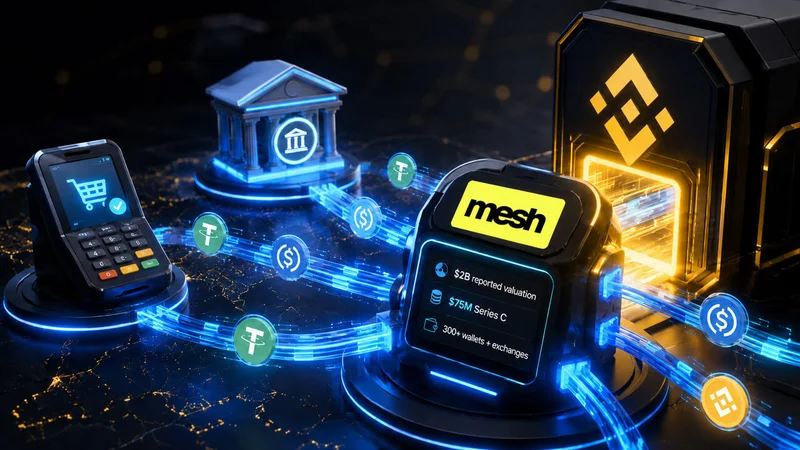
The announcement of a $2 billion investment by Binance into Mesh marks a watershed moment for the cryptocurrency ecosystem, signaling a move away from simple exchange liquidity toward the ownership of critical payment infrastructure. This isn't merely a capital injection into a promising startup; it is a calculated strategic maneuver to capture and control the "wallet-to-merchant" path—the crucial final mile where digital assets are converted into spendable value for businesses. By backing Mesh, Binance is positioning itself as a foundational architect of the rails upon which tokenized dollars will circulate globally, effectively attempting to bypass traditional financial intermediaries in favor of high-speed, blockchain-native settlement.
For years, the industry has struggled with the "utility gap," where stablecoins like USDT and USDC have achieved massive market caps but faced significant hurdles in merchant adoption. Merchants currently grapple with fragmented payment rails, high transaction fees, slow settlement cycles, and complex compliance requirements when attempting to accept digital assets directly. Mesh is designed specifically to solve these pain points by providing a unified routing layer that abstracts the inherent complexities of blockchain interactions. By creating a seamless bridge between a user's digital wallet and a merchant's point-of-sale system, Mesh enables near-instant finality, making stablecoins a viable alternative to traditional credit card networks.
How does Mesh solve the "last mile" problem for merchants?
The primary barrier to mass adoption has always been the friction of the transaction process. For a merchant, accepting crypto often involves navigating multiple network complexities and dealing with fluctuating gas fees or varying confirmation times. Mesh addresses this by offering a unified routing layer. This means that when a customer pays via their digital wallet, the backend complexity—such as which chain is being used, how many confirmations are needed, and how to reconcile the transaction—is hidden from the merchant.
By abstracting these layers, Mesh allows for what can be described as "invisible" blockchain integration. A merchant does not need to know they are interacting with a decentralized ledger; they simply see a successful payment of "tokenized dollars." This is essential for moving stablecoins out of the speculative sphere and into daily commerce. When a business can accept a digital asset as easily as a physical card, the utility of those assets scales exponentially, creating a more sustainable ecosystem for both users and holders.
Why is this investment a direct challenge to traditional banking?
The most profound systemic implication of this deal is its potential impact on the existing correspondent banking model (CBM). For decades, international and domestic payment flows have relied on a chain of intermediary banks to clear and settle transactions. This legacy system, while functional, is often slow, expensive, and reliant on outdated infrastructure that requires manual reconciliation processes.
Mesh’s integration of blockchain-native settlement offers a parallel path. Because it provides near-instant finality without the need for multiple intermediaries, it bypasses much of the overhead associated with SWIFT or other traditional gatekeepers. By investing in this specific technology, Binance is effectively building a shadow infrastructure that can facilitate borderless transactions in seconds rather than days. This shift suggests a future where certain payment flows may become "de-banked," moving directly through decentralized rails to reach merchant accounts globally.
The move toward "tokenized dollars" as a global standard
The specific focus on "tokenized dollars" highlights the evolution of stablecoins into the primary medium for global trade. Unlike volatile assets, tokenized dollars provide the stability required for commerce while retaining the speed and transparency benefits of blockchain technology. By securing a dominant position in the routing of these assets, Binance is positioning itself as a central pillar of the new digital economy.
This creates a massive network effect. As more merchants integrate Mesh’s technology, it becomes easier for crypto-native users to spend their holdings without off-ramping into fiat currency first. This "stickiness" ensures that users remain within the ecosystem. Instead of being an exchange where people trade assets before moving them to other platforms, Binance (through its stake in Mesh) becomes the primary infrastructure provider for the actual spending of those assets. It is a shift from providing the market for the asset to owning the rail for the utility.
Key Facts
- Investment Amount: Binance has committed $2 billion toward Mesh.
- Core Technology: A unified routing layer that abstracts blockchain complexity for end-users and merchants.
- Primary Goal: To control the "wallet-to-merchant" path, removing hurdles like high fees and slow settlement.
- Technical Edge: Provides near-instant finality by eliminating the need for multiple intermediaries.
- Market Focus: Targeting the infrastructure of tokenized dollars to move crypto toward a "payment utility."
Expert Commentary
From a market perspective, this is a textbook example of vertical integration intended to create a formidable competitive moat. By moving into the merchant-facing layer, Binance is attempting to capture value at every stage of the lifecycle: holding (stablecoins), trading (the exchange), and spending (Mesh).
The move toward "utility" is the only viable long-term path for stablecoin adoption at scale. When you remove the friction from the payment process, you render many traditional settlement layers obsolete. We are likely entering a period where the distinction between "crypto" and "fintech" will blur entirely; if the underlying blockchain is invisible to the merchant, the product is no longer "crypto"—it's just a superior way to move money. This investment suggests that Binance recognizes that the next billion users won't care about the underlying chain; they only care that the transaction is instant and the fees are low. By securing Mesh, they aren't just buying a piece of software; they are pre-empting a significant portion of the future global payment infrastructure.
Google Search Preference
Add Fintech Monster to your preferred sources
Never miss deep, analytical fintech insights. Prioritize our stories in your Google Search, Discover feed, and AI Overviews with one click.
About the Author
Fintech Monster
Fintech Monster is run by a solo editor with over 20 years of experience in the IT industry. A long-time tech blogger and active trader, the editor brings a combination of deep technical expertise and extended trading experience to analyze the latest fintech startups, market moves, and crypto trends.