Why Did Accel, ElevenLabs, and Vercel Just Back Pocket?
Key Takeaways
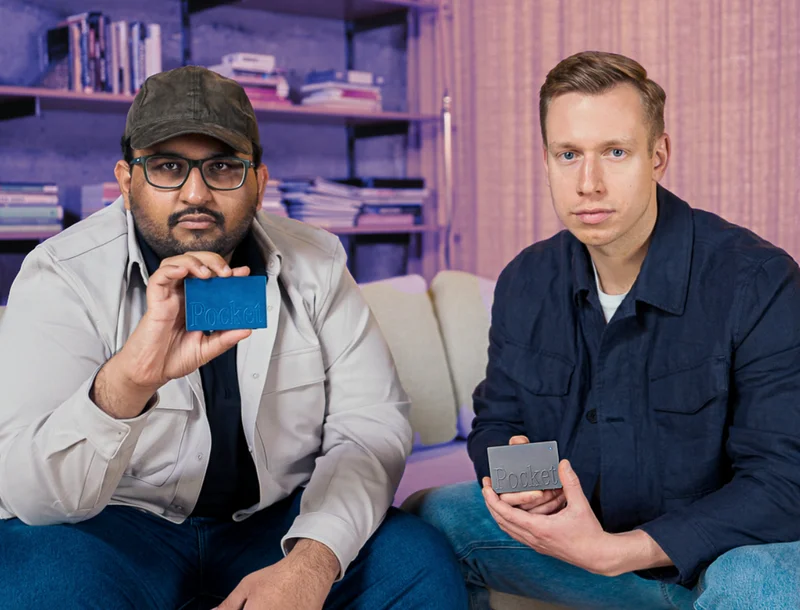
Pocket is a specialized hardware startup that secured €9.65 million ($11 million) in seed funding to solve critical AI inference bottlenecks through edge intelligence and hardware-software co-design.
The emergence of Pocket as a significant player in the hardware space marks a pivotal shift in how venture capital perceives the "intelligence" layer of the tech stack. By securing a €9.65 million ($11 million) seed funding round led by Accel, the startup has entered the spotlight not just as another AI play, but as a foundational infrastructure project. The inclusion of heavy-hitter backers from ElevenLabs and Vercel signals that the industry is moving away from simple software wrappers and toward specialized hardware designed to handle the immense computational demands of modern neural networks.
This investment underscores a growing recognition within the venture capital community regarding the limitations of general-purpose computing for high-scale AI applications. While the first wave of generative AI was powered by massive, centralized GPU clusters, the next frontier lies in efficiency and localization. Pocket is positioned at this exact crossroads, aiming to provide the specialized hardware necessary to move AI from the cloud into the "edge"—bringing intelligence directly to the end-user while drastically reducing latency and operational costs.
What makes the backing from ElevenLabs and Vercel so significant?
To understand why the CEOs of ElevenLabs and Vercel took a personal interest in Pocket, one must look at their respective positions in the tech ecosystem. ElevenLabs is a global leader in AI audio and voice synthesis. For such an application to be viable in real-time—such as in interactive voice assistants or instant dubbing—the processing must occur with minimal latency. The involvement of their leadership suggests that Pocket's hardware likely offers specialized optimizations for audio processing, allowing neural networks to execute at speeds that general-purpose chips cannot match.
Similarly, Vercel stands as a cornerstone of modern web infrastructure and edge computing. Their participation indicates that Pocket’s technology is likely aimed at solving the "edge" problem. By optimizing how AI models run on localized hardware rather than relying on distant data centers, Pocket enables developers to deploy more responsive applications. This synergy suggests that the investors are looking for a way to make AI ubiquitous; if an AI model can run locally with high performance, it removes several layers of infrastructure complexity for the end-user.
The shift from software wrappers to hardware-software co-design
The capital flow toward Pocket reflects a broader systemic move in the tech industry toward "deep tech." In recent years, many startups flourished by simply providing a user interface over existing large language models. However, as those models become commoditized, the competitive advantage is shifting back toward the physical layer. This involves what experts call hardware-software co-design—the practice of designing software and the underlying silicon in tandem to maximize performance for specific tasks like transformer architecture inference.
Furthermore, the transition of founder Gabriel Dymowski into this role highlights a trend where elite capital follows "visionary" leadership capable of navigating complex R&D cycles. Unlike pure SaaS products, hardware development requires significant capital expenditure (CapEx) and longer timelines. By backing a visionary who understands how to bridge the gap between software requirements and physical chip constraints, Accel and its partners are betting on a more sustainable and defensible moat for AI companies.
Key Facts
- Pocket is a specialized hardware startup co-founded by Gabriel Dymowski.
- The company secured €9.65 million ($11 million) in seed funding.
- The investment round was led by Accel, a premier global venture capital firm.
- High-profile backing includes the CEOs of ElevenLabs and Vercel.
- Key technical focus areas include inference optimization, edge intelligence, and hardware-software co-design.
Expert Commentary
From a trading and market analysis perspective, the entry of heavyweights like Accel alongside specific industry "practitioner" investors (the CEOs of ElevenLabs and Vercel) is a massive indicator of "moat construction." In the current cycle, we are seeing a move away from "thin" AI layers. When you see infrastructure leaders backing hardware startups, it suggests they are trying to solve the unit economics of AI.
Standard GPU clusters are expensive and power-hungry; moving that intelligence to specialized silicon (Edge Intelligence) is the only way for many companies to achieve high margins. Pocket isn't just selling a piece of hardware; they are attempting to own the "inference layer." For investors, this represents a move into the bedrock of the industry—investing in the tools that make the software revolution scalable and economically viable over the next decade. We should expect to see more "co-design" plays as the era of general-purpose AI computing hits its practical limits.
Google Search Preference
Add Fintech Monster to your preferred sources
Never miss deep, analytical fintech insights. Prioritize our stories in your Google Search, Discover feed, and AI Overviews with one click.
About the Author
Fintech Monster
Fintech Monster is run by a solo editor with over 20 years of experience in the IT industry. A long-time tech blogger and active trader, the editor brings a combination of deep technical expertise and extended trading experience to analyze the latest fintech startups, market moves, and crypto trends.