Why Former OpenAI Researcher Bets $13B on Bitcoin Miners: The Grid is the Next Frontier
Key Takeaways
Following a massive capital allocation of $13.6 billion, former OpenAI researcher Leopold Aschenbrenner is betting that the true value of crypto miners lies not in Bitcoin itself, but in their critical, hard-to-acquire assets: industrial power capacity and stable grid connectivity for the age of AI.
Table of Contents
The financial industry is experiencing a major shift, moving away from pure speculative bets and toward the foundational physical infrastructure required to power the next generation of intelligence. This seismic realization is perfectly encapsulated by the investment thesis of Leopold Aschenbrenner, a former researcher from OpenAI. Aschenbrenner’s recent, massive capital deployment—reportedly totaling $13.6 billion in Q1 2026—is not a traditional crypto bet. Instead, it represents a highly technical, systemic allocation targeting the core chokepoint of the Artificial General Intelligence (AGI) supercomputer race: massive, reliable, industrial-grade energy capacity and grid access.
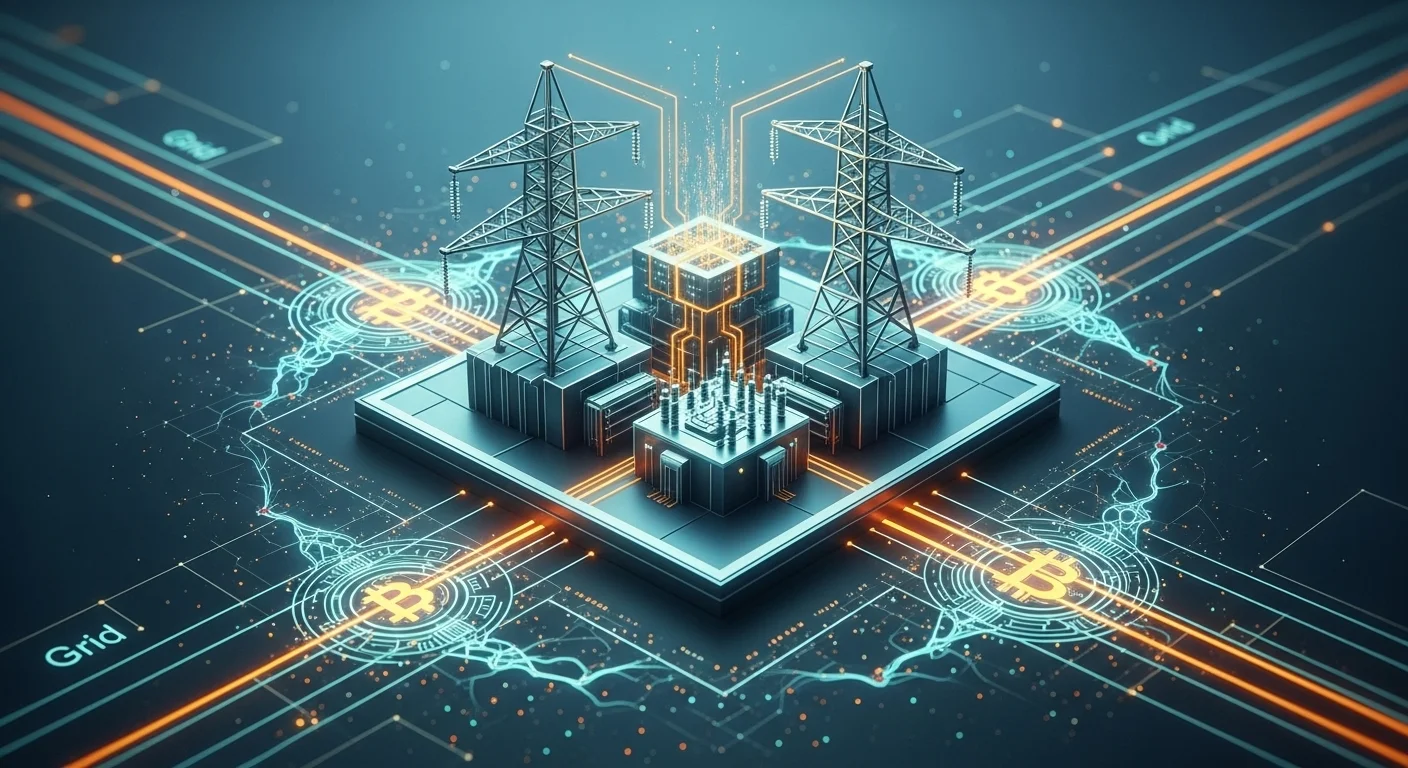
Aschenbrenner's thesis dismisses the idea that computational breakthroughs are solely dependent on algorithmic elegance or faster chips. His core argument asserts that the primary, imminent bottleneck for achieving AGI is an overwhelming, unprecedented requirement for energy. As AI models grow exponentially in size and complexity, their computational demands are measured not in teraflops, but in gigawatts (GW). This realization pivots the investment focus dramatically: the value proposition is no longer the coin mined, but the physical infrastructure—the power transformers, the grid connections, and the real estate—that allows that mining (or AGI computation) to exist at scale.
Is the AI Superintelligence Race Primarily an Energy Competition?
For decades, the narrative surrounding advanced computing focused heavily on hardware accelerators (the "NVIDIA cycle") and algorithmic efficiency. While these factors remain crucial, Aschenbrenner’s analysis introduces a critical constraint: the utility grid. To train models approaching AGI capabilities, the computational resources required demand power levels far exceeding the sustained capacity of many established tech hubs. This isn't merely a matter of buying more chips; it's about guaranteeing the consistent, massive supply of clean, high-density power.
The global energy grid, particularly in established tech clusters, faces systemic stress. The projected power draw of a cluster of AGI supercomputers is so immense that it threatens to overwhelm localized grids, leading to energy scarcity that becomes the most expensive, hardest-to-source commodity. This fundamental constraint transforms the Bitcoin mining operation from a speculative digital asset venture into an essential energy utility. Miners are, therefore, seen as highly specialized, pre-existing holders of scarce, industrial-grade power capacity—a true hard asset.
Why Are Bitcoin Miners the Ideal Infrastructure Play?
The key to Aschenbrenner's model lies in the inherent nature of large-scale mining operations. Unlike smaller, distributed computing loads, professional mining farms require dedicated, industrial-scale power substations. They must maintain robust, redundant grid connections capable of handling constant, immense loads. This necessity means that the miners have already solved the most difficult part of the infrastructure problem—the securing of reliable, high-capacity utility feeds.
By investing in miners, capital is effectively acquiring a deeply de-risked asset class: power supply contracts and physical real estate with utility access. When the AI boom inevitably requires terawatt-scale power, these established mining facilities become critical, irreplaceable pieces of infrastructure. The investment thesis thus shifts the valuation from (Bitcoin Price x Hash Rate) to (Power Capacity Value x Location Scarcity Premium).
De-Risking Crypto: How Infrastructure Mitigates Market Volatility
A traditional crypto speculation fund is highly susceptible to the sentiment swings of the market, where sudden changes in Bitcoin or Ethereum pricing can wipe out capital quickly. Aschenbrenner's strategy attempts to fundamentally decouple the investment from the digital asset cycle.
The value proposition is structured as a two-layered gain: 1. The Utility Layer (The Hedge): The immediate, non-crypto-dependent value is the power capacity and grid access itself. This is a utility play, benefiting regardless of whether the Bitcoin price goes up or down. It hedges against the primary systemic risk of the crypto market—volatility. 2. The Digital Layer (The Upside): Simultaneously, the operational efficiency and revenue generation from the underlying mining activity still benefit from any cyclical uptrend in crypto prices.
This combined exposure creates a powerful arbitrage opportunity. The investor is positioned to profit simultaneously from the global energy transition (a secular, long-term trend) and the exponential growth of decentralized computation.
Google Search Preference
Add Fintech Monster to your preferred sources
Never miss deep, analytical fintech insights. Prioritize our stories in your Google Search, Discover feed, and AI Overviews with one click.
About the Author
Fintech Monster
Fintech Monster is run by a solo editor with over 20 years of experience in the IT industry. A long-time tech blogger and active trader, the editor brings a combination of deep technical expertise and extended trading experience to analyze the latest fintech startups, market moves, and crypto trends.
Related Articles
Recommended
Grid Wars: How Local Zoning Battles Are Redefining the Future of Crypto Mining and AI Infrastructure
Local zoning conflicts over energy consumption are creating a systemic regulatory risk for both crypto mining and AI data centers, forcing the industry to pivot toward decentralized power sourcing and sophisticated compliance models.

Decoding the Strategic Divorce: Why Bitcoin is Outpacing Traditional Narratives While Diverging from the AI Equity Surge
While the equity markets are currently dominated by a high-growth narrative fueled by Artificial Intelligence, Bitcoin’s divergence signifies a structural shift toward infrastructure-based value in stablecoins and real-world asset (RWA) tokenization.
How EMCD and VNISH Are Redefining Mining: The Shift from Raw Hashrate to Optimal Efficiency
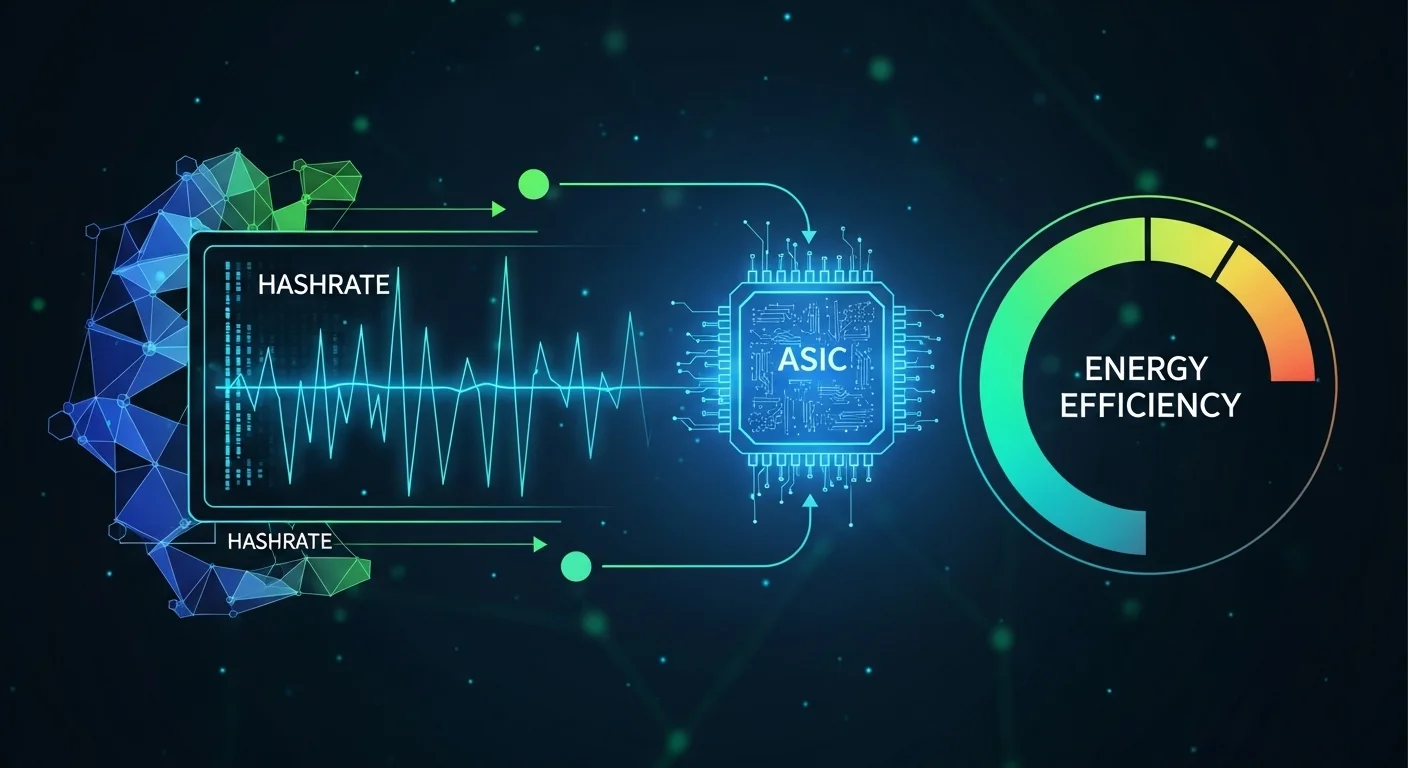
The partnership between EMCD and VNISH introduces an integrated mining stack that optimizes ASIC performance through advanced firmware, prioritizing energy efficiency and stability over raw hashrate.

From Bootstrapped Roots to a €3.1B Powerhouse: The Rise of Oxylabs
Oxylabs has achieved unicorn status with a €3.1 billion valuation by providing the critical AI-powered infrastructure necessary to bypass complex anti-bot protections and extract high-quality data for LLM training and real-time analysis.

The Water Crisis in the AI Boom: How Wafr Technologies’ $100M Investment Is Cooling the Data Center Landscape
Wafr Technologies has secured $100 million to commercialize advanced, water-efficient cooling technologies that can reduce data center water usage by up to 95 percent.