Is NEAR Protocol Positioned for a 20x Growth Cycle? Analyzing the Infrastructure Shifts Driving NEAR's Value
Key Takeaways
Arthur Hayes's thesis suggests NEAR Protocol's potential for exponential growth stems from its unique architectural integration of AI utility, enhanced privacy features, and the revolutionary 'Intents' layer, positioning it as a foundational layer for decentralized computing.
The market commentary suggesting NEAR Protocol (NEAR) could see massive appreciation, exemplified by high-profile figures such as Arthur Hayes, indicates a fundamental reassessment of the protocol's systemic value. This narrative moves the conversation beyond simple speculation, anchoring the projected growth in concrete, technologically superior architectural features. The core thesis is that NEAR is not merely a functioning blockchain but is becoming a specialized, foundational layer designed to solve the most complex, high-value computational problems of the next generation, specifically those intersecting Artificial Intelligence, data privacy, and cross-chain interoperability.
For years, many smart contract platforms competed primarily on throughput (TPS) or initial token valuation. Today's market, however, is rewarding specialization. NEAR’s recent developments—particularly the emphasis on 'Intents' and its robust support for AI workflows—signal a pivot toward utility and application capability. This deep structural enhancement means the network is positioning itself to capture the exponential value created by decentralized AI agents and regulated enterprise applications, a shift that validates its long-term infrastructure play status.
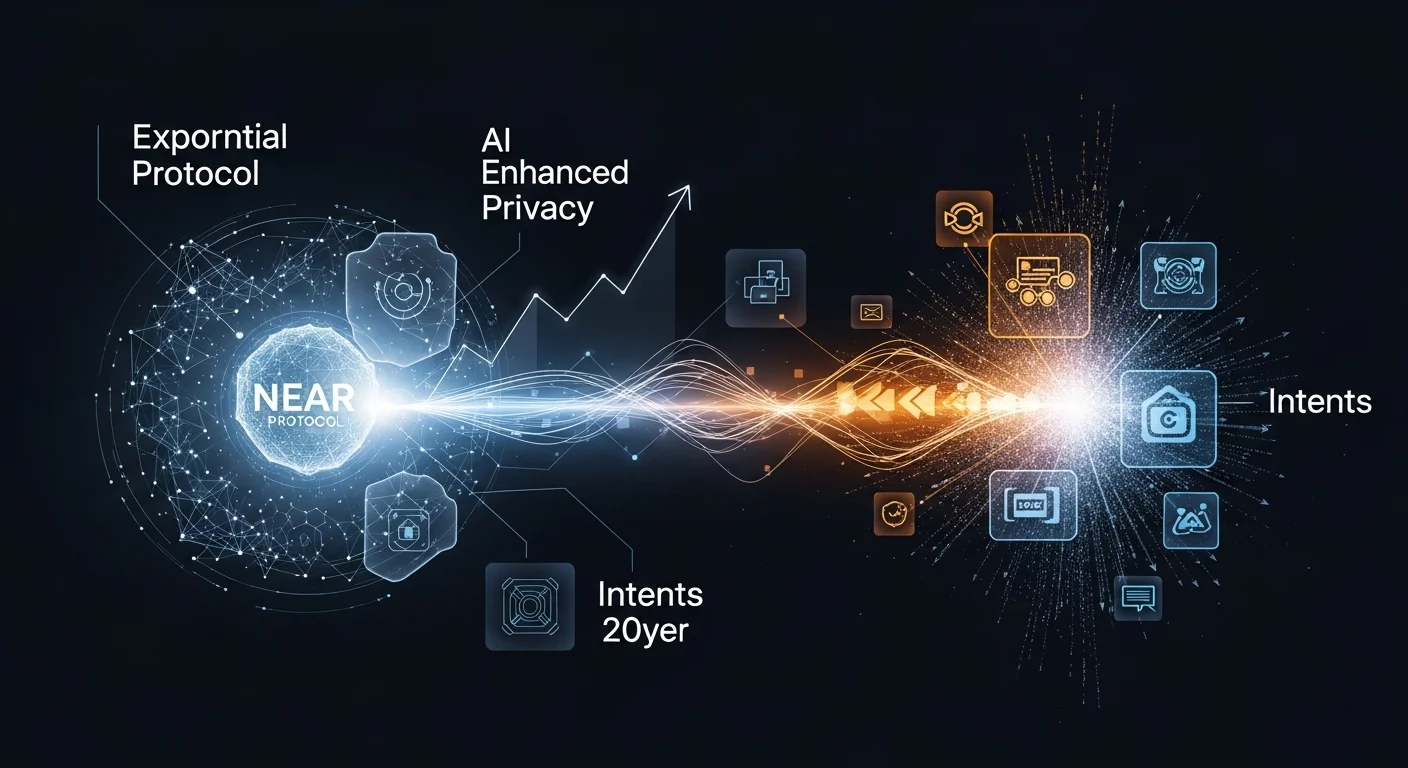
How Is NEAR Adapting to Become the Backbone for AI Infrastructure?
The integration of Artificial Intelligence into the decentralized finance (DeFi) and decentralized application (dApp) space represents the most significant compute shift since the initial deployment of ETH 2.0. Instead of merely storing data about AI transactions, modern infrastructure requires the ability to execute complex, compute-intensive AI workflows directly on-chain or via seamless off-chain coordination.
NEAR is leveraging its flexible architecture to address this demand. The protocol is evolving to support decentralized compute layers, meaning that computation—the actual processing done by AI algorithms—can be orchestrated across various nodes and validated by the network. This capability is crucial because AI models require vast, reliable, and verifiable computational resources. By embedding AI utility into its core infrastructure, NEAR transitions from being merely a ledger to becoming a decentralized computation marketplace.
This positioning allows smart contracts to interact directly with AI agents. Instead of a developer writing code to predict a commodity price, they can define an intent: "Execute a market prediction using Model X and pay Model Y if the outcome meets Threshold Z." This dramatically lowers the barrier to entry for complex, real-world AI applications, making NEAR a prime candidate for powering the next wave of decentralized, autonomous agents that will manage assets and execute complex strategies.
Decoding the "Intents" Layer: Beyond Traditional Smart Contracts
Perhaps the most revolutionary element cited by technical analysts is the implementation of 'Intents.' Traditional smart contract development is often akin to providing a highly specific, step-by-step instruction manual for a machine: "First, call contract A; then, wait 5 seconds; third, execute function B." This approach is brittle, complex, and fails when interacting with multiple chains or variable conditions.
The concept of Intents solves this by abstracting the execution model. Instead of telling the network how to achieve a goal, the user simply tells the network what they want (the intent). For example, the intent might be: "Swap 100 USDC for the maximum amount of BTC available from a liquidity pool across any connected chain." The NEAR infrastructure, acting as an intelligent routing layer, then autonomously determines the optimal path—which includes which cross-chain bridges, which liquidity pool, and what gas fees are required—and executes it.
This level of abstraction is exponentially valuable. It drastically increases the protocol’s utility, enhances user experience for cross-chain users, and positions NEAR as a pivotal piece of multi-chain connectivity, solving one of the most enduring pain points in the DeFi industry. The ability to process generalized user intentions creates a sticky, sticky infrastructure that attracts serious institutional and cross-chain capital.
Key Facts
- AI Utility: NEAR is integrating advanced computing primitives to support complex AI model execution directly on the blockchain, transforming it into a computational layer.
- Intelligent Routing: The 'Intent' mechanism allows users to specify a desired outcome rather than a rigid sequence of transactions, dramatically improving cross-chain efficiency and user experience.
- Protocol Adoption: The continuous development of robust tooling and SDKs ensures that institutional and enterprise developers can build complex, multi-step applications directly on the NEAR blockchain.
Analyzing the Ecosystem Shift: Why This Matters
The combination of sophisticated compute capabilities (AI) and superior transaction abstraction (Intents) fundamentally changes the network's value proposition. It moves the blockchain from being merely a ledger (a record keeper) to being a functional, highly programmable computer (a settlement and execution engine).
This paradigm shift makes NEAR attractive to sectors like decentralized finance (DeFi 2.0), decentralized physical infrastructure networks (DePIN), and Web3 gaming, areas that require complex, interconnected state changes rather than simple token transfers.
The persistent emphasis on developer experience, low transaction costs, and high throughput (a testament to its architecture) ensures that the platform can scale to meet the demands of institutional capital—a requirement that many older or less scalable chains struggle with. The focus is not just on technology; it is on enabling massive, scalable, real-world utility.
Google Search Preference
Add Fintech Monster to your preferred sources
Never miss deep, analytical fintech insights. Prioritize our stories in your Google Search, Discover feed, and AI Overviews with one click.
About the Author
Fintech Monster
Fintech Monster is run by a solo editor with over 20 years of experience in the IT industry. A long-time tech blogger and active trader, the editor brings a combination of deep technical expertise and extended trading experience to analyze the latest fintech startups, market moves, and crypto trends.