Mysa Raises $3.4M Pre-Series A for AI Finance Platform in India
Key Takeaways
Bengaluru‑headquartered Mysa raises $3.4 million in a Pre‑Series A round co‑led by Blume Ventures and Piper Serica to scale AI-powered finance operations.
Key Facts on Mysa's Funding:
- Amount Raised: $3.4 Million Pre-Series A
- Lead Investors: Blume Ventures, Piper Serica
- Product: B2B financial automation layer targeting mid-market Indian enterprises.
- Traction: Processing ₹1,500 crore annualized volume; integrated with 15+ banks.
Bengaluru‑headquartered fintech startup Mysa, a business‑to‑business platform that automates financial operations for mid‑sized companies, has raised $3.4 million in a Pre‑Series A funding round co‑led by Blume Ventures (an India‑focused early‑stage venture capital firm) and Piper Serica (an investment firm concentrating on financial services) with participation from Ikemori Ventures, Raise Financial Services, and QED Innovation Labs, alongside existing investors Antler, IIMA Ventures, and Neon Fund. This round brings Mysa’s total capital raised to approximately $6.2 million.
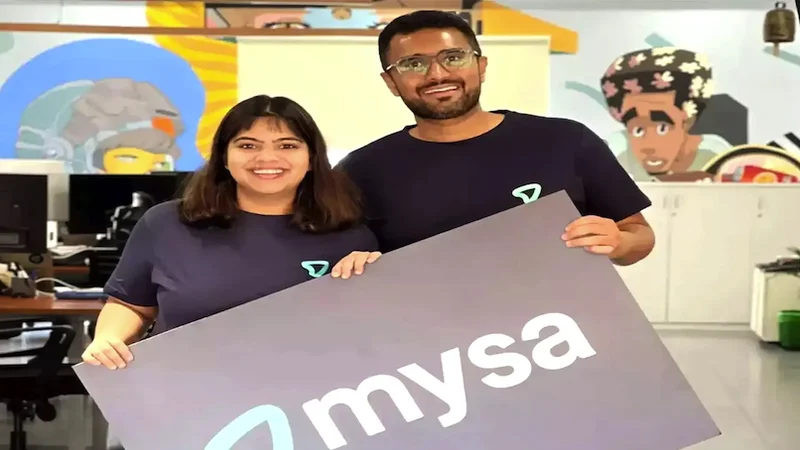 Mysa Secures $3.4M in Pre‑Series A Funding to Deepen AI‑Powered Finance Platform.
Who is Mysa and What Do They Do?
Mysa was founded in 2023 by Arpita Kapoor and Mohit Rangaraju. The platform targets Indian mid‑sized enterprises with annual revenues or financial operations roughly between ₹10 crore and ₹300 crore (about $1.2 million to $36 million), a segment investors describe as under‑served by legacy software.
The product integrates with existing enterprise resource planning (ERP) systems and multiple bank accounts to automate vendor management, accounts payable, expense tracking, GST input tax credit compliance checks, and multi‑bank payment operations. This integration aims to reduce manual workload and operational risk while preserving existing financial systems and workflows.
Mysa claims its platform currently processes over ₹1,500 crore in annualised transaction volumes and facilitates payments to more than 40,000 bank accounts across India. It reports integrations with more than 15 banks, including Axis Bank, YES Bank, IDFC First Bank, ICICI Bank, and HDFC Bank.
Who Are the Founders Behind the Platform?
Arpita Kapoor serves as Mysa’s Chief Executive Officer. Her public statements on the funding emphasise the platform’s role as an AI‑driven automation layer that “plugs seamlessly” into legacy ERPs and bank systems without requiring migrations or upfront costs.
Mohit Rangaraju is co‑founder and leads product development. Prior funding disclosures from Mysa indicate the founding team also includes Ashutosh Panigrahi (Chief Technology Officer) and Mohit Jain (Head of Partnerships and Sales), bringing additional engineering, banking, and fintech experience to the leadership.
Angel and advisory backers in earlier rounds include founders and executives from Swiggy, Ultrahuman, MyGlamm, Uni Cards, and Locus, pointing to networks across Indian tech and consumer startups.
How Does Mysa Fit Into the Market?
Mysa’s core proposition is to unify fragmented banking, accounting, and financial workflows into a single dashboard that operates on top of existing systems. Its “Smart Scan” feature uses AI to interpret invoices and receipts, predict due dates, and categorise expenses, while workflow automation attempts to reduce human error and processing time.
The company says its customer base spans sectors including quick commerce, manufacturing, hospitality, fintech, and real estate, citing clients such as Dhan, Wint Wealth, Swish, DrinkPrime, Material Depot, and others.
How Will the New Capital be Used?
According to company disclosures, the fresh capital will be used to expand automation capabilities and extend the product suite with new offerings such as procurement tools, UPI‑linked expense management, and a corporate credit card. Mysa also plans to explore embedded financing by leveraging its vendor network, and to deepen integrations with banks and enterprise systems.
Investor commentary frames Mysa as addressing a structural inefficiency in India’s SME segment, where complex compliance requirements and fragmented systems create operational friction and additional cost. Piper Serica and Blume Ventures have described the platform as creating a new category by combining AI‑driven automation with deep banking integrations.
What are the Implications for Indian Fintech?
The funding round underscores ongoing investor interest in financial operations automation for mid‑market enterprises in India. As SMEs and mid‑sized companies adopt more digital financial tooling, platforms that effectively bridge banking, accounting, and ERP systems without disruptive migrations may attract additional capital and expanded adoption. The development also suggests a shift in B2B fintech investment focus toward platforms that balance automation, compliance, and vendor financing capabilities at scale.
Google Search Preference
Add Fintech Monster to your preferred sources
Never miss deep, analytical fintech insights. Prioritize our stories in your Google Search, Discover feed, and AI Overviews with one click.
About the Author
Fintech Monster
Fintech Monster is run by a solo editor with over 20 years of experience in the IT industry. A long-time tech blogger and active trader, the editor brings a combination of deep technical expertise and extended trading experience to analyze the latest fintech startups, market moves, and crypto trends.