Stablecoins Powering Global Payments: How Nium and Coinbase Are Redefining Cross-Border Finance
Key Takeaways
The partnership integrates USDC settlement directly into Nium’s global rails, transitioning cross-border payments from capital-intensive prefunding models to rapid, just-in-time settlement via a unified fiat-and-on-chain platform.
The convergence of established global payment infrastructure and programmable digital assets marks a definitive inflection point for the global financial industry. The strategic partnership between Nium, a heavyweight in cross-border payout systems, and Coinbase, a regulated custodian of digital assets, is not merely an integration—it is a fundamental re-engineering of how money moves across borders. By embedding the settlement power of USDC stablecoins directly into Nium’s massive global payout rails, the collaboration creates a unified, multi-rail architecture designed to eliminate the systemic friction, latency, and cost bottlenecks inherent in legacy correspondent banking networks.
For decades, global commerce has been hampered by payment systems that require enormous amounts of pre-allocated, idle capital and often settle funds in outdated cycles. Nium's existing operational footprint is vast, supporting payouts to accounts, cards, and wallets across over 190 countries and facilitating transactions in approximately 100 currencies. The introduction of stablecoin settlement via Coinbase’s robust APIs solves the core challenge of liquidity management: providing an instantaneous, efficient, and globally usable digital settlement layer that bridges the reliability of fiat currency with the speed of the blockchain.
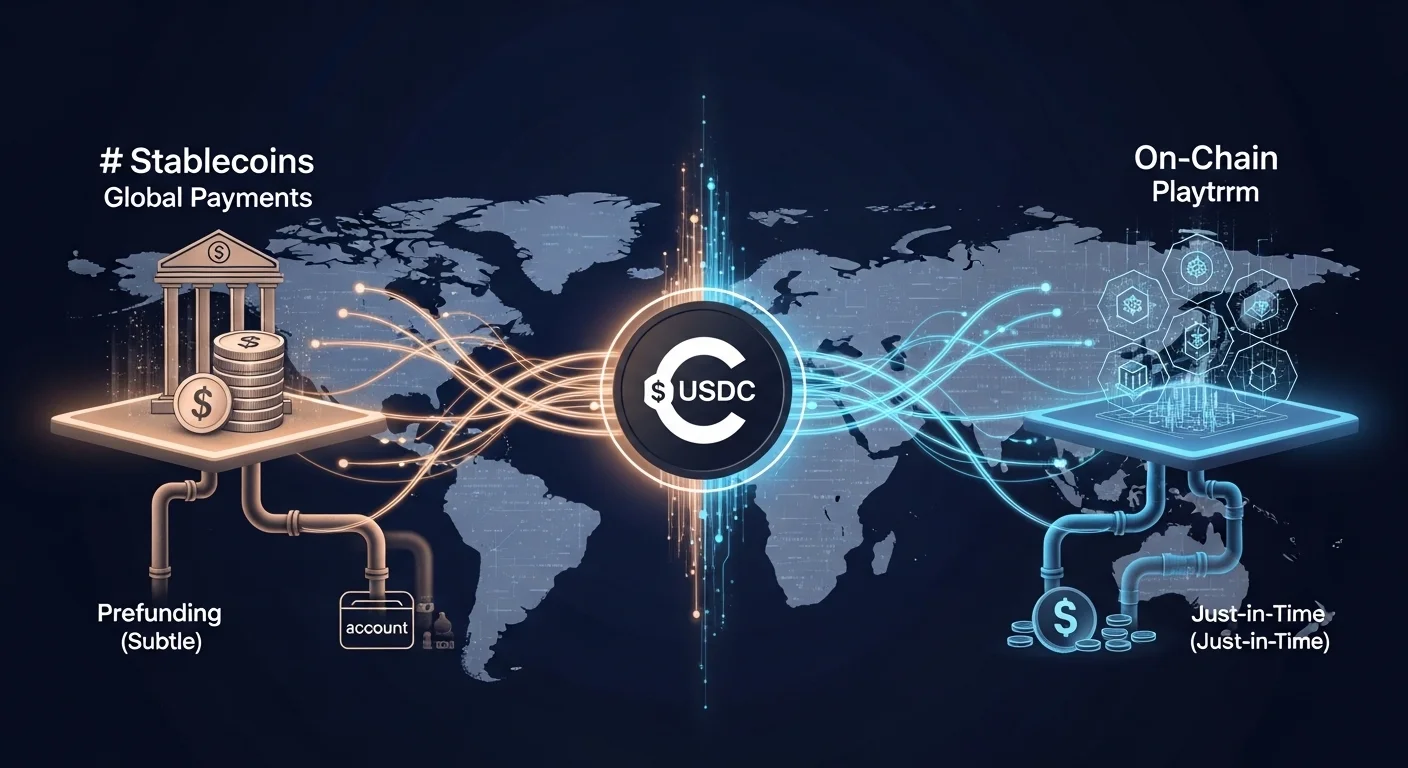
How Does Stablecoin Settlement Transform Global Payments?
At its heart, this partnership provides a single, seamless operating environment for businesses that traditionally had to manage multiple, disconnected settlement paths. Previously, a company initiating a payout across continents often had to juggle several mechanisms: SWIFT for institutional transfers, local bank rails for final mile settlement, and complex treasury operations to fund the necessary liquidity corridors. This fragmentation creates significant operational overhead.
The Nium-Coinbase synergy dramatically simplifies this by allowing clients to transact across both on-chain (stablecoin) and fiat rails on a single, unified platform. Businesses can now use USDC stablecoins—a highly regulated and stable digital dollar—to power payouts, knowing that the system manages the conversion, routing, and final leg settlement into the recipient's local currency at the precise moment needed.
Why Is "Just-in-Time" Settlement the Game Changer for Treasuries?
The most profound operational benefit highlighted by this partnership revolves around treasury optimization. In the traditional model, a multinational corporation or large financial institution must engage in capital-intensive prefunding. To ensure that a disbursement to a market far away is guaranteed, a substantial amount of capital must be tied up and held in anticipation—or "idled"—in various intermediary accounts (the so-called "collateral lockup"). This trapped capital represents a significant drag on profitability and dynamic global resource allocation.
The stablecoin mechanism fundamentally solves this by enabling 'just-in-time' settlement. Instead of pre-funding the entire journey, funds move digitally and settle immediately as needed. This drastically reduces required working capital, improves cash flow efficiency, and de-risks the operational ledger. It shifts the focus from capital allocation to pure transaction velocity.
Core Pillars of the New Global Commerce Model
The partnership establishes three crucial pillars for modern digital commerce:
- Instant Global Liquidity: By bypassing traditional, slow correspondent banking chains for the initial settlement layer, liquidity moves instantly, making global payment cycles closer to domestic bank transfers.
- Reduced Counterparty Risk: The transparent, digital settlement ledger of the stablecoin layer inherently reduces the counterparty risk associated with multi-jurisdictional, manual processes.
- Programmable Money Flows: This framework supports advanced financial use cases, such as escrow services, immediate payroll disbursements, and programmatic revenue splitting, all executed with the speed and finality of blockchain settlement.
Expanding Utility: Beyond Simple Payments
The utility of this infrastructure extends far beyond simple point-to-point payments. The stablecoin mechanism enables complex, multi-step financial choreography that was previously prohibitively complex or expensive:
- Supply Chain Finance: Financing can be released automatically at specific checkpoints (e.g., customs clearance, factory assembly completion) without intermediary manual approvals.
- International Remittances: For workers sending money home, the cost and speed are drastically improved, ensuring higher net payouts to the beneficiary.
- Digital Wallets and Loyalty: Retail interactions can become instantaneous, using tokenized credits that settle globally, enhancing the loyalty loop.
The Future of Finance: Efficiency and Accessibility
The combination of Nium’s deep localized market expertise and Stripe’s global infrastructure, layered over a stable, programmable settlement layer, positions this system as a universal financial utility.
It democratizes access to advanced financial tools. Businesses in emerging markets, which often suffer from outdated banking infrastructure, can instantly access the efficiency levels of global financial hubs. The net result is a dramatically more efficient, faster, and cheaper plumbing for the global economy.
Key Takeaways:
- The Shift: From relying on slow, capital-intensive correspondent banking to using instant, digital liquidity rails.
- The Benefit: Massive improvement in working capital efficiency and reduction in counterparty risk for global businesses.
- The Outcome: A truly borderless financial infrastructure capable of supporting the next wave of complex digital commerce.
Google Search Preference
Add Fintech Monster to your preferred sources
Never miss deep, analytical fintech insights. Prioritize our stories in your Google Search, Discover feed, and AI Overviews with one click.
About the Author
Fintech Monster
Fintech Monster is run by a solo editor with over 20 years of experience in the IT industry. A long-time tech blogger and active trader, the editor brings a combination of deep technical expertise and extended trading experience to analyze the latest fintech startups, market moves, and crypto trends.