The $3.5 Billion Pivot: How HIVE Digital is Building Canada's Sovereign AI Compute Superhighway
Key Takeaways
HIVE Digital Technologies is making a massive strategic shift, committing $3.5 billion to build a 320 MW 'AI gigafactory' in the Greater Toronto Area, transforming from a crypto-mining entity into a foundational provider of sovereign AI compute resources.
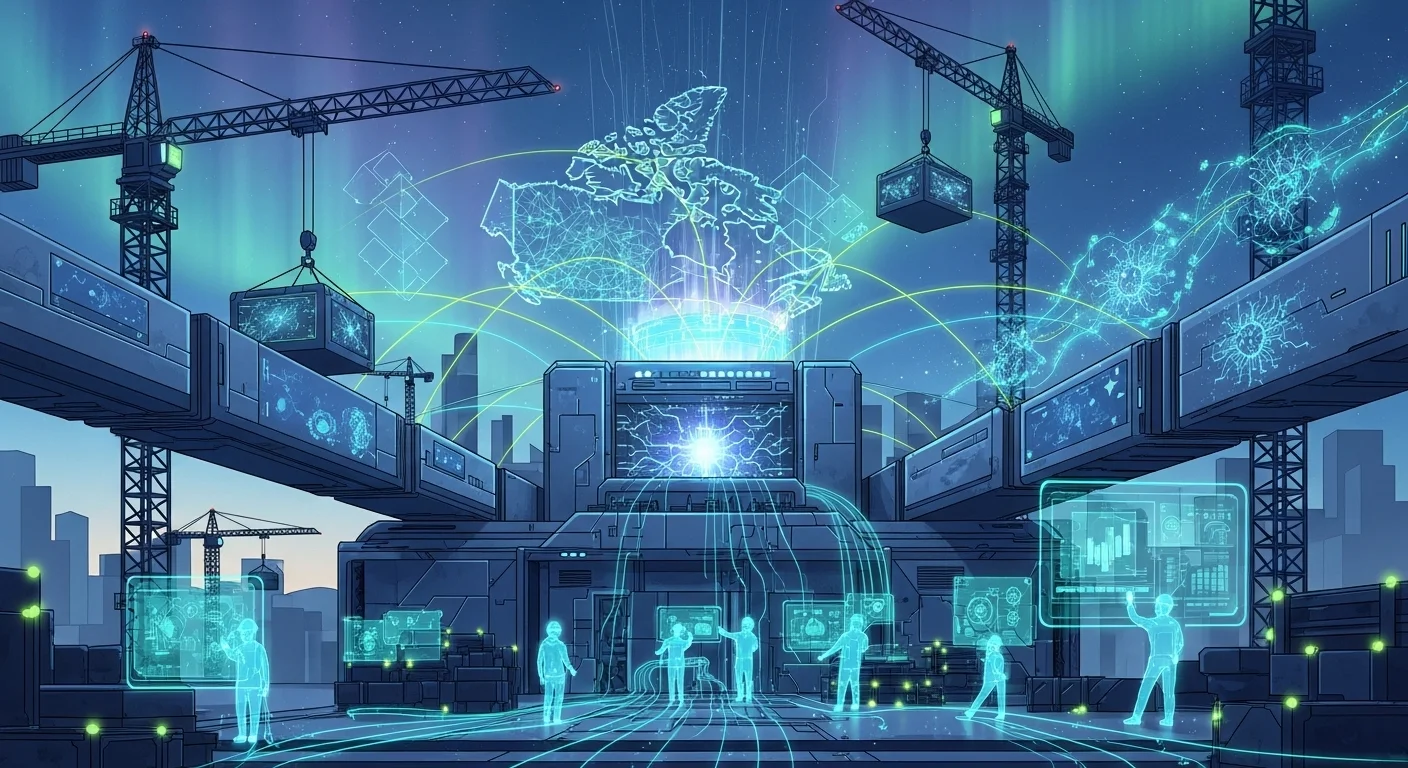
HIVE Digital Technologies, the prominent player in the crypto infrastructure space, has announced a staggering strategic pivot with plans to construct a monumental 320 MW AI infrastructure park in the Greater Toronto Area (GTA) of Ontario. This project, dubbed an 'AI gigafactory,' represents a definitive, capital-intensive shift for the company, repositioning it away from its historical core of Bitcoin mining and establishing itself as a critical, foundational provider of sovereign AI compute power for Canada's rapidly expanding intelligence economy. The scale of the investment and the technical specifications signal not merely a data center expansion, but a fundamental re-architecting of HIVE’s business model to ride the coattails of the global artificial intelligence boom.
Historically, HIVE's operations have been inextricably linked to the energy demands and capital cycles of Proof-of-Work (PoW) cryptocurrencies. While this foundation provided immense financial resources, the future trajectory of digital asset mining faces increasing scrutiny regarding energy efficiency and regulatory headwinds. Recognizing the maturation of crypto capital and the exponential growth of AI research, HIVE is aggressively directing its focus. By targeting specialized AI workloads, the company is moving into a sector that demands not just massive power, but extremely specialized, high-density computing resources—a significant leap in both complexity and operational value.
Why the Shift from PoW Mining to AI Compute Matters
The difference between mining a cryptocurrency and running a large-scale AI model is profound, both technologically and economically. Mining, while requiring colossal power, is structurally dedicated to verifying transactions on a decentralized ledger. Conversely, advanced AI compute, particularly for training large language models (LLMs) or running complex scientific simulations, requires enormous, sustained power delivered to specialized accelerator hardware, such as thousands of GPUs. This specialization means the demand is shifting from generalized power consumption to optimized, high-density compute throughput.
HIVE’s pivot directly addresses this structural change. By committing resources to an AI-native super factory, the company is signaling its intent to become a service provider to the most demanding corporate and governmental clients: the organizations building the next generation of AI. This transition is not merely a change in revenue stream; it’s an elevation into a critical component of national economic infrastructure.
What Does a 320 MW AI Superfactory Entail?
The stated capacity of 320 megawatts is not a modest figure; it places the facility among the largest planned industrial compute sites in the country. For comparison, achieving this level of utility connection and physical build-out requires years of planning, utility negotiations, and specialized engineering. The goal is to create a centralized, robust environment capable of housing a projected capacity exceeding 100,000 GPUs, with the combined pipeline pointing toward 130,000 units.
The strategic location within the GTA is paramount to this valuation. This area is a global nexus for academic excellence, boasting proximity to world-class research hubs like the University of Toronto and the Vector Institute. This clustering of top-tier talent, research institutions, and established tech companies provides an immediate, high-value client base. The facility is positioned to be the physical embodiment of 'sovereign AI infrastructure' for Canada, making it a key national resource.
How Much Capital is Required to Build This Future?
The financial commitment underpinning this vision is massive, with the total estimated capital expenditure pegged at approximately CAD $3.5 billion. This figure encompasses not only the physical build-out (the land acquisition, the electrical infrastructure, and the specialized cooling systems) but also the integration of cutting-edge computational hardware.
Such a capital allocation serves multiple strategic purposes. First, it assures investors of HIVE's deep commitment, guaranteeing that the shift is irreversible. Second, it allows the company to negotiate and secure critical long-term power contracts, which is often the hardest component of a megasite data center. The scale of this investment allows HIVE to compete directly with hyperscale cloud providers, forcing a re-evaluation of its market standing within the global data center sector. This strategy transforms the company from a niche crypto player into a serious, multi-billion dollar infrastructure operator.
Key Facts
- Total Estimated Capital Expenditure: ~$3 Billion+
- Primary Operational Shift: From Cryptomining to High-Density AI/HPC Computing
- Geographic Significance: Tapping into established, skilled talent pools in the Greater Toronto Area.
- Strategic Goal: To serve as a foundational cloud backbone for advanced AI research and commercialization.
The Implications for the Broader Tech Ecosystem
The development of this hyper-scale computing facility signals more than just increased data center capacity; it points to the maturation of Canadian AI as a commercial industrial sector. By building such a deep, dedicated resource pool, HIVE is positioning itself as a critical enabler for Artificial Intelligence, High-Performance Computing (HPC), and generative AI model training.
This move suggests that the revenue streams will pivot away from volatile crypto market cycles and towards stable, long-term contracts with global tech giants and national research bodies that require petascale computing power. It is a calculated shift from commodity production (mining) to highly specialized service provision (cloud AI).
The GTA's ecosystem—blending top-tier universities with established tech corridors—is ideally suited to sustain this operational model. The integration of specialized labor, research partnerships, and high-throughput fiber connectivity makes the region an attractive global destination for the next generation of computational infrastructure.
Google Search Preference
Add Fintech Monster to your preferred sources
Never miss deep, analytical fintech insights. Prioritize our stories in your Google Search, Discover feed, and AI Overviews with one click.
About the Author
Fintech Monster
Fintech Monster is run by a solo editor with over 20 years of experience in the IT industry. A long-time tech blogger and active trader, the editor brings a combination of deep technical expertise and extended trading experience to analyze the latest fintech startups, market moves, and crypto trends.