The RWA Revolution: How Tokenized Stocks are Remaking Global Finance
Key Takeaways
Tokenization of real-world assets, particularly stocks, is fundamentally eliminating friction in global capital markets by providing 24/7 liquidity, fractional ownership, and blockchain-native settlement for traditional financial instruments.
The accelerating convergence of traditional finance (TradFi) and decentralized finance (DeFi) is no longer a theoretical prediction; it is manifesting in the tangible, high-growth infrastructure of Real-World Asset (RWA) tokenization. At the vanguard of this shift are tokenized stocks—digital representations of fractional equity ownership in major global corporations. This development signals a profound maturity in digital asset markets, transitioning the focus from speculative crypto plays to deeply rooted, institutionally backed assets. Tokenized stocks are fundamentally restructuring how capital is accessed, transacted, and valued, providing the unprecedented combination of global liquidity, instant settlement, and the regulatory adherence required by the world's largest financial players.
Historically, traditional equities operated within rigid, localized infrastructure. Accessing significant capital required participation in specific exchanges during limited operating hours, complex custodian relationships, and multi-day settlement cycles (like T+2). This friction created systemic inefficiencies, limiting global capital mobility and increasing counterparty risk. The RWA movement, and specifically the tokenization of stocks, addresses these bottlenecks directly. By wrapping the legal ownership claim of a traditional asset into a smart contract on a blockchain like Ethereum, the inherent attributes of the asset—ownership, yield, and value—are made instantly accessible, programmable, and globally fungible. This process transforms illiquid, complex assets into highly liquid digital tokens, marking a watershed moment for global market infrastructure.
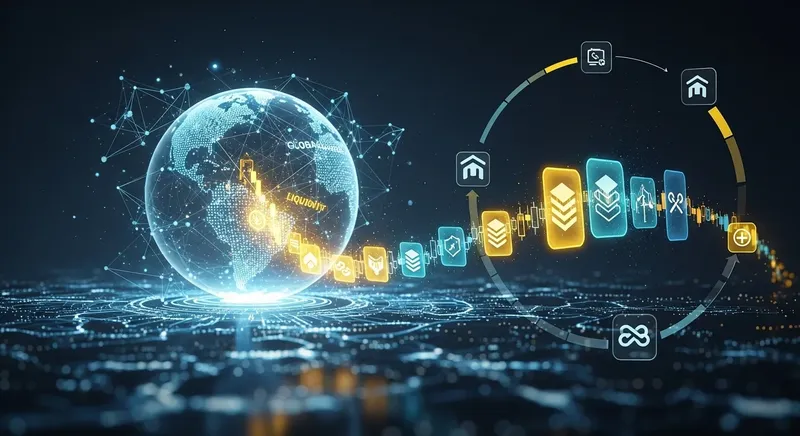
Why Is Tokenization Seen as the Next Major Infrastructure Build?
The need for tokenized stocks is driven by the core incompatibilities between the legacy financial system and the decentralized ethos. Traditional finance is heavily siloed, relying on intermediaries (correspondent banks, clearinghouses) that slow down settlement and increase costs. DeFi, conversely, is permissionless, composable, and operates in real-time. Tokenization acts as the essential bridge, allowing capital to flow across these traditionally separated layers while maintaining the legal and regulatory backing of the underlying assets.
How Do Tokenized Stocks Actually Work on Ethereum?
The mechanics are sophisticated, involving more than simply minting a token. Specialized protocols and custodians act as the critical middleware. They perform three primary functions: Legal Structuring, Asset Custody, and Tokenization/Wrapping.
- Legal Structuring: Before tokenization, the underlying asset (the stock claim) is legally wrapped into a Special Purpose Vehicle (SPV) or a dedicated trust. This SPV holds the actual equity and assumes the legal liability, ensuring that the digital token represents a legitimate, legally binding claim. This layer is paramount for institutional trust.
- Custody and Audit: The actual shares and financial instruments are held securely by institutional-grade custodians. This provides audited proof of existence, linking the digital token ownership to the physical, regulated asset.
- Token Wrapping: A smart contract is then deployed on Ethereum. This contract does not hold the stock; rather, it manages the rules of ownership for the tokenized claim, minting tokens that mathematically represent fractional ownership. When a user trades a token, the smart contract executes the transfer, and the custodian is programmed to settle the corresponding claim on the traditional exchange.
The use of Ethereum is non-negotiable for these high-value assets. Its battle-tested security, massive validator network, and established developer tooling make it the preferred "settlement layer" for assets requiring maximum trust and regulatory scrutiny.
Mapping DeFi Composability to Traditional Equity Value
One of the most revolutionary aspects of tokenized stocks is their composability. In the traditional system, if an investor wants to use their equity value for collateral in a leveraged loan, they must liquidate the asset, incurring capital gains taxes and market delays. In the tokenized environment, the asset token can be used as collateral instantly and programmatically across DeFi protocols without physical liquidation.
This capability unlocks entirely new capital pools, allowing for fractional ownership of previously indivisible, high-value assets. An institutional treasury can now be systematically segmented, allocated, and utilized across diverse financial instruments purely via smart contracts, an efficiency unimaginable a decade ago.
Key Drivers of Adoption
- Institutional Adoption: Large asset managers and sovereign wealth funds are leading the charge, demanding efficiency and transparency that traditional settlement systems cannot match.
- Liquidity Depth: Tokenization massively increases liquidity by making assets divisible and immediately usable, attracting institutional buy-in.
- Regulatory Clarity: As regulatory frameworks begin to clarify digital asset classification (treating tokens as regulated securities), market confidence surges.
The fusion of traditional finance (TradFi) assets with decentralized technology represents the most significant structural overhaul of modern finance since the introduction of the internet. By providing programmable, liquid, and auditable representations of real-world assets, tokenization is not just an upgrade—it is the infrastructure necessary for global capital flow to achieve unprecedented levels of velocity and efficiency.
Google Search Preference
Add Fintech Monster to your preferred sources
Never miss deep, analytical fintech insights. Prioritize our stories in your Google Search, Discover feed, and AI Overviews with one click.
About the Author
Fintech Monster
Fintech Monster is run by a solo editor with over 20 years of experience in the IT industry. A long-time tech blogger and active trader, the editor brings a combination of deep technical expertise and extended trading experience to analyze the latest fintech startups, market moves, and crypto trends.