OFAC Strikes Cartel Digital Lifelines: How Sanctions Target Crypto-Fueled Fentanyl Trafficking
Key Takeaways
OFAC is escalating its fight against global cartels by bypassing traditional banking choke points to directly target the technological and digital financial infrastructure, forcing the crypto sector into a permanent state of enhanced compliance.
The U.S. Department of the Treasury’s Office of Foreign Assets Control (OFAC) has signaled a profound escalation in the global fight against illicit finance, issuing sophisticated sanctions that directly target the technological infrastructure supporting drug trafficking networks. These recent actions, aimed at dismantling elements of the Sinaloa Cartel and its affiliates, mark a critical paradigm shift: the government is no longer merely sanctioning individuals or seizing assets; it is systematically disrupting the core digital financial lifelines—specifically the flow of crypto-assets—used to monetize high-volume cartel operations. This move confirms that the global community views technology not just as a tool for profit, but as a primary battleground in the fight against transnational crime.
Historically, law enforcement focused on traditional banking vulnerabilities, creating choke points through sanctions on correspondent banks and major financial institutions. However, the rise of cryptocurrencies provided cartels with a perceived immunity, offering a borderless, pseudo-anonymous, and rapid mechanism for transferring value far outside the purview of established financial monitoring. The scope of the current sanctions package demonstrates that global regulators recognize the inadequacy of legacy AML (Anti-Money Laundering) systems in monitoring modern financial flows. Instead of chasing fiat off-ramps, the focus has shifted upstream—to the protocol level and the institutional gatekeepers (exchanges and custodians) that facilitate crypto entry and exit.
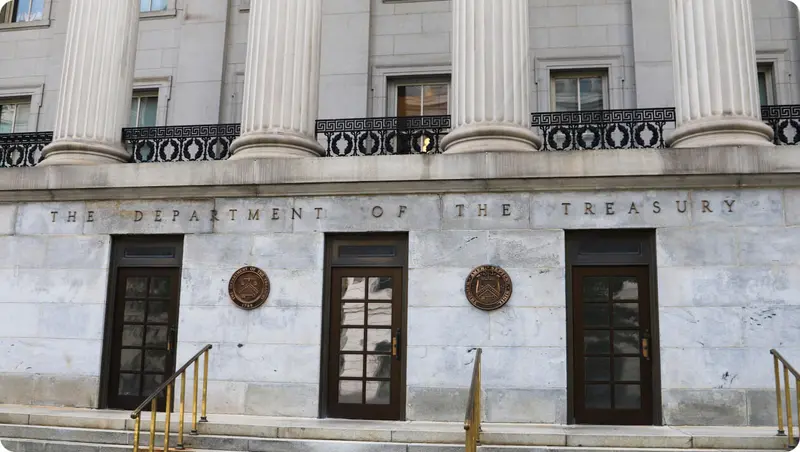
Why Is OFAC Targeting Blockchain Instead of Banks?
The increasing sophistication of criminal financing methods forced regulators to adapt their strategies. Traditional financial institutions, while robust, are susceptible to jurisdictional arbitrage and are limited by the sheer scale and complexity of global transactions. Crypto, particularly certain non-custodial transfers, offered the appearance of perfect anonymity, making it an attractive pseudo-commodity for cartel profits.
OFAC's strategy, therefore, is to neutralize the perceived anonymity of digital assets. By targeting not just the cartels themselves, but also the facilitators—the shell companies, the specific crypto mixers, and the regulated exchange pools used for laundering—they are effectively forcing the illicit finance ecosystem into a corner. This multi-layered approach transforms the challenge of tracing funds from a purely technical problem into a regulatory compliance mandate for every participant. The sanctions are designed to make the choice between criminal operation and regulated compliance untenable for financial intermediaries.
How Does Financial Forensics Make Illicit Crypto Transactions Traceable?
The prevailing narrative around crypto is that it is inherently untraceable. However, the reality, increasingly proven by law enforcement, is far more nuanced. The entire record of transactions exists on a publicly verifiable ledger. The challenge lies in the interpretive layer—following the funds through mixers, privacy coins, and multiple wallets.
Advanced blockchain analytics firms, working in conjunction with financial intelligence units, have developed powerful tools that can aggregate disparate data points. They don't just track the currency; they trace the utility of the currency. By monitoring movement into highly regulated Centralized Exchanges (CEXs) and observing fiat off-ramps, investigators build comprehensive economic profiles of the criminal organization. The successful tracing of these funds demonstrates that the technology intended to provide sanctuary merely provides a detailed ledger that law enforcement can now read like an open book. This ability to trace value is fundamentally changing the risk calculus for international money laundering operations.
The Economic Impact of Digital Enforcement
The impact of these highly coordinated sanctions is not just law enforcement; it is a massive disruption to illicit economies. For cartels and transnational criminal organizations, their entire business model relies on opacity and speed. By creating systemic friction—by flagging suspicious transaction clusters, freezing associated digital assets, and imposing punitive fees on associated financial service providers—governments are introducing systemic cost barriers.
This forces criminal networks to move away from fast, lightly regulated digital assets and back to slow, easily detectable physical cash. It's a huge blow to their operational efficiency. The combination of strict KYC/AML mandates and advanced blockchain forensics is proving to be a major win for global financial stability.
The recent escalation in enforcement shows we've hit a major turning point. The days of moving massive amounts of illicit money anonymously are ending. With regulators, AI analytics, and global financial institutions all working together, digital accountability is finally here—and the cost of doing business in the criminal underworld just skyrocketed.
Google Search Preference
Add Fintech Monster to your preferred sources
Never miss deep, analytical fintech insights. Prioritize our stories in your Google Search, Discover feed, and AI Overviews with one click.
About the Author
Fintech Monster
Fintech Monster is run by a solo editor with over 20 years of experience in the IT industry. A long-time tech blogger and active trader, the editor brings a combination of deep technical expertise and extended trading experience to analyze the latest fintech startups, market moves, and crypto trends.