Standard Chartered Absorbs Zodia Custody: Decoding the Mega-Trend in Institutional Digital Asset Finance
Key Takeaways
Standard Chartered's move to absorb Zodia's regulated custody arm signals a global consolidation trend, where major banks are prioritizing direct, in-house control over critical digital asset infrastructure to mitigate third-party risk and streamline compliance.
The reported strategic consolidation involving Standard Chartered (SC) absorbing the core institutional custody business of Zodia represents more than a simple corporate restructuring; it is a highly visible indicator of a fundamental, systemic shift in how traditional finance manages digital asset risk. As global regulators tighten compliance screws and institutional capital floods into crypto markets, the demand for verifiable, bank-grade custody services has skyrocketed. SC's action—centralizing the regulated asset holding function while spinning off Zodia's technological expertise—articulates a clear market thesis: the highest value in the digital asset space now lies not just in the assets themselves, but in the reliable, controlled, and compliant infrastructure managing them.
This move follows a pattern of increasing caution among the world’s largest financial institutions. Historically, the custody sector has been fragmented, relying on specialized third-party providers to safeguard multi-billion dollar digital assets. While specialized custodians offer technical excellence and agility, the inherent risk of relying on external counterparty services—operational risk, liquidity risk, and systemic risk—presents a growing liability for risk-averse corporate treasury departments. By bringing the regulated custody function entirely in-house, SC achieves maximum control, minimizing operational blind spots and simplifying the client journey for global asset managers and sovereign wealth funds who require single-point accountability backed by massive institutional balance sheets.
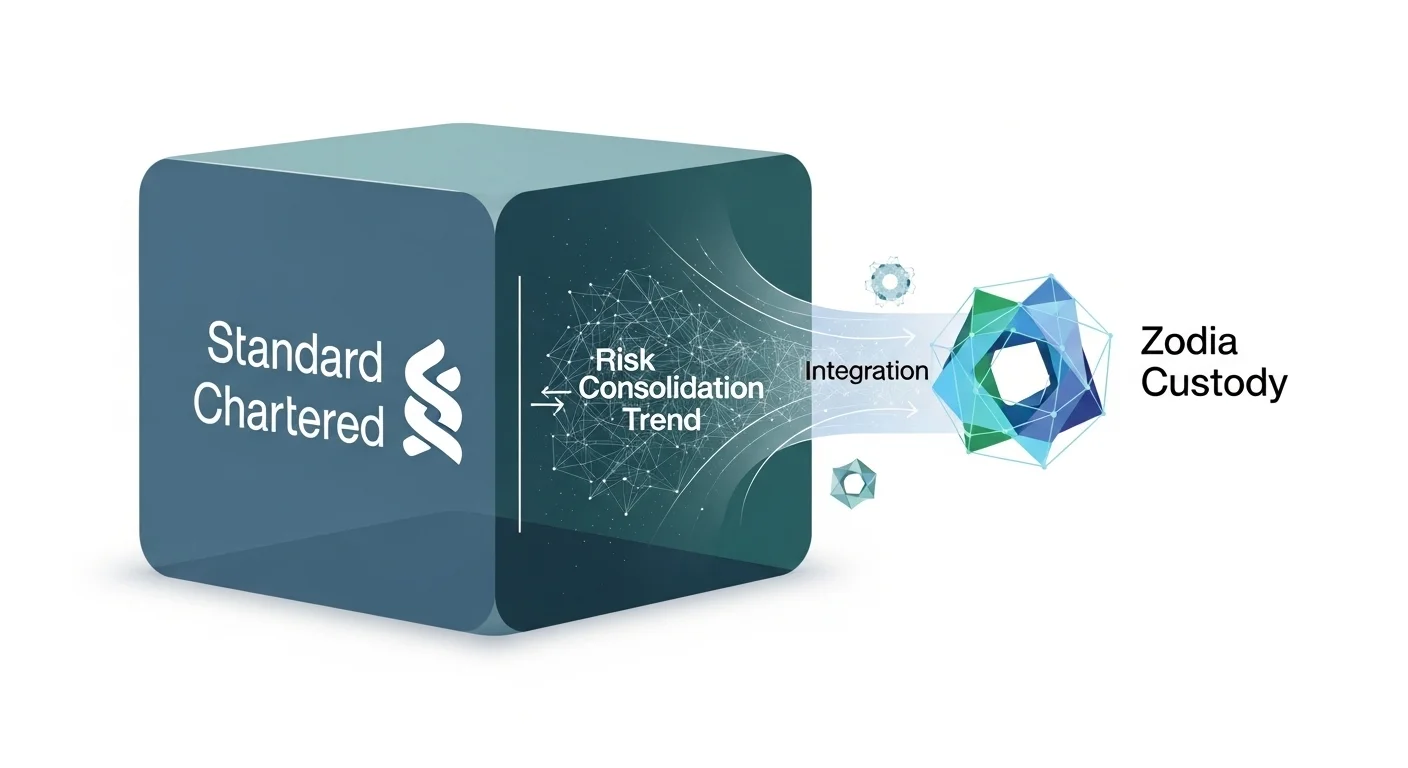
Why Is Counterparty Risk the Single Biggest Concern for Global Banks?
At its core, this entire transaction is a play to neutralize counterparty risk. For a major institution like Standard Chartered, where trust and regulatory compliance are the primary currencies, outsourcing the physical safekeeping and settlement of client assets to a third party, regardless of how reputable that party is, introduces unquantifiable systemic variables.
The move allows SC to move up the value chain from being a client that uses a custodian, to being the entity that is the custodian. This vertical integration is essential for creating a truly seamless "digital asset passport" for institutional clients. When a client needs to move assets from origination (on-ramping) through custody, trading, settlement, and then off-boarding (exit), having these processes managed entirely under one regulated roof significantly reduces friction and regulatory headaches. This single-vendor, single-regulatory-umbrella approach is incredibly valuable and is rapidly becoming the de facto standard for institutional finance.
Separating the Regulator from the Codebase: The SaaS Strategy
The most sophisticated element of this announcement is the strategic decision to spin out Zodia Solutions as a dedicated Software-as-a-Service (SaaS) entity, while retaining the core regulated custody functionality internally. This separation demonstrates a nuanced understanding of modern fintech architecture.
In traditional banking, internal systems are often monolithic, highly customized, and difficult to update. By keeping Zodia’s technological prowess separate, SC does several critical things:
- Maintains Tech Agility: They gain access to cutting-edge platform architecture—the "brains" of the operation—without forcing every new development into the rigid, legacy systems of a global bank. This SaaS arm can operate with the speed and agility typical of a pure tech startup.
- Protects IP and Expertise: It ensures that the specialized technological knowledge that built the platform remains commercially active and focused, rather than becoming swallowed and slowed down by the massive overhead of a traditional bank’s IT structure.
- Future-Proofs the Business Model: It positions the underlying technology as a product line that can be scaled, licensed, or adapted for other financial services, decoupling the technology's value from the specific custody relationship.
This dual structure—a stable, regulated custodian backed by a dynamic, scalable tech engine—is the ultimate play for institutional finance in the Web3 era.
Key Implications for the Industry:
- Standardization of Custody: The focus shifts from merely holding assets to providing integrated, standardized, and regulator-approved custody solutions that support complex digital asset transfers and settlement mechanisms.
- Increased Regulatory Scrutiny: This consolidation means that future digital asset custodians will face immense pressure from regulators (like the SEC or global central banks) to adopt the highest standards of operational transparency and security, effectively reducing the risk of "Wild West" crypto practices.
Summary of the Transformation:
| Before (The Old Model) | After (The New Institutional Model) |
|---|---|
| Assets held in siloed, technology-disparate silos. | Assets managed through a single, integrated, auditable ledger system. |
| Custody is viewed as a service that costs money. | Custody is viewed as a platform that unlocks liquidity and efficiency. |
| Regulation is reactionary and difficult to implement. | Regulation is proactive, baked into the architecture from day one. |
Google Search Preference
Add Fintech Monster to your preferred sources
Never miss deep, analytical fintech insights. Prioritize our stories in your Google Search, Discover feed, and AI Overviews with one click.
About the Author
Fintech Monster
Fintech Monster is run by a solo editor with over 20 years of experience in the IT industry. A long-time tech blogger and active trader, the editor brings a combination of deep technical expertise and extended trading experience to analyze the latest fintech startups, market moves, and crypto trends.